It’s no rarity to see tournament competitors staying close and targeting release fish, but while there’s no shame in that game, fans of the sport treasure the tales of intrepid anglers making a specific run to a specific spot with the steadfast belief in the expected rewards.
That might be a mother lode scenario, it might be a couple key bites or it could be a one-fish gamble with day-making potential.
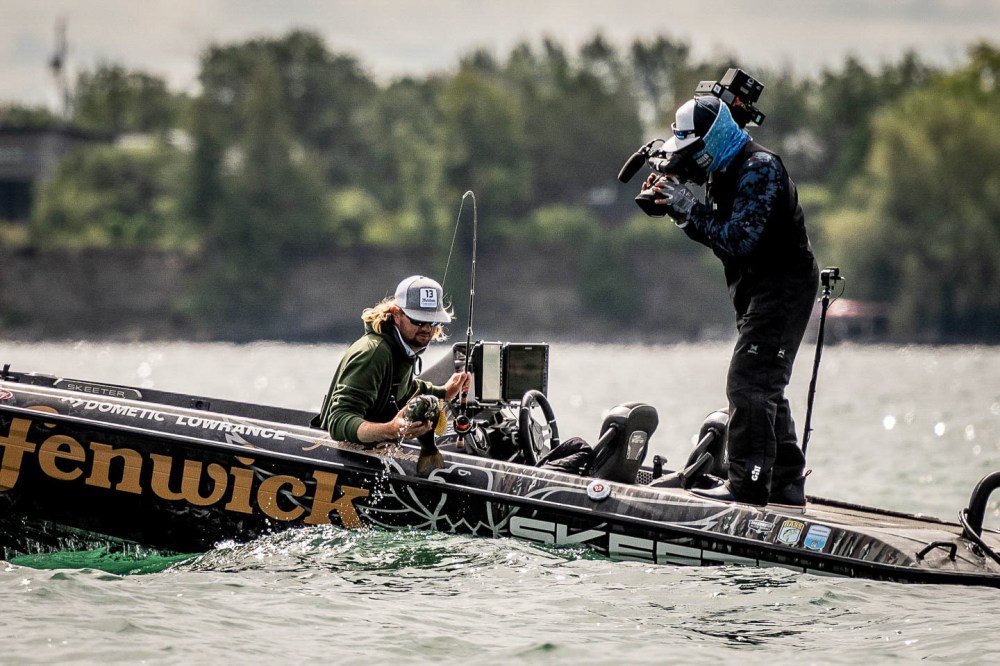
Let’s start with a look back to the 2023 Bassmaster Elite Series event at the St. Lawrence River, where Kyle Welcher won the Bassmaster Angler of the Year title. Keeping himself in the conversation all week, Welcher placed fifth on Day 1, took over the lead on Day 2, moved back to second on Semifinal Saturday and ultimately finished fifth.
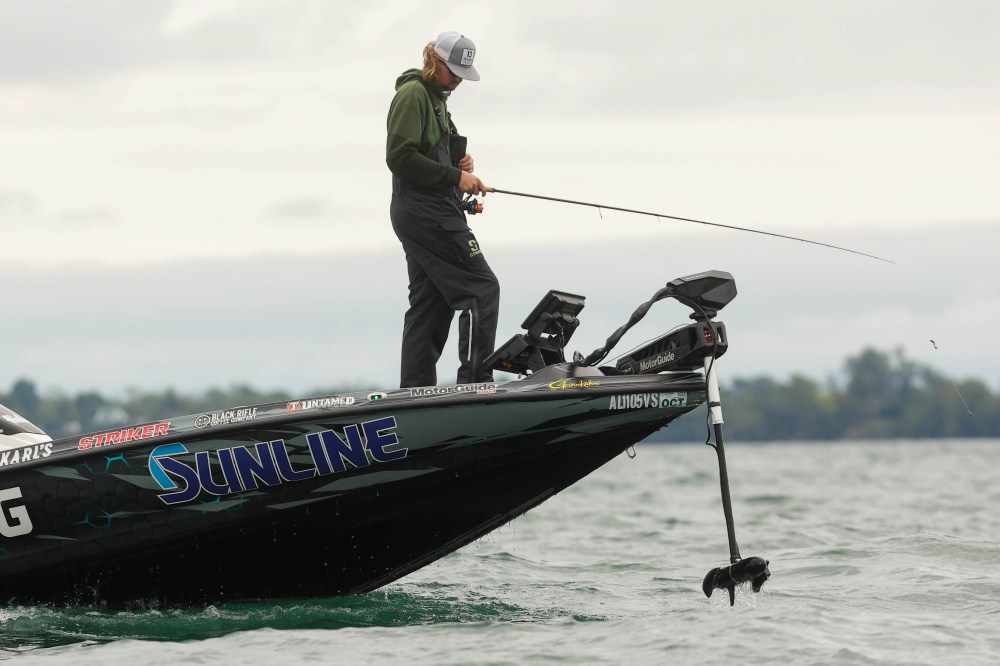
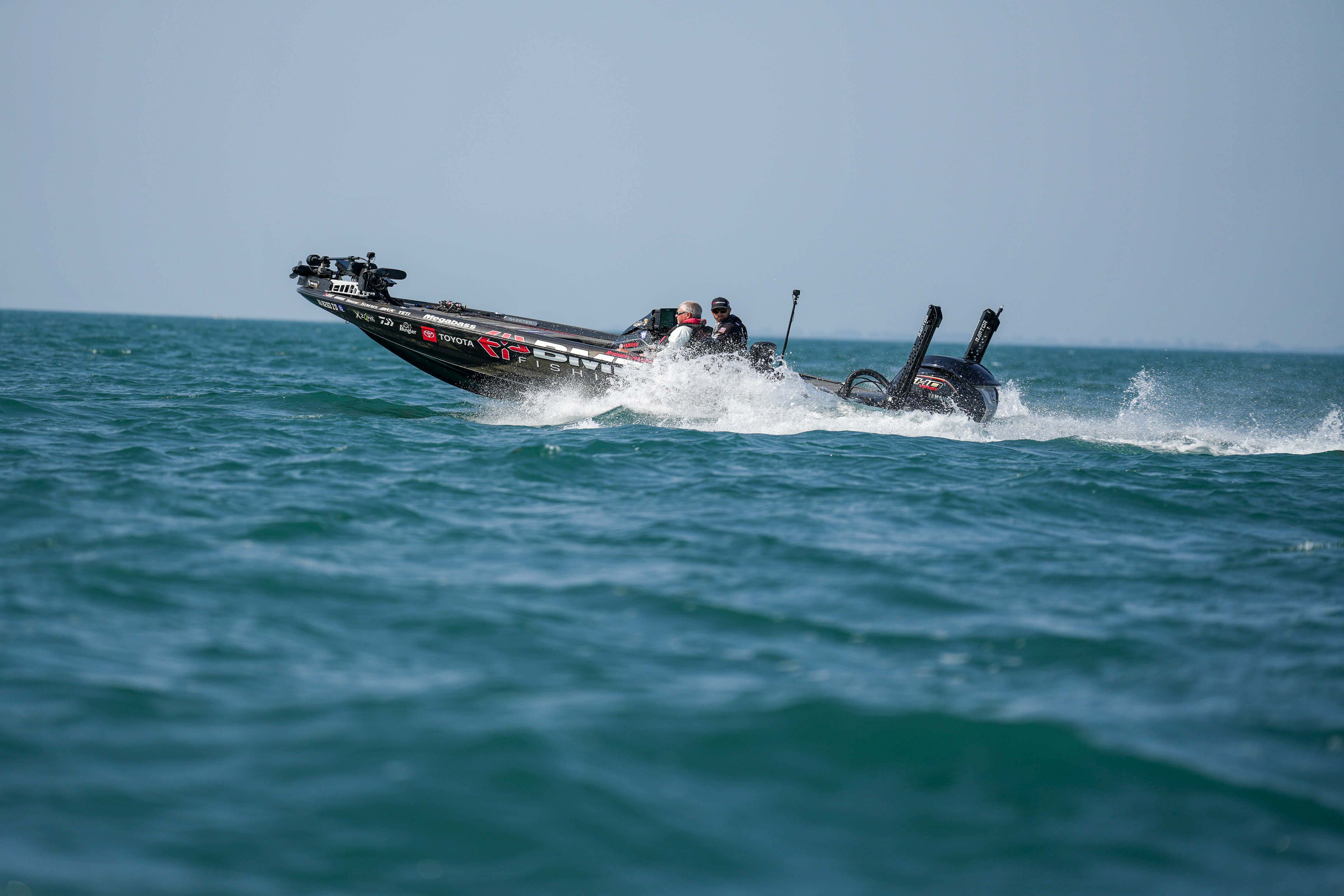
Approaching every day with a “Go for it,” mentality, Welcher braved a rough Lake Ontario and made a long run to a distant spot on the Canadian side. He paid the price with a pounding, soaking ride, but Welcher said it came down to a value proposition.
“Whenever we leave the dock, we have eight hours to catch as much weight as we can possibly catch,” Welcher said. “There are certain places we go where two hours of fishing time in one area, in my opinion, has a higher expected value than seven hours and 45 minutes of fishing close to the ramp.
“If you spend two hours where they’re biting, that’s better than spending seven hours where they’re not biting. I make the decision that morning, ‘What area gives me the best chance to catch the most weight possible?’ If that takes me driving three hours, that’s fine.”
After three days with limits of 25-10, 27-12 and 25-15, a final-round mechanical issue held Welcher to 20-7. That disappointment derailed a legitimate shot at the win, as Welcher fell just 4 ounces short of a Century Club belt. Nevertheless, his bold commitment positioned him to race across the AOY finish line by a 24-point margin.
Here are a couple more cases of long runs that delivered the goods.
Irresistible urge
For 3 1/2 days, Brandon Palaniuk drop shotted in Anchor Bay with many of his competitors in the 2025 Bassmaster Elite at Lake St. Clair. Steady and dependable, but all the while, a distant option kept tugging at his consciousness.
“In practice, I had found this big outflow pipe in one of the rivers that had a lot of current, and I caught a 6 1/2 there on a 5-inch Megabass Magdraft,” Palaniuk said. “It was just something abnormal from what most people would fish. That’s why it held bigger-than-average fish.
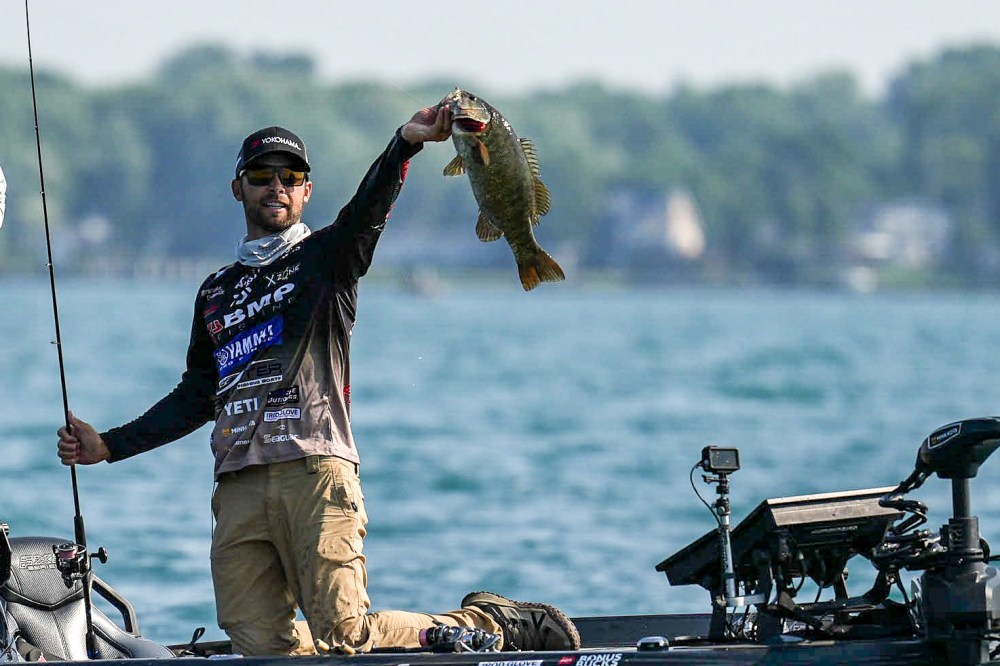
“I knew there were big fish there; I just knew it was really difficult to catch multiple fish.
As Palaniuk recalls, his spot was no gimme. With the fish sitting in about 3 feet and swirling current creating a back eddy, cracking a big’n required a specific cast and retrieve that brought his bait through a narrow feeding zone. Miss it by a little and no dice.
“It was just getting your bait to look natural,” Palaniuk said. “Anytime you’re fishing current, getting your bait to come naturally to those fish is the key.”
Needing to secure as many points as possible, and factoring in the potential for a disappointing waste of time, Palaniuk diligently played the community hole game and started with a 42nd-place Day 1 limit of 20-1. In the second round, he added 21-4 and rose 20 spots before catching a Day 3 limit of 22-8 and entering Day 4 in 10th place.
Day 4 of the event found Palaniuk back in Anchor Bay, but after catching a 20-pound limit by 11 a.m., he finally yielded to a relentless inner urging. Around noon, he packed up and made the hour run.
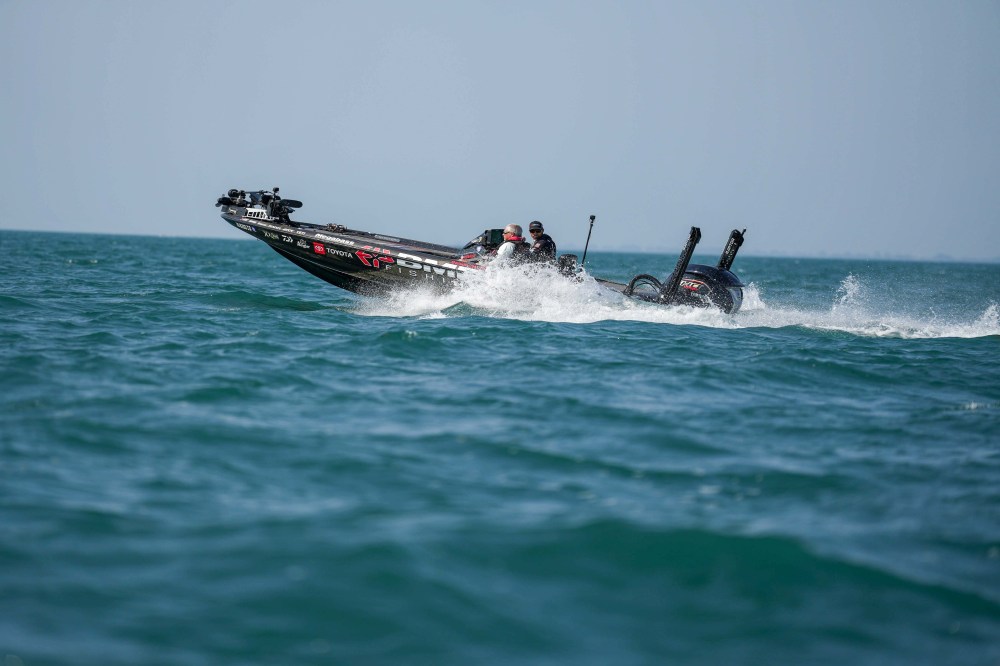
“That place just kept coming back and coming back (in my mind) and, by Day 4, I just couldn’t fight it anymore,” Palaniuk said. “I had to scratch the itch just to know if what I thought was possible could actually happen.”
Upon reaching his spot, Palaniuk fished around to make sure he wasn’t missing other opportunities. He saw a few noncommittal followers, but once he dialed in the cast, that’s when the magic happened.
“I could feel that the bait was working right and it washed right into where those big ones were sitting,” Palaniuk said. “I finally got the cast just right, and I caught a 6-2.”
Sometimes it works, sometimes it doesn’t
Justin Atkins shared a double dose of recent risky runs with contrasting outcomes. His first example arose on Day 3 of the Bassmaster Elite at the Tennessee-Tombigbee Waterway, when his timing proved better than his execution.
Practice had shown Atkins an atypical shad spawn in Aliceville Lake with the daybreak bite actually weaker than the late morning action. Basically, sun warming a clay bank spurred the deal, so Atkins started on a current-related spot in Columbus Lake where the tournament was based and waited for the shad spawn to reach a fever pitch.
“I told my Marshall 20 times, ‘I want to leave, but know I need to wait; I don’t need to get down there until this time,’” Atkins said. “I waited until 11 o’clock, and then I made a big run. I only had two hours to fish, but I was running to make one cast.
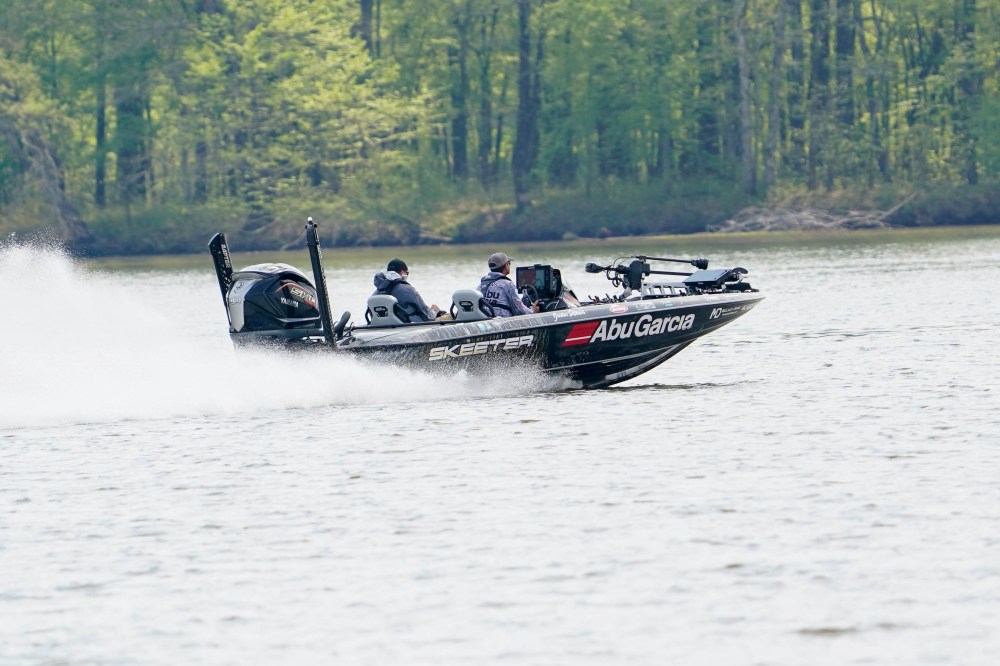
“The wind was making a mud line. It was perfect. I pulled up right to where I thought the fish would be and got the bite; I just lost the fish.”
In hindsight, Atkins believes his long run would have been productive had he stuck with the swim jig he’d successfully used in practice. The windy conditions prompted him to throw a spinnerbait, but the fish hit from the side and missed the connection that a more streamlined swim jig likely would have delivered.
Redemption: A couple months later, Atkins again made a big run to a specific spot during Day 2 at the Pasquotank River. This time, the gamble paid off big and salvaged his event.
“I fished an area in the Perquimans River the second day until like 10 o’clock and realized it wasn’t working,” Atkins said. “I was only going to have two hours to fish, but I made an 80-mile run, pulled up to my spot and caught over 16 pounds in 20 minutes. That saved my whole tournament.”
In practice, Atkins ran far up the Chowan River and found a spot where tides had washed out a hard place around stumps in 8 feet. Something different amid a sea of sameness, the spot delivered encouraging practice results, so Atkins filed that note in his game plan.
“The first day of the tournament, I stayed close because I had a place (in the Perquimans River) I had some confidence in where I could get a lot of bites and potentially catch a big one,” he said. “The first day, I caught 11-11 and never got a big bite.”
Starting Day 2 as the first one out of the cut, Atkins knew he had to play a smart game. The calculation was simple: If he mirrored his first-round plan, he’d need a big bite to prevent a low finish.
“On Day 2, I went back there (the Perquimans) and at 9:30 I only had one fish and the day before, I had caught my limit in six casts,” Atkins said. “I knew the day was going slow, and I’d already burned up a bunch of fishing time, so having a one-cast spot in the Chowan made it more appealing.
“I was thinking it’s going to take me a long time to get there; I would have to get gas. It’s gonna be rough, but if they are there, I’m going to pick them up really quickly. I pulled up and caught what I had in a matter of minutes.”
Takeaway points
Summarizing the foundational criteria for choosing a big run, Atkins said: “Decisions like that are risk management. More times than not, they don’t work, but when they do, it makes it worth the risk.
“Understanding from practice about what potential is honesty there helps make your decision-making clear when you run 80 mies to make one cast. Very rarely do you just run somewhere and just fish around. You have to know exactly where you’re gonna fish.”
During the St. Clair event, Palaniuk’s big run to catch one big fish pushed him into a fifth-place finish, but it took 3 1/2 days of steady productivity to make him comfortable with the gamble. Also, starting the final day in 10th place, Palaniuk literally had nothing to lose, so the decision was easier.
Looking deeper, he points to a couple more considerations.
“As clichéd as it sounds, it comes down to a gut feeling and that comes from factors like, what you’ve seen in practice,” Palaniuk said. “I always joke and say that the only difference between a good decision and a bad decision is a 4-pounder.
“If you make a decision and don’t get a bite, it’s easy to say, ‘Well that was a dumb idea.’ But if you do the exact same thing and you catch a big one, then you say, ‘That was a great idea.’”
Palaniuk tells himself not to fear the occasional gamble, as long as it’s a calculated gamble. Ultimately, recurring thoughts linger because the brain is subconsciously assessing something real.
“If it keeps coming up in your mind, there’s a reason.”