Elite Man Caves: Mike Iaconelli

Take a tour of Mike Iaconelli's huge Man Cave — otherwise known as 'The Shop.'
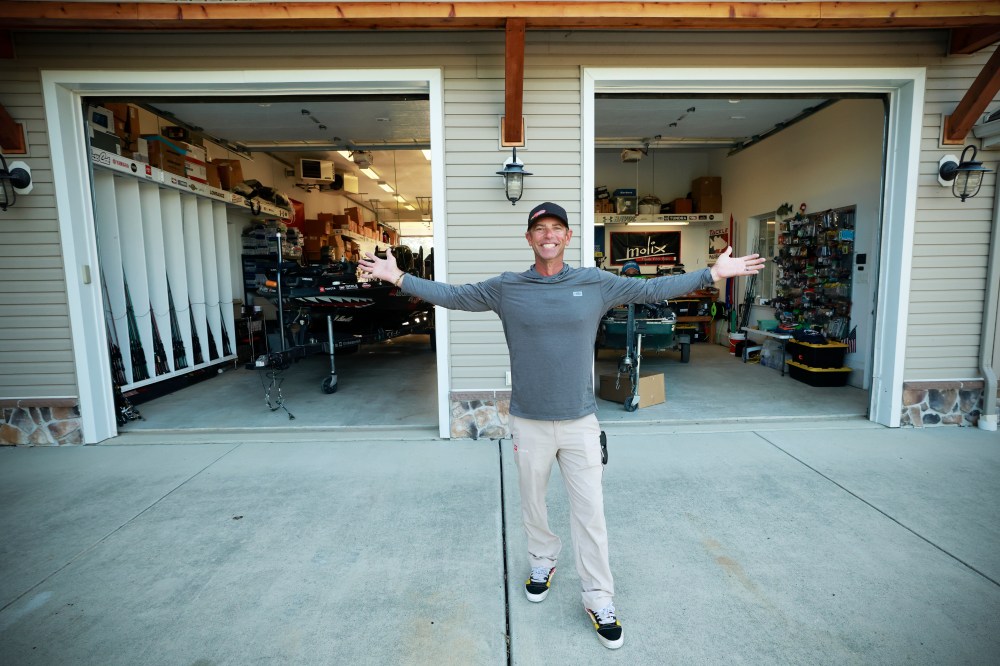
Welcome to my man cave. We call my man cave the Shop. Having a fully stocked and fishing ready shop is something I’ve dreamed about my whole life. When I was a kid all the way until I was in my 30s, I dreamed about having a place that would be my central hub for my fishing passion. Well dreams do come true, and here it is! 
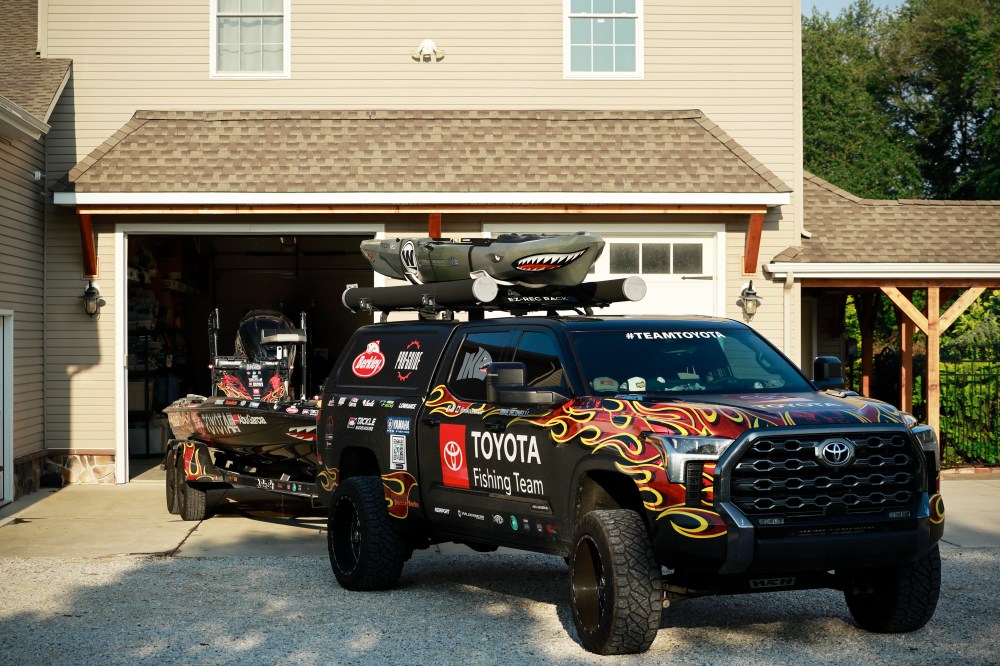
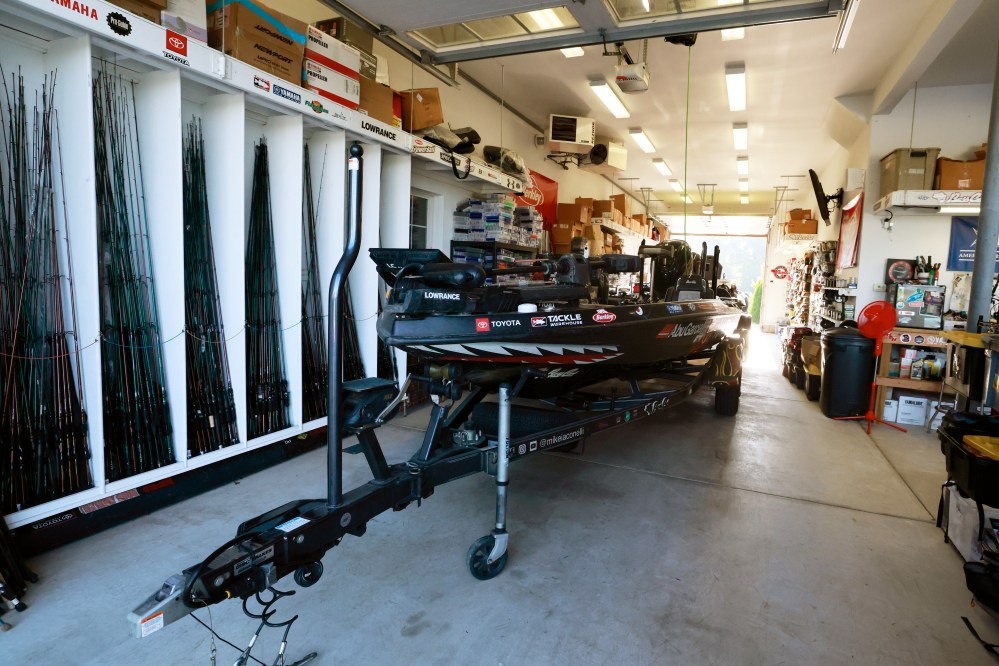
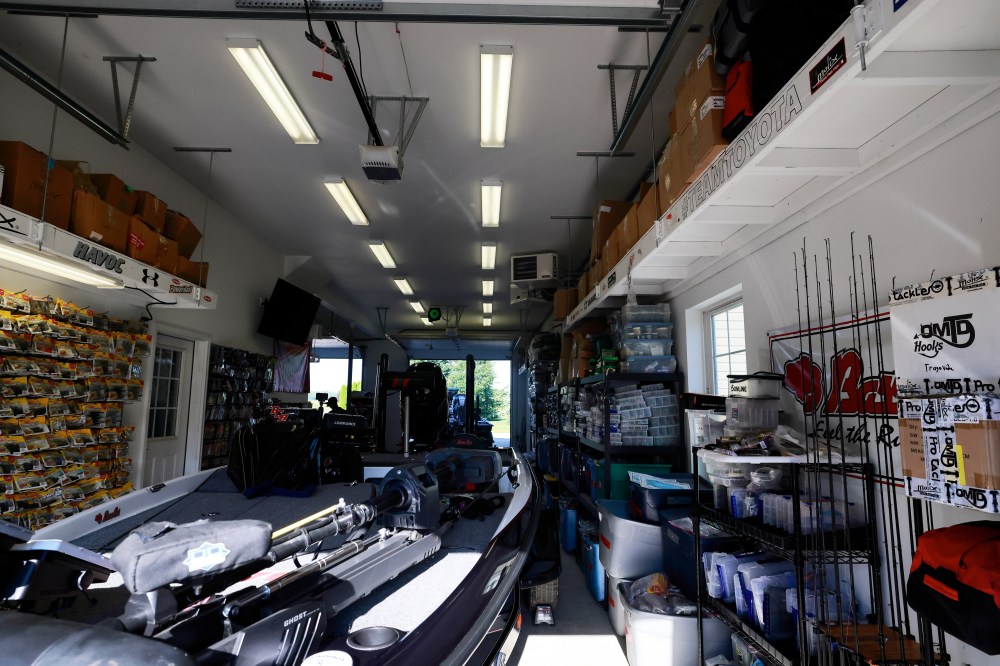
I designed the Shop entry to allow a truck and boat to pull right through. In one side and out the other without ever having to unhook the Bass Cat boat from my Toyota Tundra truck. Talk about easy.
The Shop is my happy place. It surrounds me with fishing tackle, lures, boats, motors and memorabilia. It’s a constant reminder of my love for fishing and is a sort of escape for me when things get crazy. But it’s not all fun and play; a lot of work happens in the Shop too.
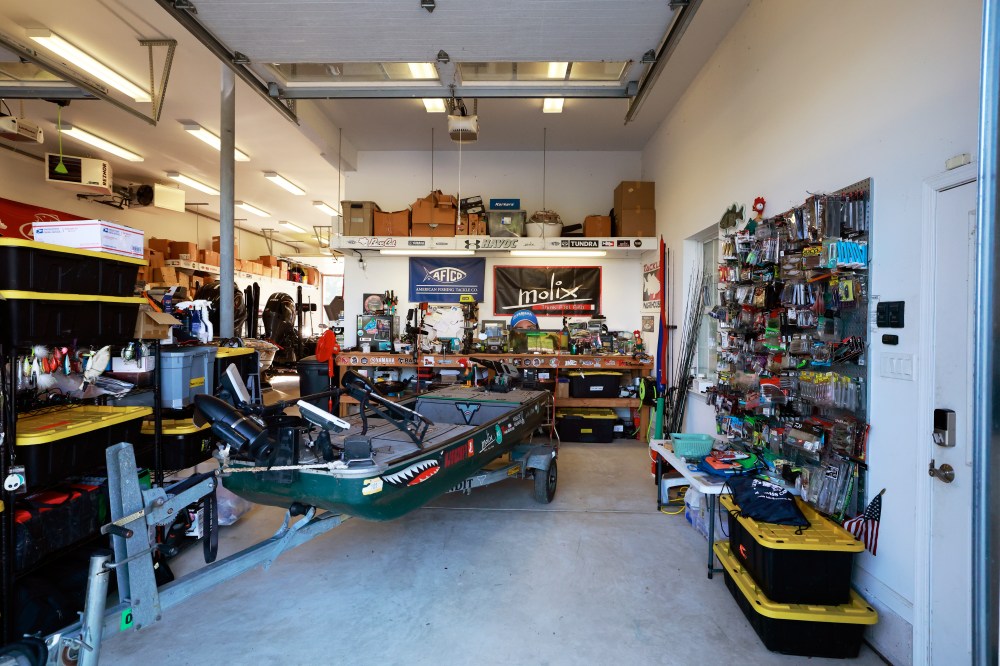
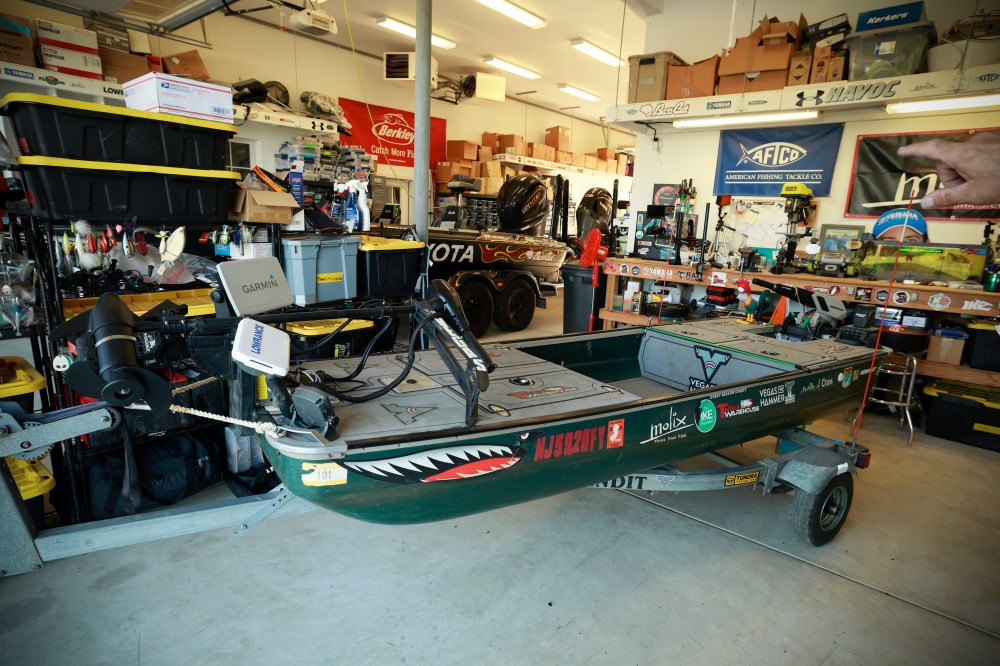
The main Shop area has two distinct bays. The right bay houses my original tiny boat (now my son Vegas’ boat), Vegas’ tackle wall and my shop desk.
There’s a lot of meaning that goes along with my original tiny boat. This boat was given to me as a high school graduation present way back in 1990. It’s the boat that gave me my start in local New Jersey bass fishing competitions with my old fishing club the Top Rod Bassmasters. Over the years, this boat has been through a lot of fishing and has seen a bunch of different modifications and builds. I passed the boat on to my son Vegas, and now it’s his to pass on again.
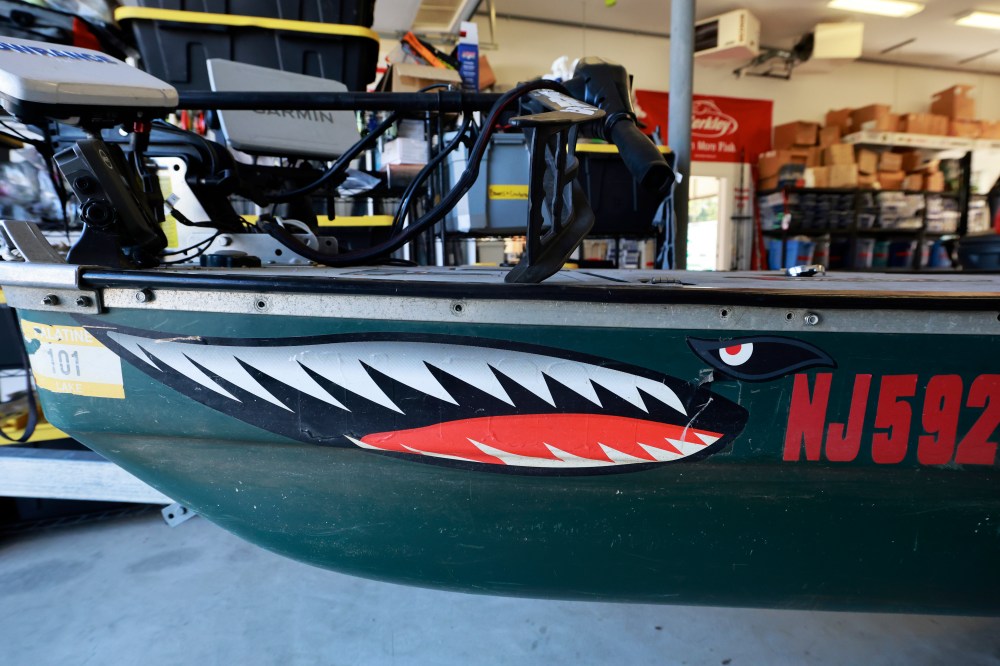
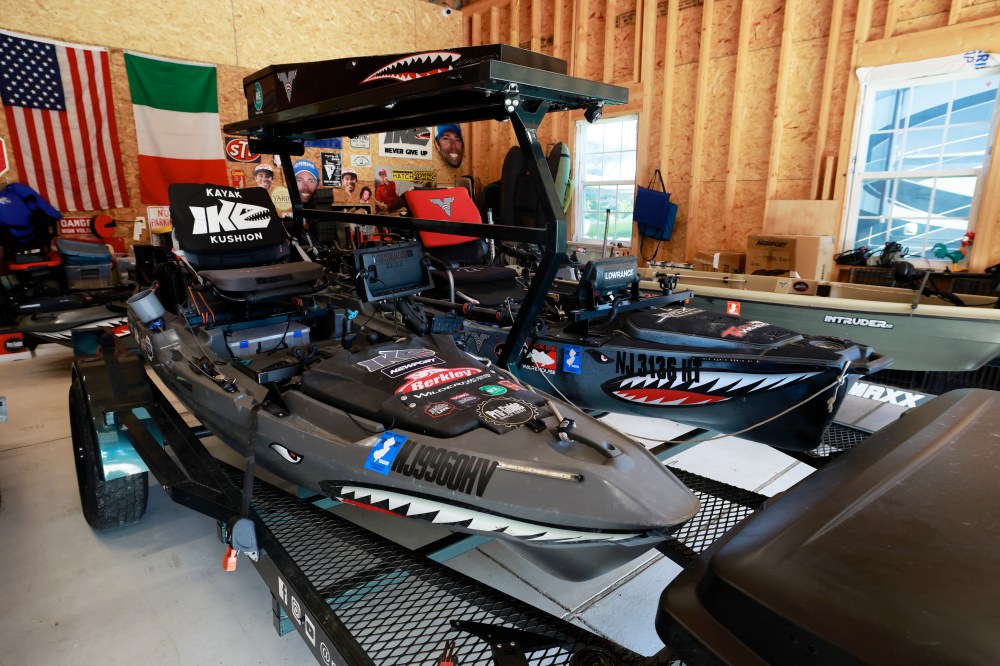
Of course even the tiny boat has my signature Ike brand shark mouth and eye on the bow. 
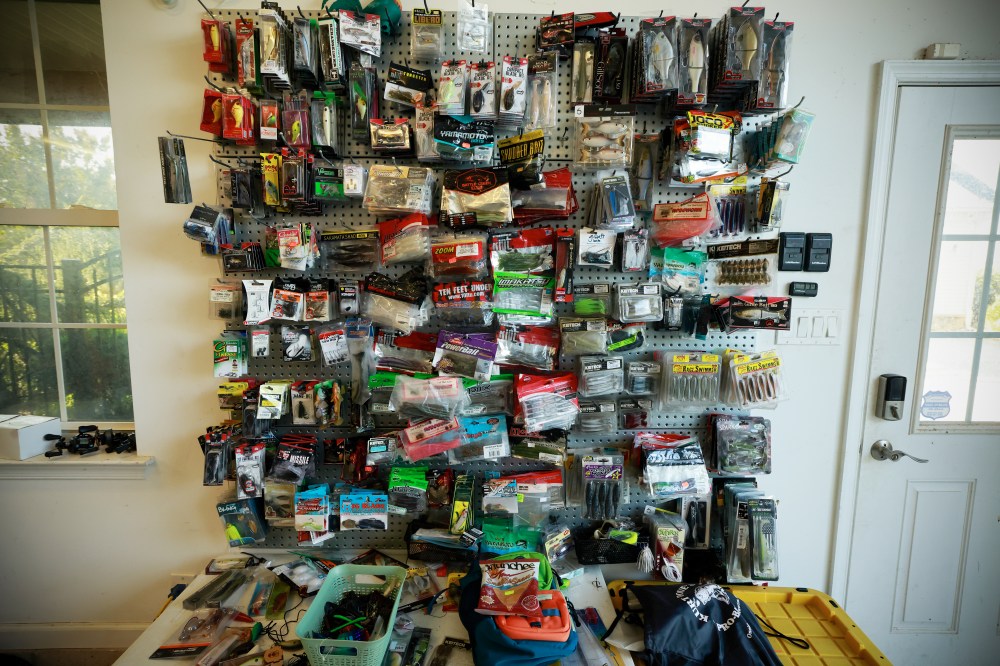
Across from the tiny boat is Vegas’ bait wall. On the Gorilla Board peg board, Vegas has assembled a unique mix of baits and terminal tackle that he uses for his own fishing adventures.
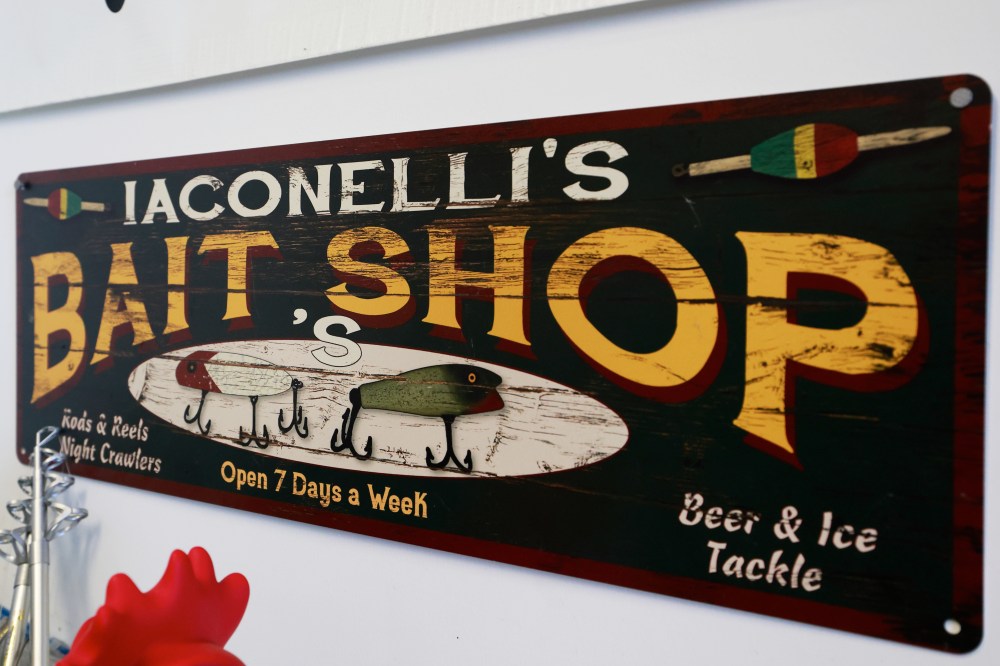
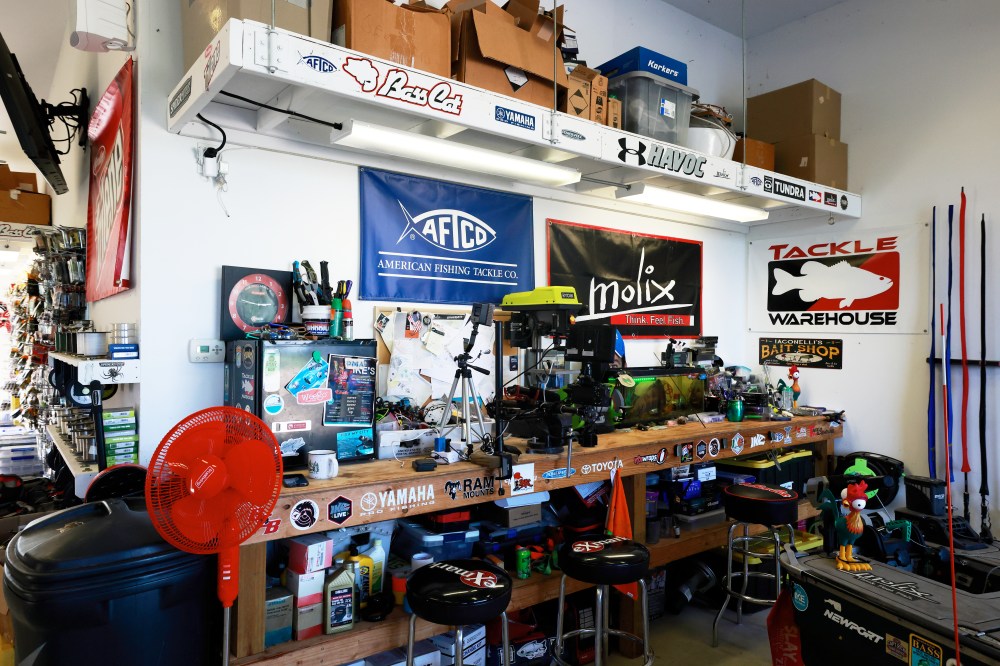
Located on the back wall on this side of the Shop, is my custom shop desk. A cool retro tin sign was given to me by a fan and is the perfect touch for this part of the Shop. 
The shop desk and shelving area is the main space where I develop and test new baits and modify old existing baits. The shop desk is also the place where I film my weekly fishing education YouTube series called “In The Shop!” More on this later.
The shop desk is full of different things to help me get all of this work accomplished. Tools, drawings, paints, adhesives, cameras and even a fish tank on the desk to help me test the action and buoyancy of baits. Of course there are some sponsor banners and pictures too.
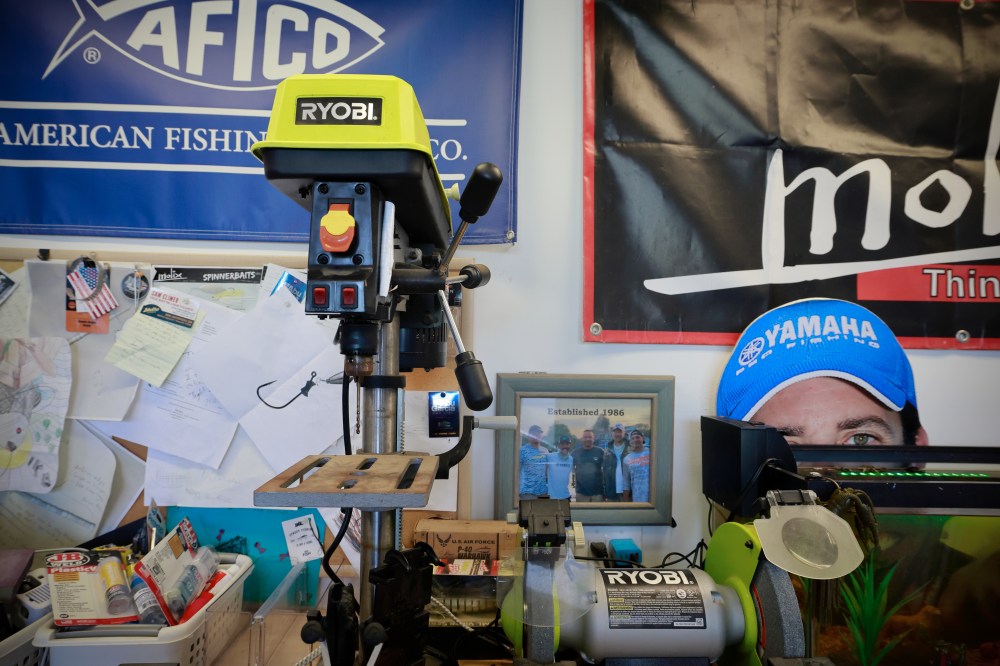
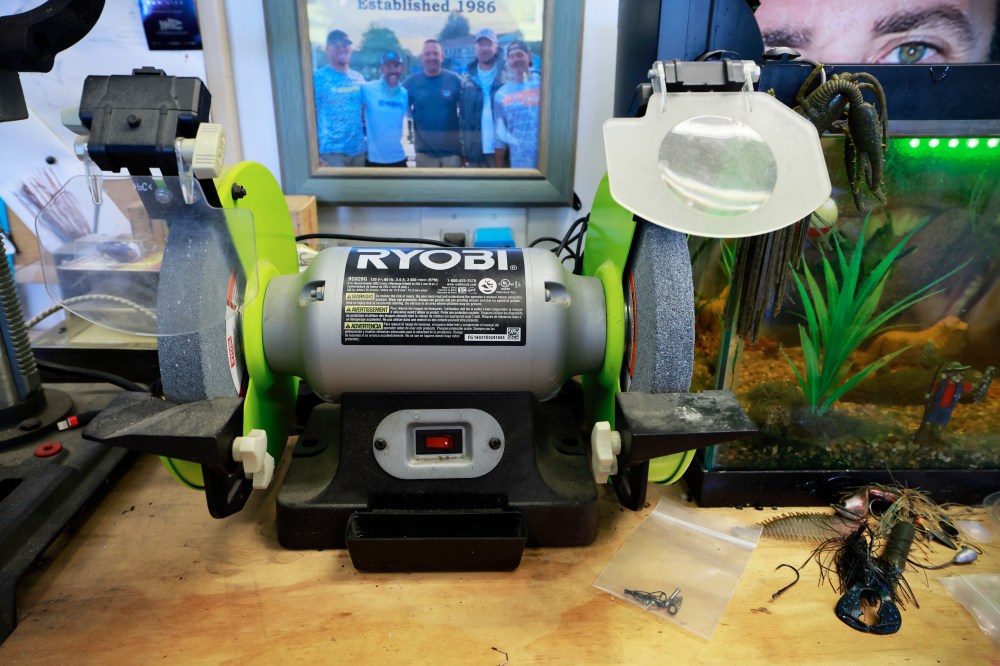
Some of the tools on the desk include a vice, a drill press and this grinder. I use the grinder to modify baits by shaving down the lip or bodies of a crankbait or grinding down the head of jigs spinnerbaits and ChatterBaits too.
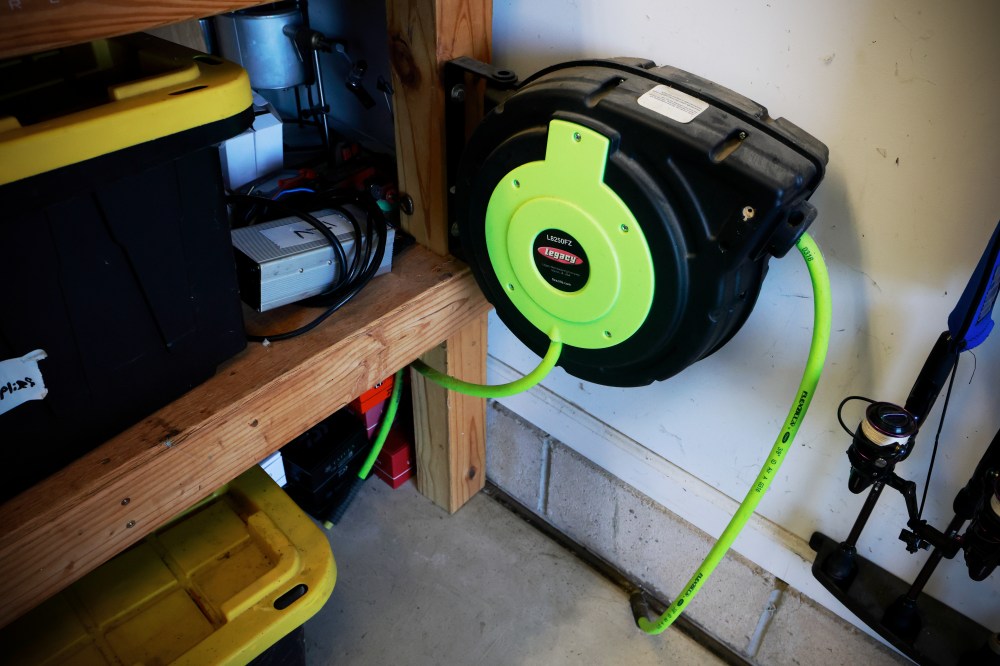
Another one of the tools at the shop desk is this high-powered air hose. With this hose, I can do many things including custom paint and airbrush work on some of my favorite baits.
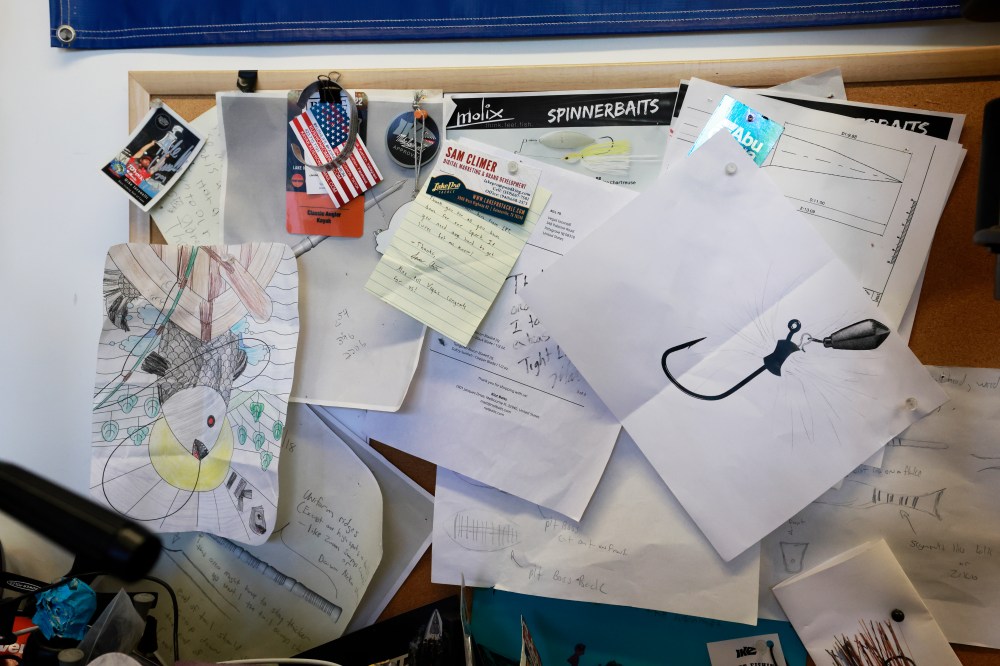
A cork board is also hanging on the shop desk wall. I pin on the board ideas, drawings and concepts for new bait designs. Also, I have a few special fan letters written to me each year that get pinned on there too.
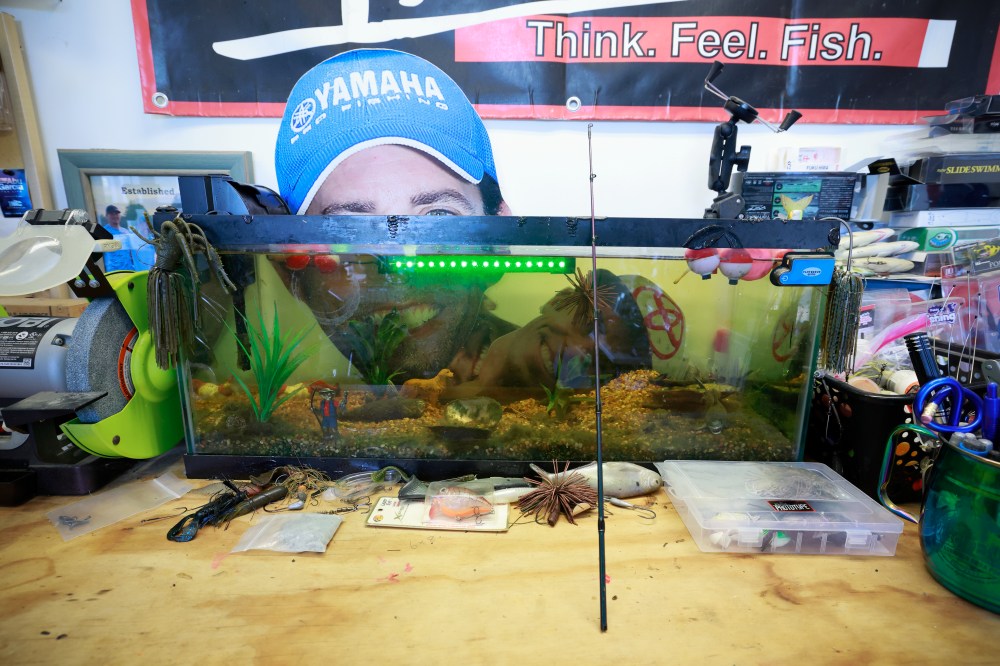
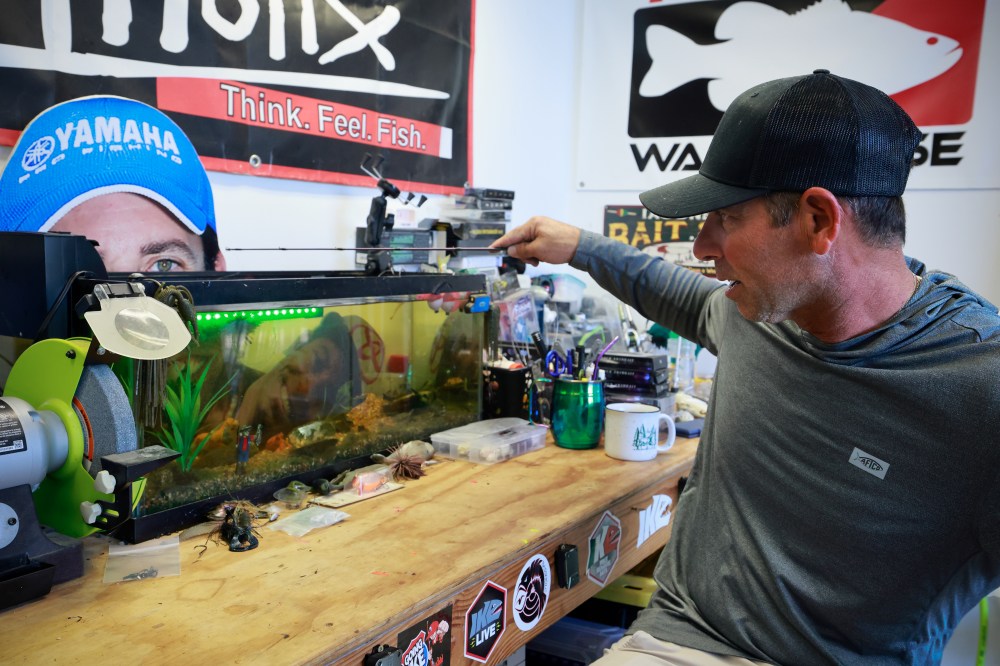
The aquarium that sits on my shop desk is not for pet gold fish, but instead it is used to test baits. Fall rate, float rate and action can all be viewed in this tank.
I use the short end of a broken rod tip to tie on the baits and see what they do in the tank. A lot of time in the design process on new baits, I’ll go through 10 to 20 different versions until I get the bait that moves and looks just right.
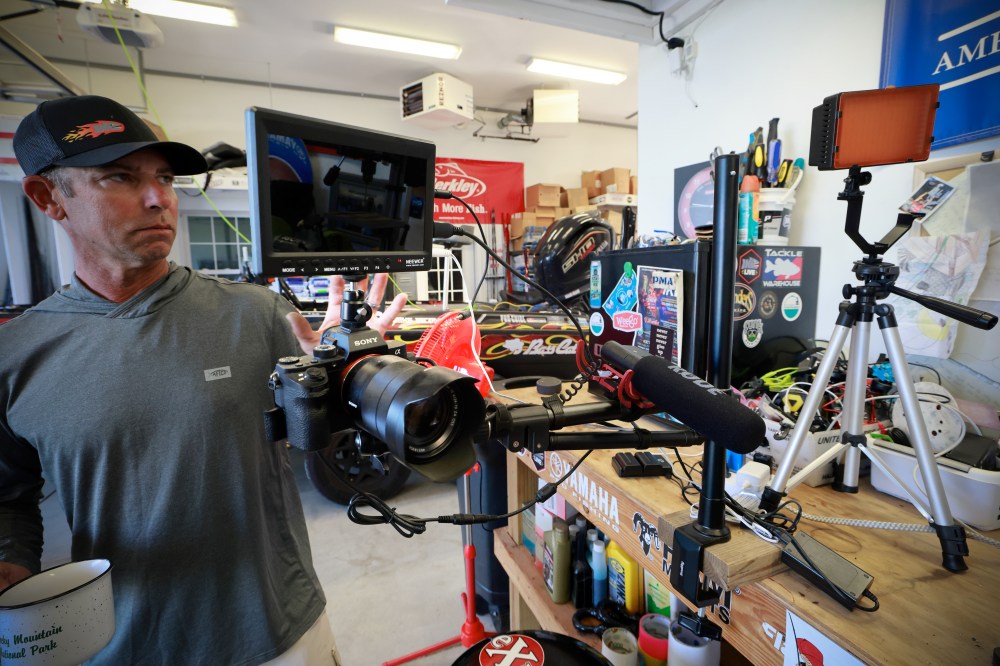
The other critical part of the shop desk besides designing and testing baits is filming episodes of my YouTube series “In The Shop.” I film a new video every single week, and I try to help anglers learn some of the tricks and techniques I’ve picked up over the last 30-plus year of bass fishing. If you not already subscribed, head on over to the Mike Iaconelli Fishing page on YouTube.
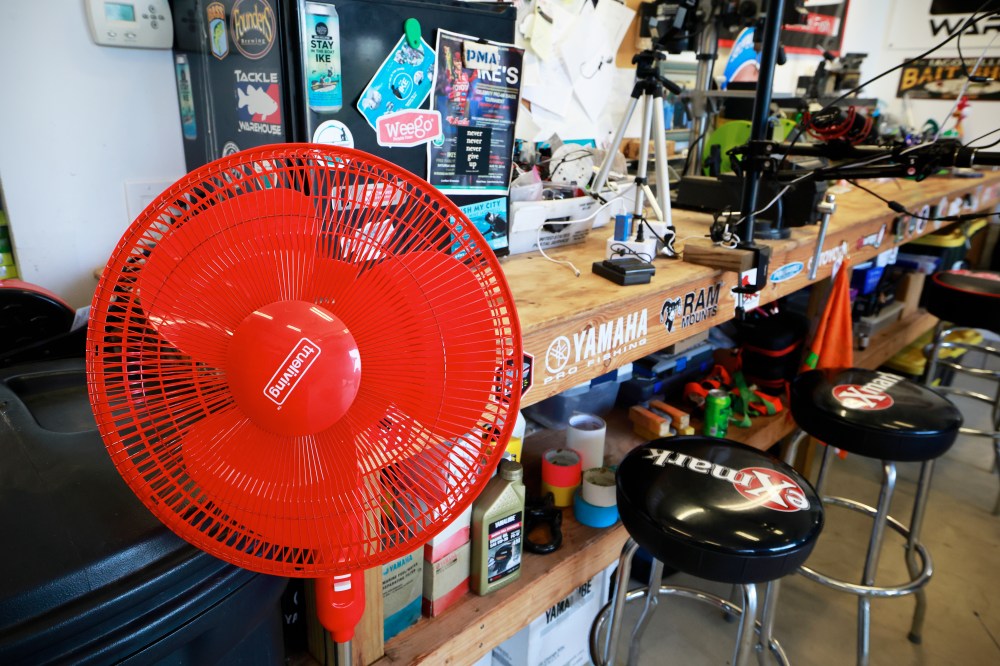
A refrigerator, fan and trash can complete this part of the Shop. Staying cool and hydrated are important things when you’re having fun in the Shop.
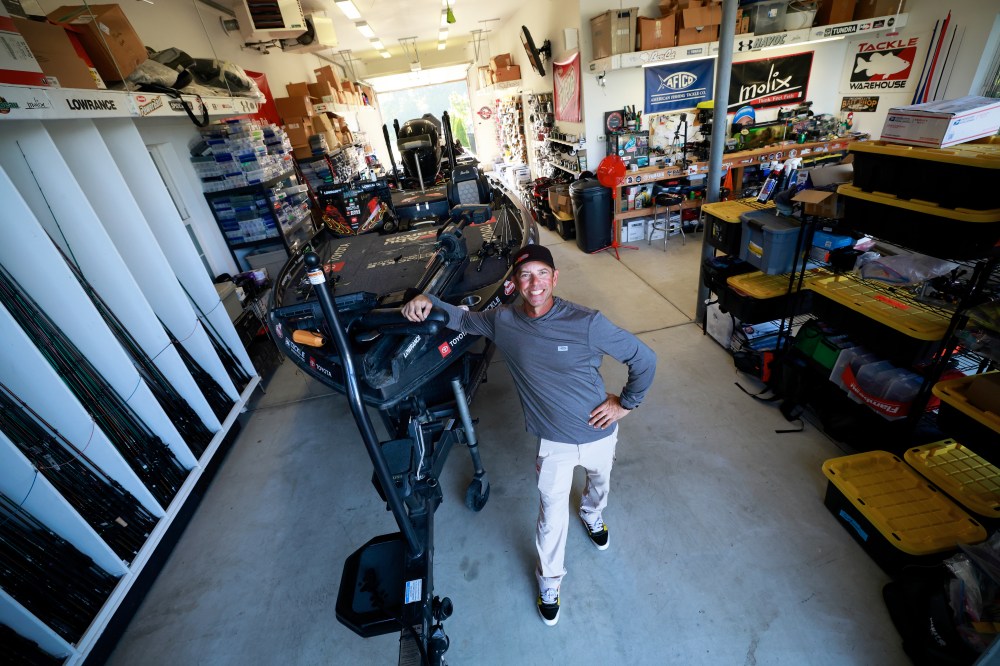
On the left side of the Shop, my Bass Cat Puma FTD bass boat sits perfectly in the middle of the space with air conditioning units and retracting charging power cords over head.
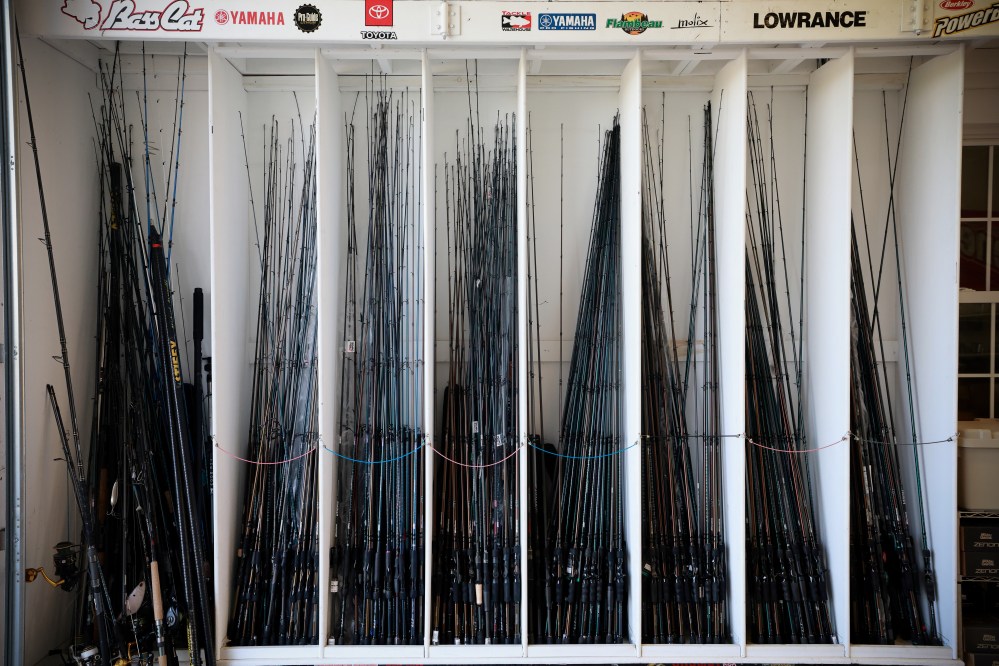
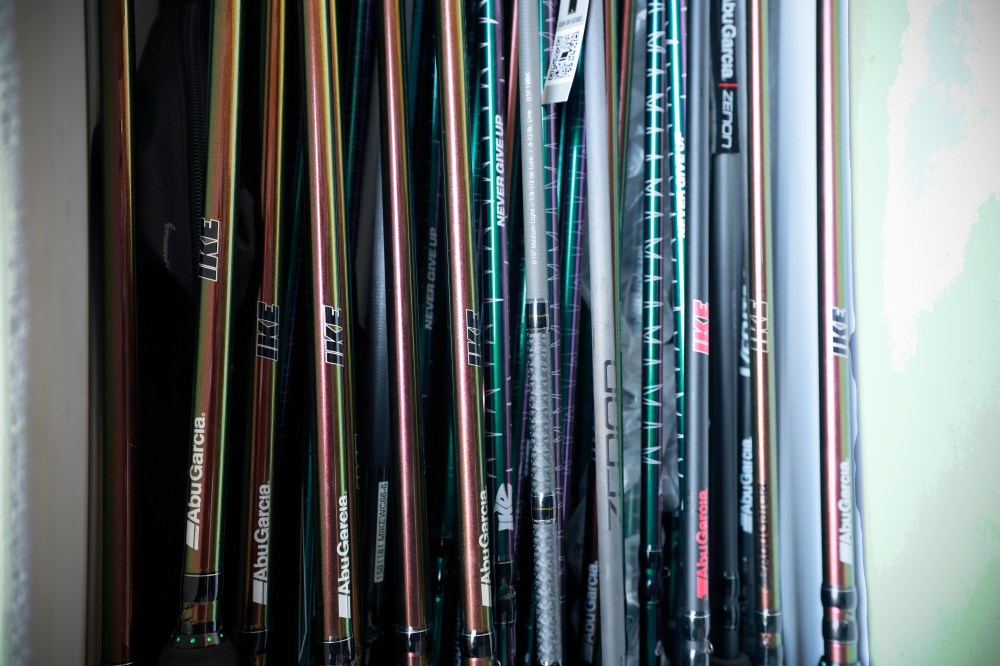
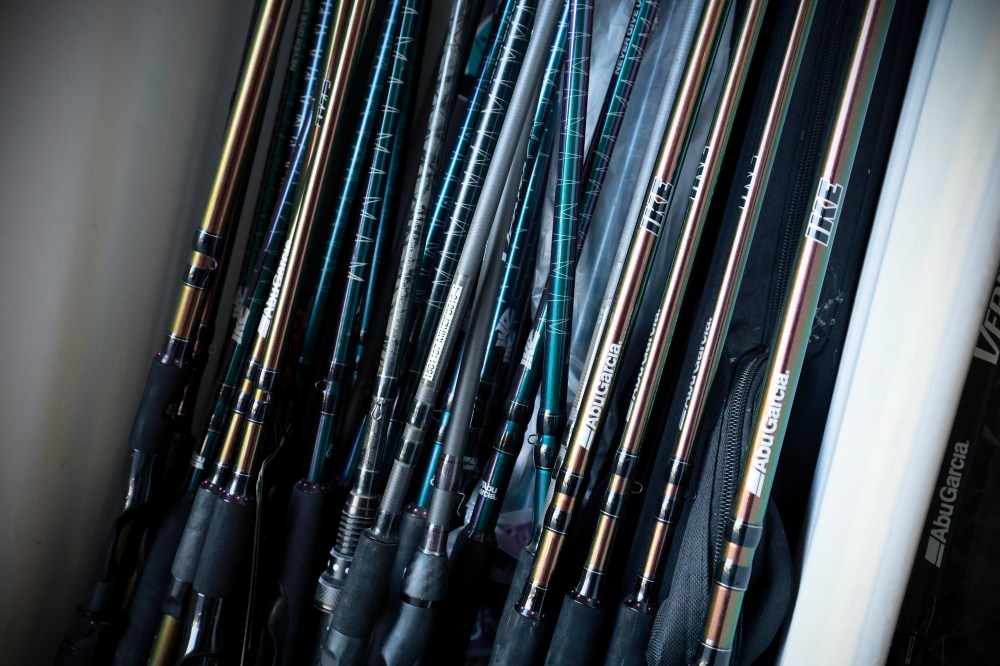
And on the back wall of this side of the Shop sits my custom-built rod lockers. These rod lockers are not the small standard rod holders, but eight individual 9-foot-tall wooden lockers. In these locker storage spaces I keep my spare Abu Garcia rods and prototype Ike Series rods I’m working on. 
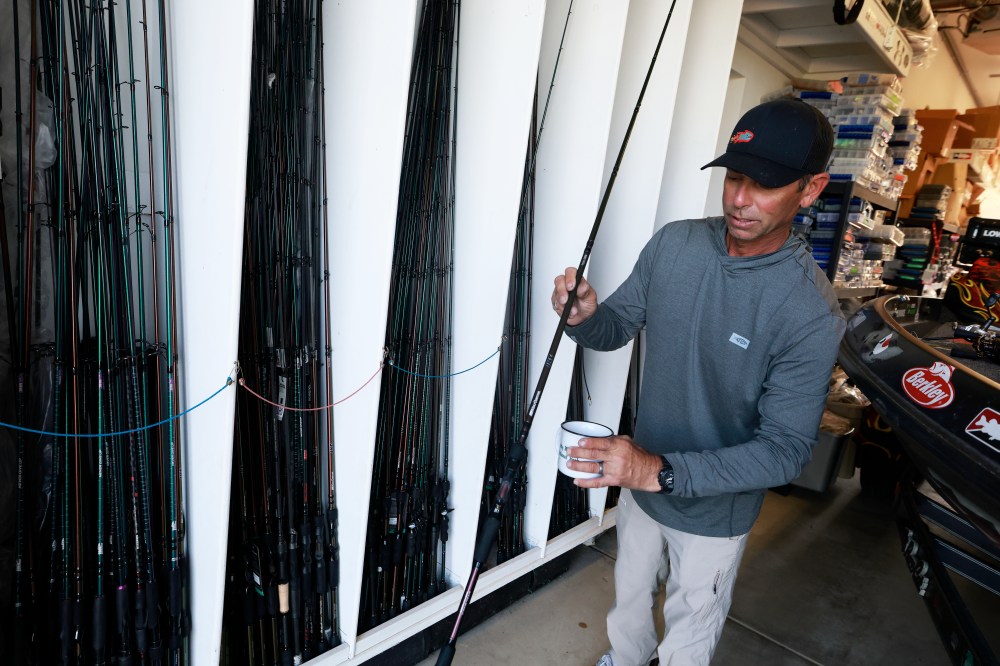
Each of these rod locker spaces houses different action, length and style Abu Garcia rods. I use a small bungee cord across the front of each locker to make sure the rods stay in nice and secure. 
All of the rods in my locker are Abu Garcia, and many of them are the Ike Series rods. I separate these rods by length and action, and I keep all of the spinning and casting separated into different lockers.
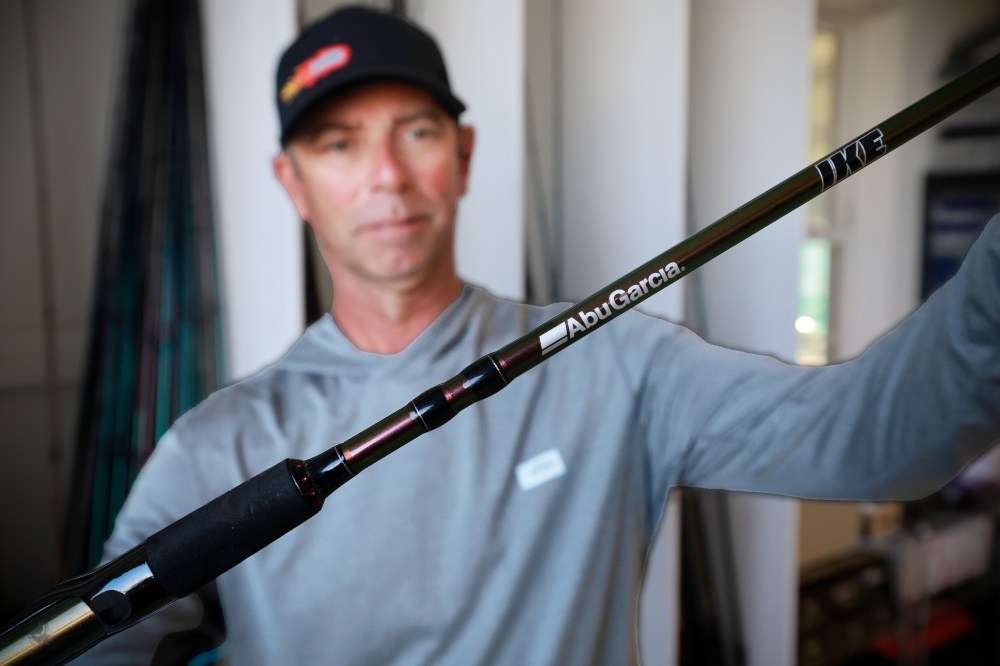
I have a mix of Ike Series 1.0, 2.0 and the most recent edition Abu Garcia Ike Series 3.0 rods. The Ike rods are light, sensitive and strong and are very recognizable by the cool flip flop chameleon paint job on each rod.
The Finesse Ike Series rods are all spinning rods, and you can identify them by the purple dot and accents on the rod.
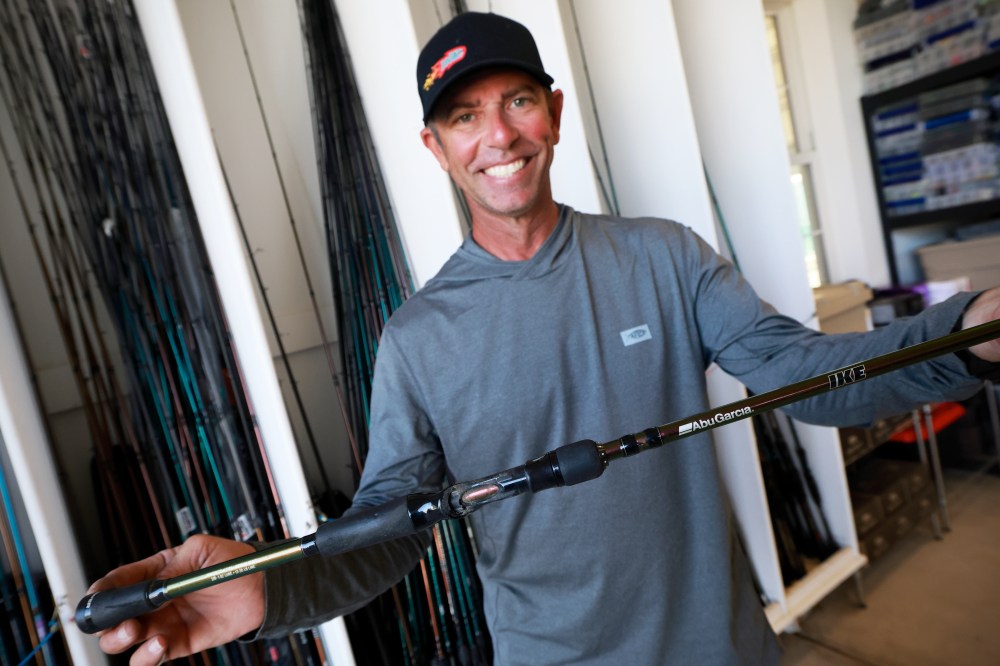
The Delay and Power casting rods also have different colors on the rod to help you identify them. This one I’m holding is a Power series and has silver accents and dots on the rod. The Delay series has green accents and dots and is a composite rod that mixes graphite and glass to give you a very forgiving parabolic rod prefect for crankbaits, topwaters, jerkbaits and lipless or anything with treble hooks.
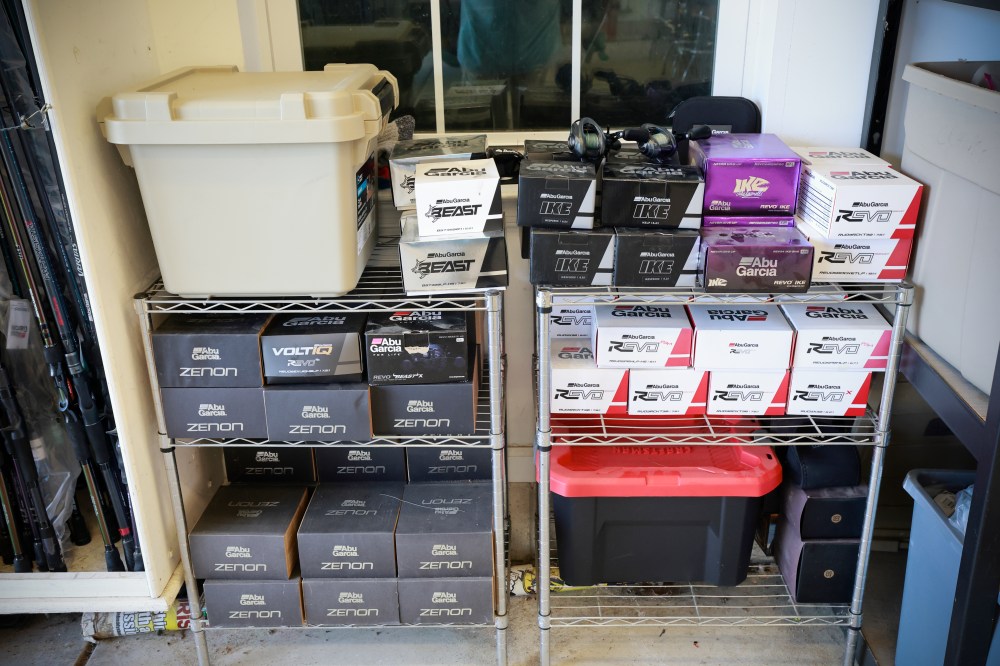
The next area in this part of the Shop located directly next to my rod lockers is my reel station. This “cart of reels” is in the perfect spot to pair with a rod or when I need to grab some spares or swap out before a tournament. 
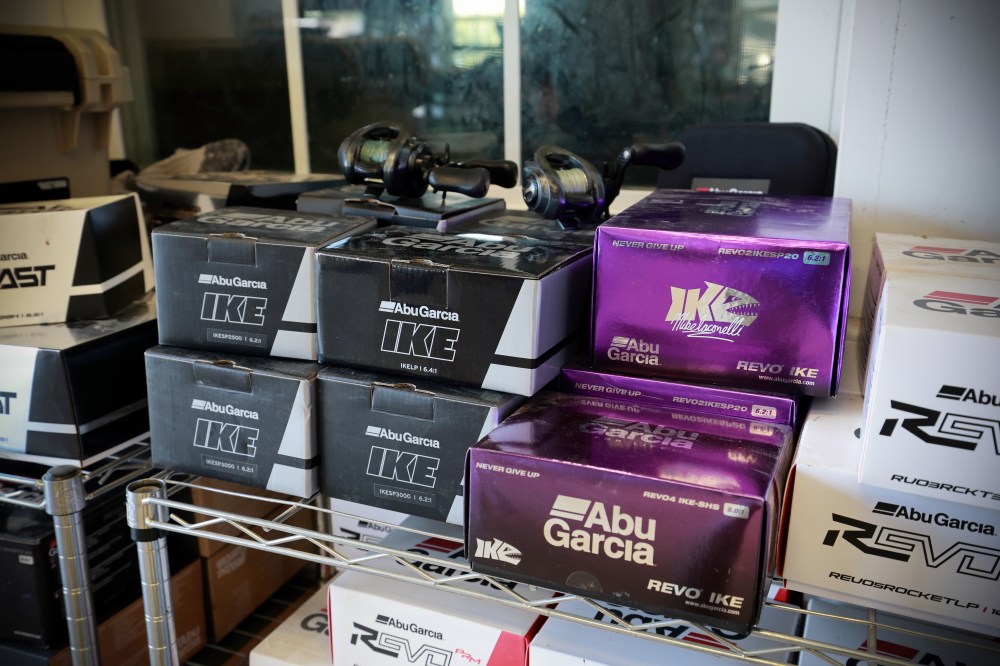
This area holds all of my Abu Garcia reels including my Ike Series spinning and casting reels.
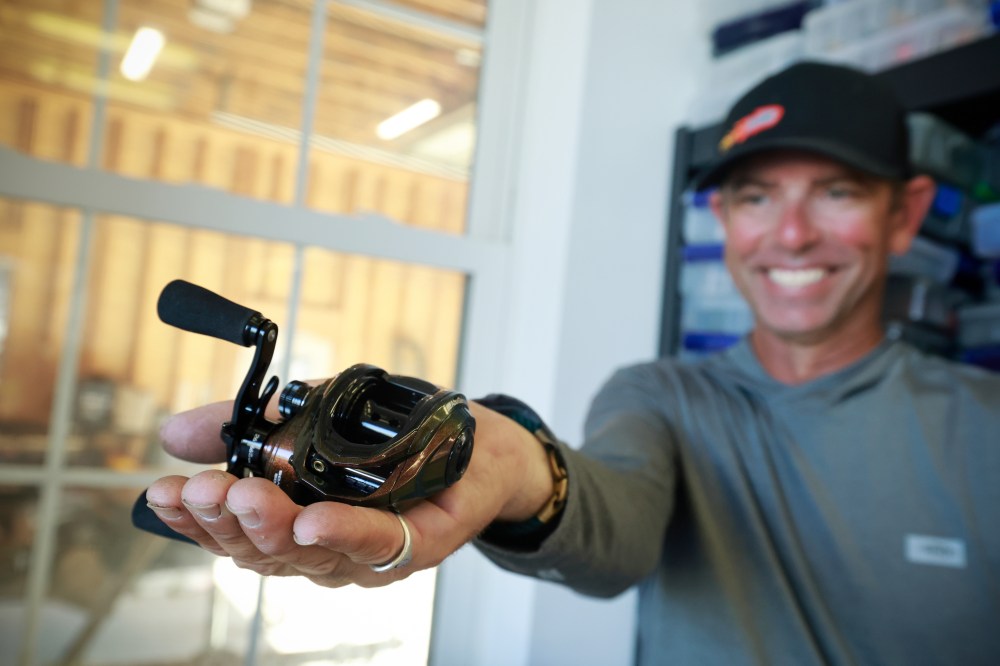
The Abu Garcia Ike Series 3.0 baitcasters are super light, low-profile reels. They come in two different gear ratios and are available in both left- and right-hand retrieves. They also have nine ball bearings, an auditable drag clicker and the same awesome looking flip flop paint finish that the Ike rods have.
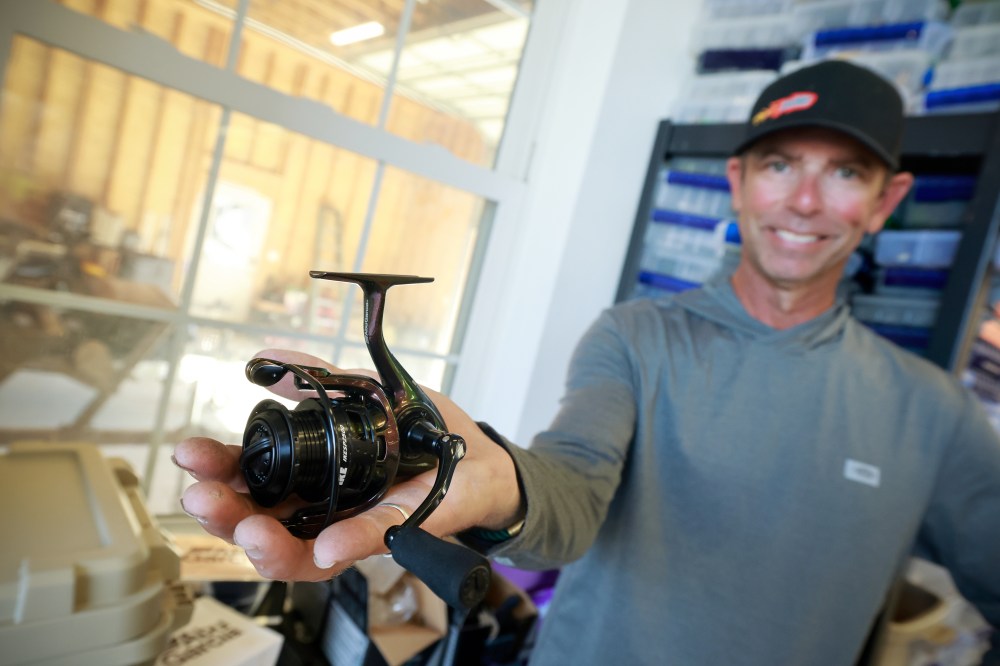
The Abu Garcia Ike Series 3.0 spinning reels come in two sizes with a ton of great features. Super light frame, nine ball bearings, fast retrieve and even a custom drop shot/bait keeper on the reel.
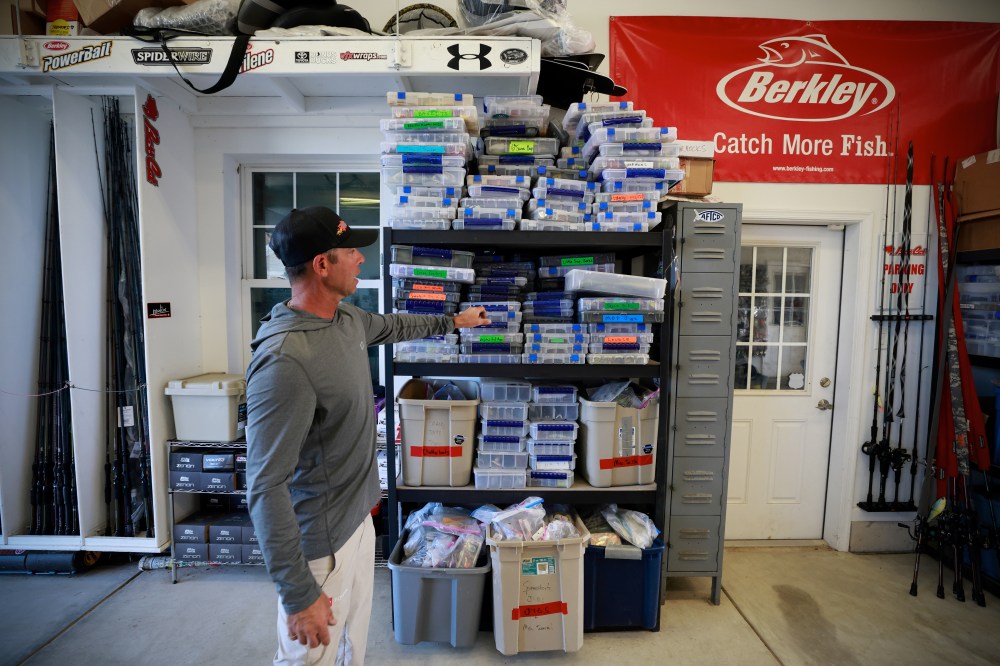
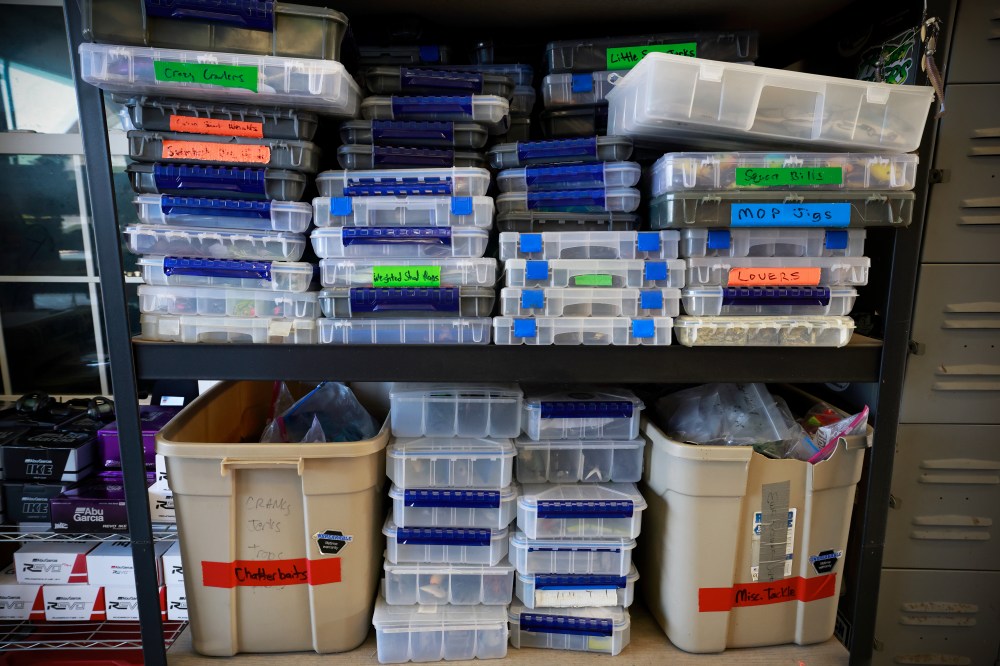
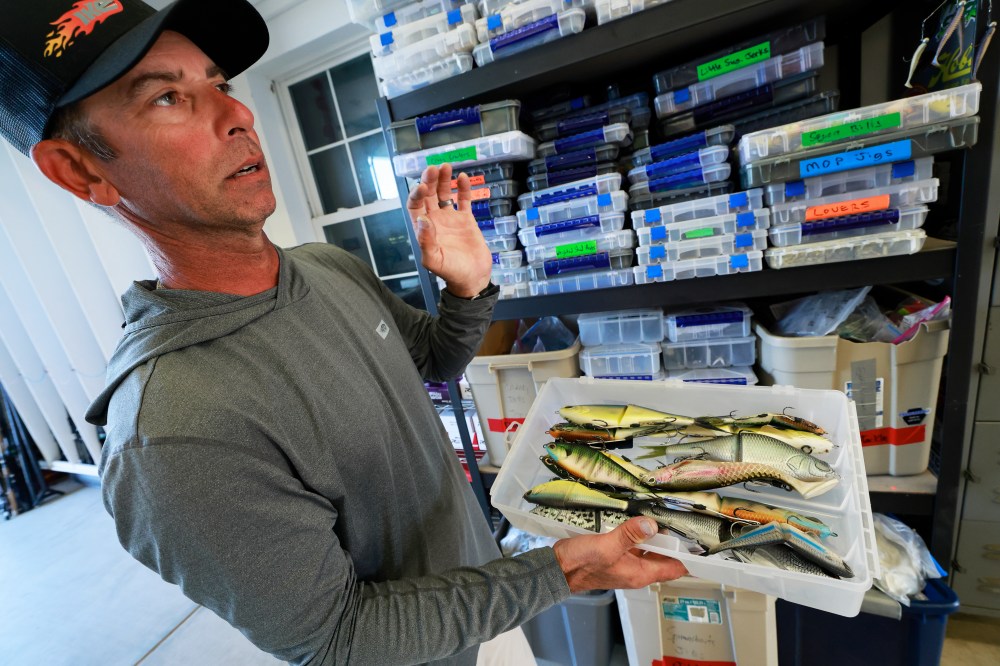
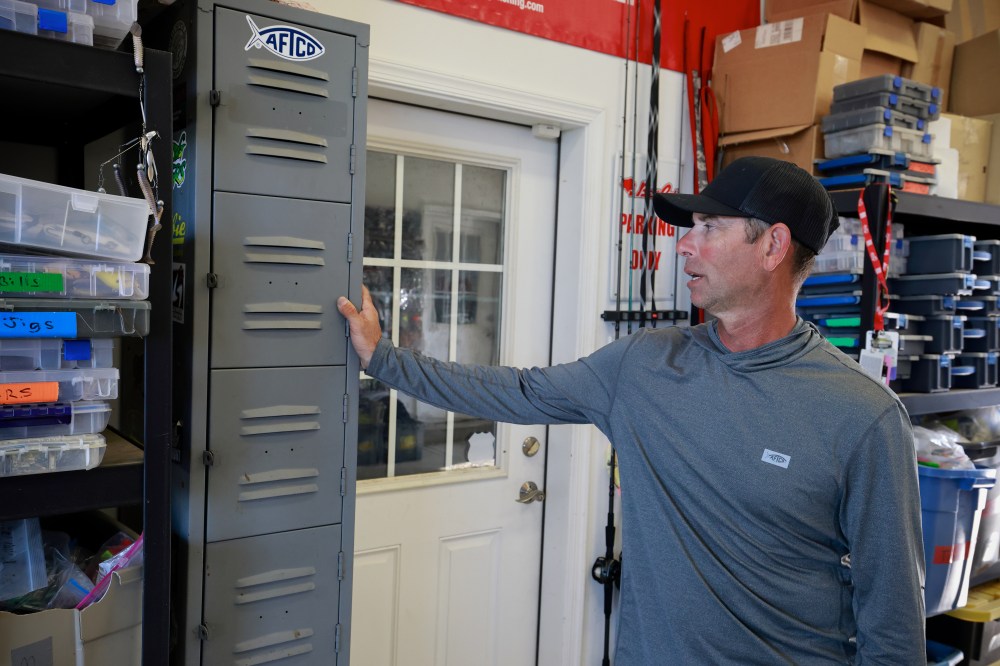
Directly next to my reel station, you will find a shelving unit and old metal locker. This shelving unit is used for all of the baits and lures I’m using on a more regular basis. Its position in the shop is in a perfect spot for grabbing and trading out boxes directly from my boat and truck to this shelving unit.
You’ll find a little bit of everything on this shelf, from ChatterBaits, to hard baits, to spoons and swimbaits as well.
Speaking of swimbaits, I’ve gotten into the habit of always having some Berkley Chop Block soft glidebaits both in my boat and spares on my shelf. The Chop Block has an amazing S glide chopping motion on the retrieve. And because it’s soft, it’s a more silent style glide, and it totally compresses in a fish’s mouth when the bass inhale it.
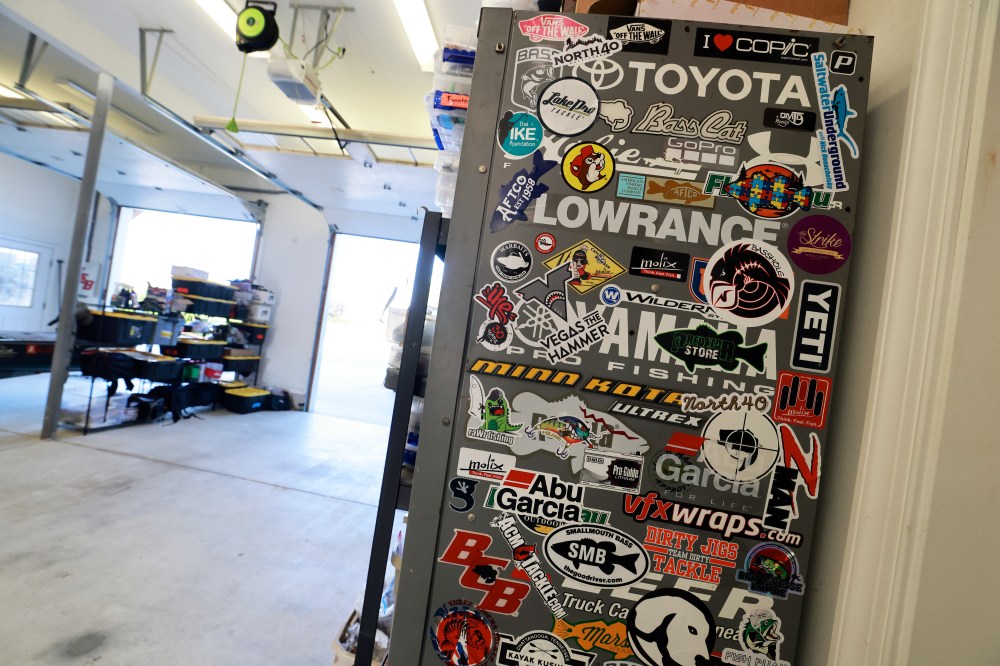
The old school metal locker is something I’ve had since I was a kid. In about the eighth grade, my friend Brian and I trashed pick two of these out in front of a warehouse that was going out of business. Since then, it’s become a great storage area for more tackle.
I’ve even decorated the side of the locker with cool sponsor and fishing stickers I’ve collected over the years.
To the right of the locker is a door out to the Boat Shed (more on that later) and my next series of storage units.
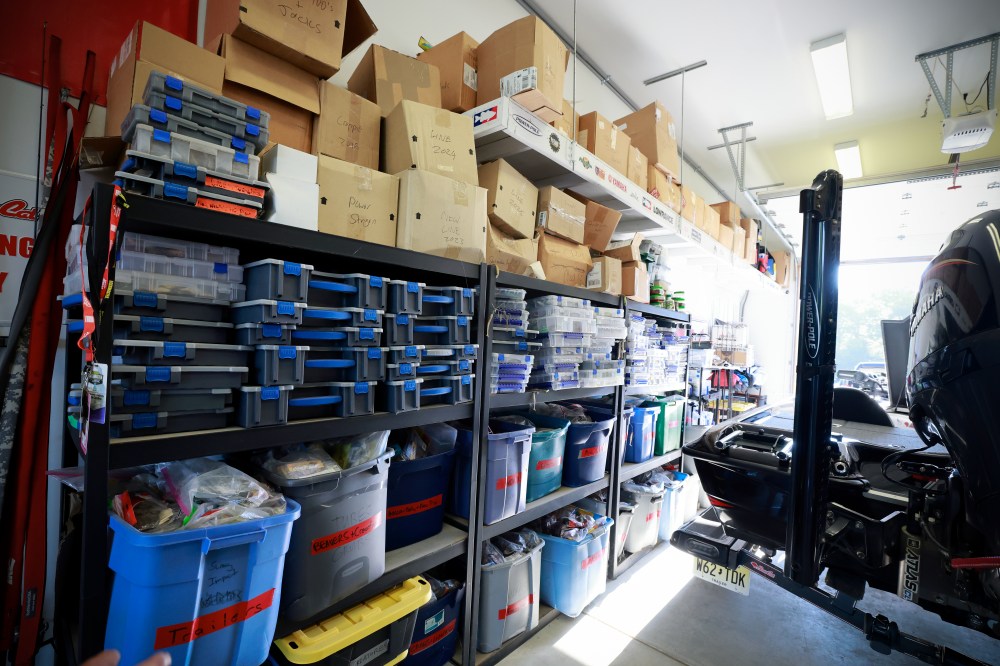
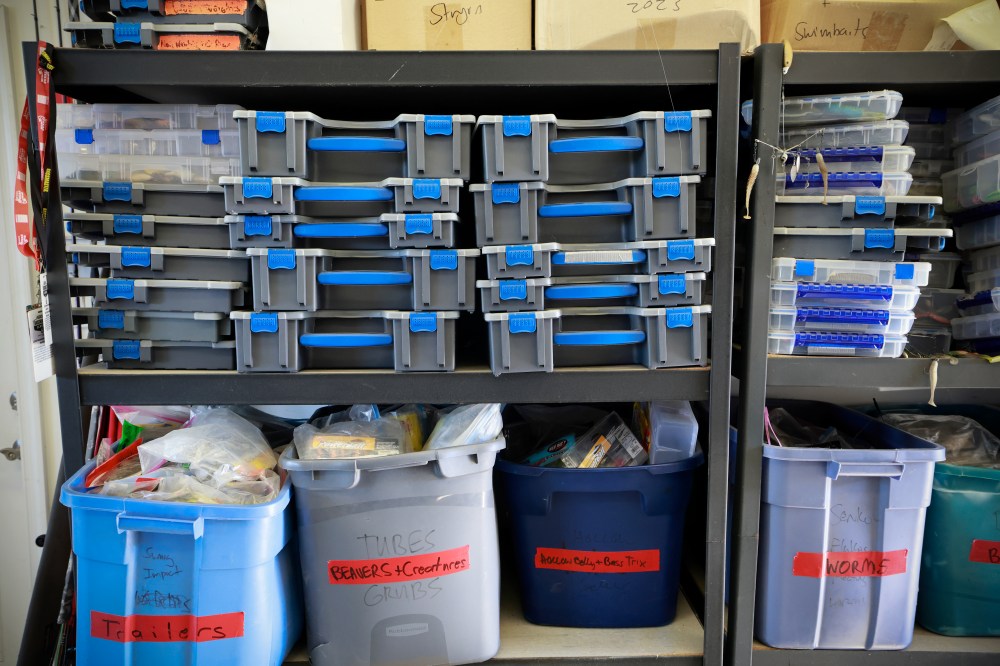
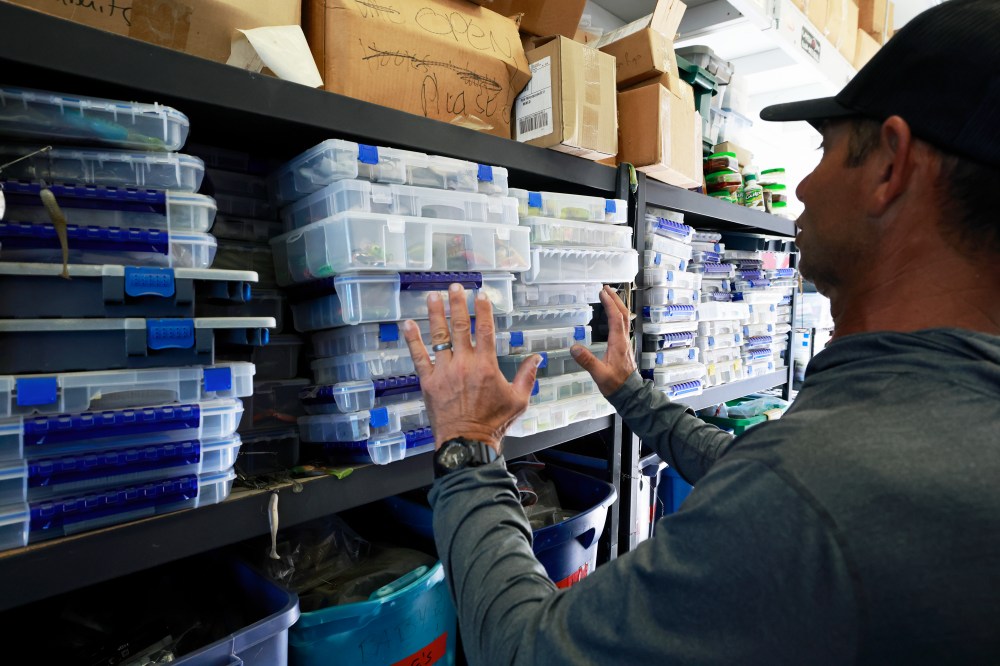
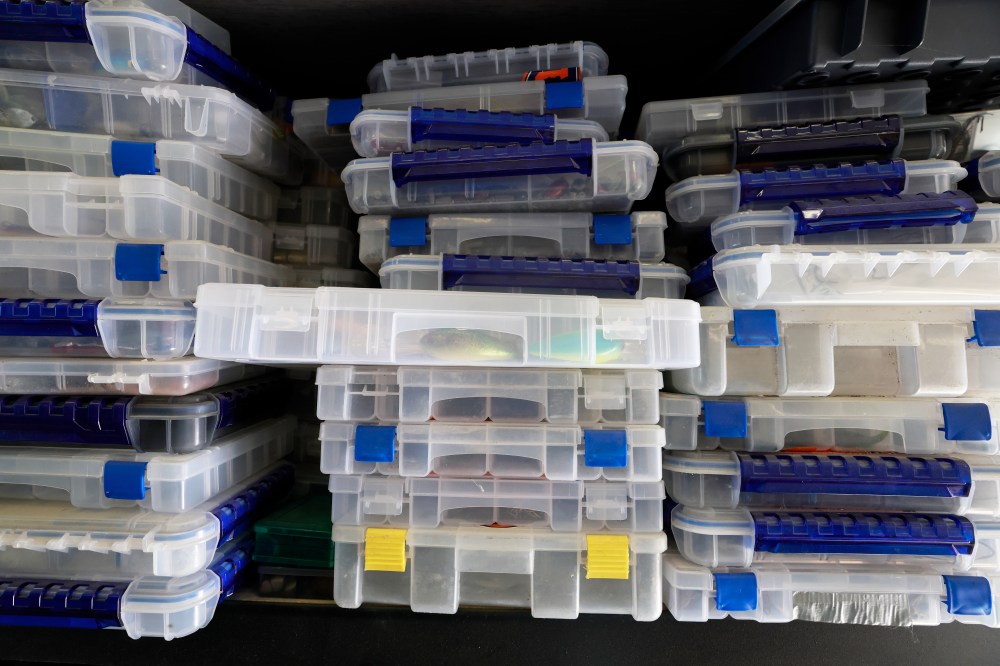
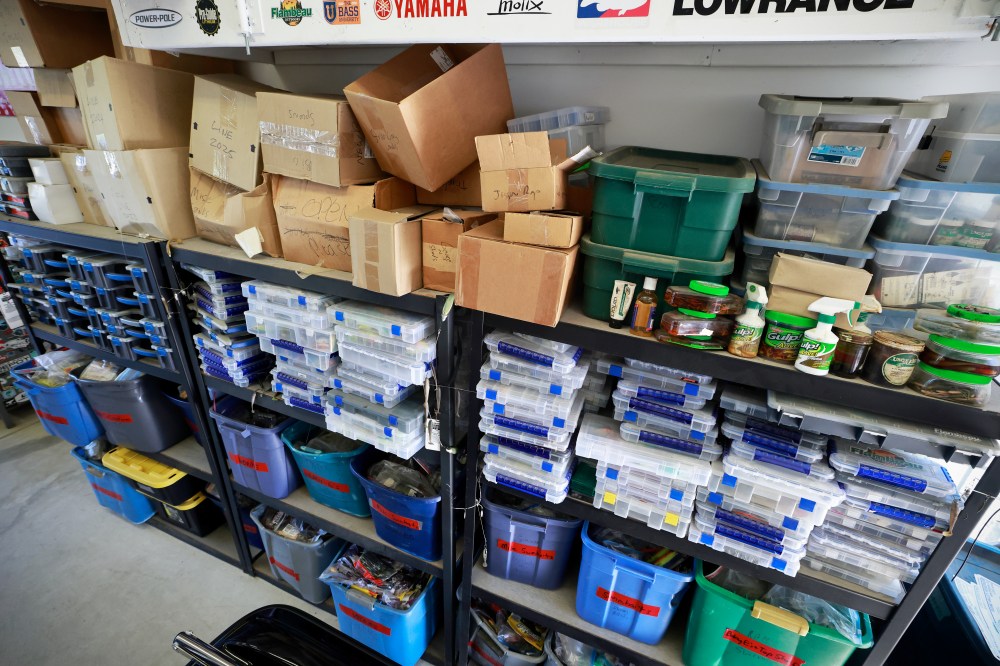
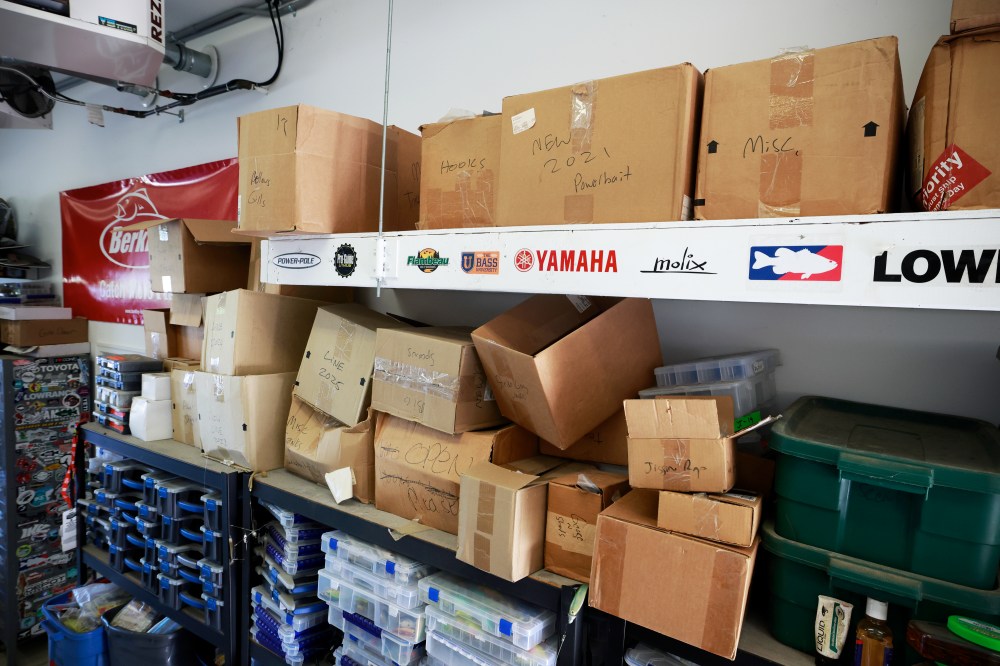
On these next run of storage units on the left wall, I keep some of my older fishing tackle stored in both traditional boxes and storage tubs below.
Many of these baits are special “old school” lures I have collected over the years. I’ve always had a hard time letting go of old lures especially hard bait style lures. I guess you can call me a fishing lure hoarder.
Each lure in this collection, even the old rusty ones, have a story connected to it. A fish lost, a big fish caught, a special fishing destination and new friends are all tied to these lures.
I often come out to the Shop just to open up these boxes to sift through them and reminisce on my fishing experiences from the past.
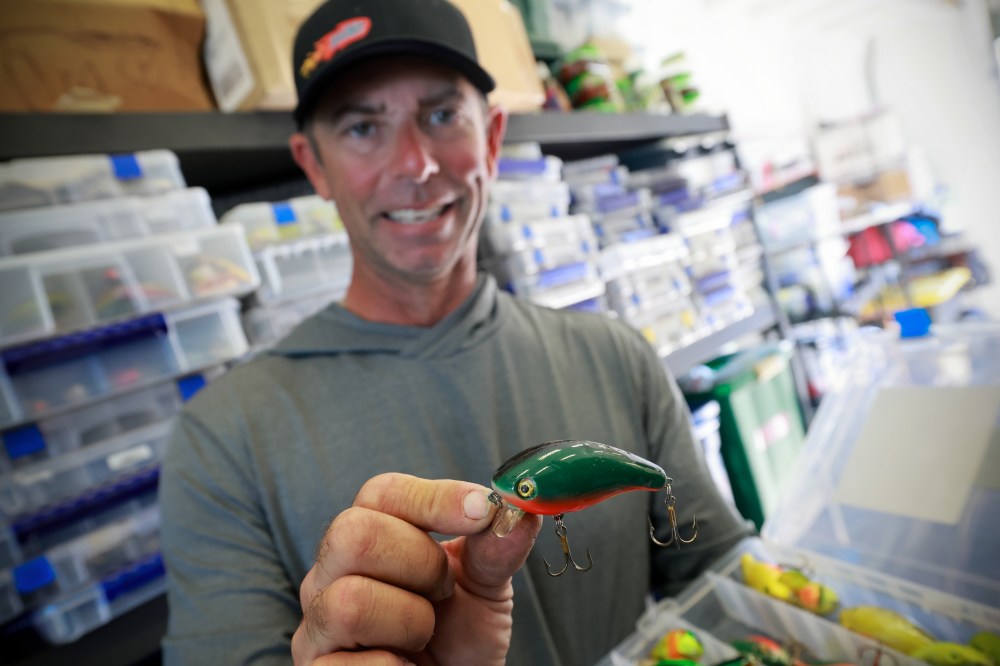
There are some really special lures in these boxes too. This one is a special color run of some Mann’s Baby 1 Minus lures that I had Mann’s special paint for me for the 2003 Bassmaster Classic. I went on to use this bait and some others in winning that event. I only had 12 of these made and this is one of about only eight of these lures I have left. I wonder what they’re worth? 
This is another very special lure. This is an old Poe’s 400 Series cedar wood crankbait that was given to me by David Fritts back when I fished as an amateur co-angler. I drew out with him in a B.A.S.S. Pro Am event on Lake Norman in North Carolina, and he gave this to me after he put on a crankbait clinic from the front of the boat. I got to watch the crankbait master himself boat bass after bass, and I even saw him catch a double. Fishing as a co-angler back then really helped me learn some special techniques from amazing pros and gave me a real-world look at the life of a professional bass angler.
In addition to old hard and soft baits, this storage area also holds some other old school stuff like scent, dyes, pork and some other older fishing terminal tackle.
Above all of the storage units, I also have drop-down celling shelves as well. These upper shelves are great place to store bulk sponsor products that I use on a regular basis when I’m restocking my gear.
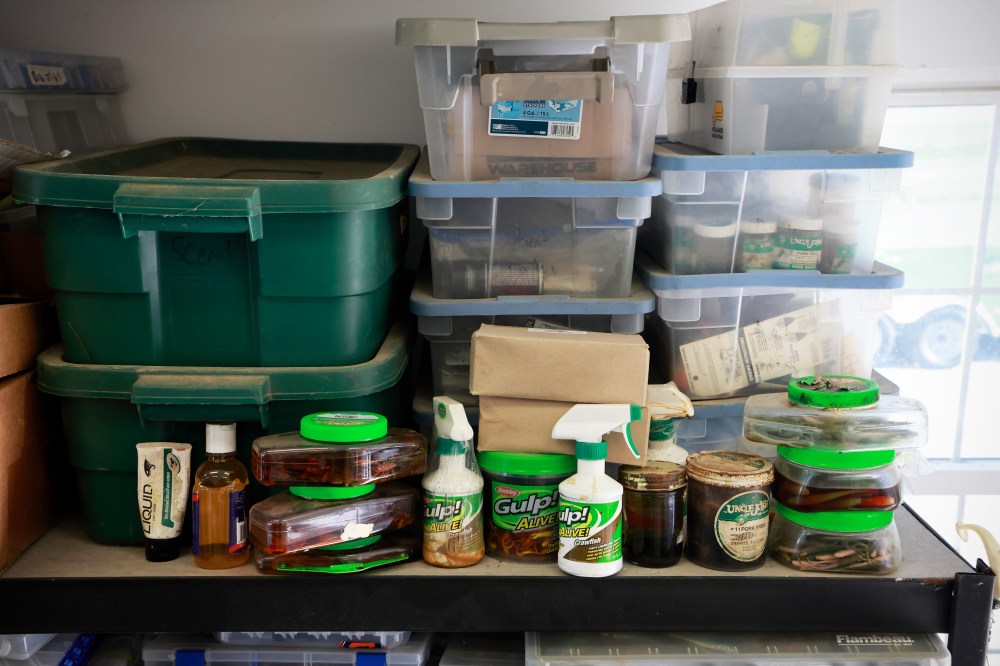
Here’s a more close-up view of some of the scents, dyes and pork that I have used in the past. Berkley Gulp and Uncle Josh pork rinds are two of my all-time favorites. Believe it or not, there was a time in the past when pork was what everyone used on the back of their skirted jigs. I’ve caught more than a few monster bass on them. But nowadays, especially with modern plastic and scent technology, more often than not I’m just using a Berkley Maxscent or PowerBait chunk or craw.
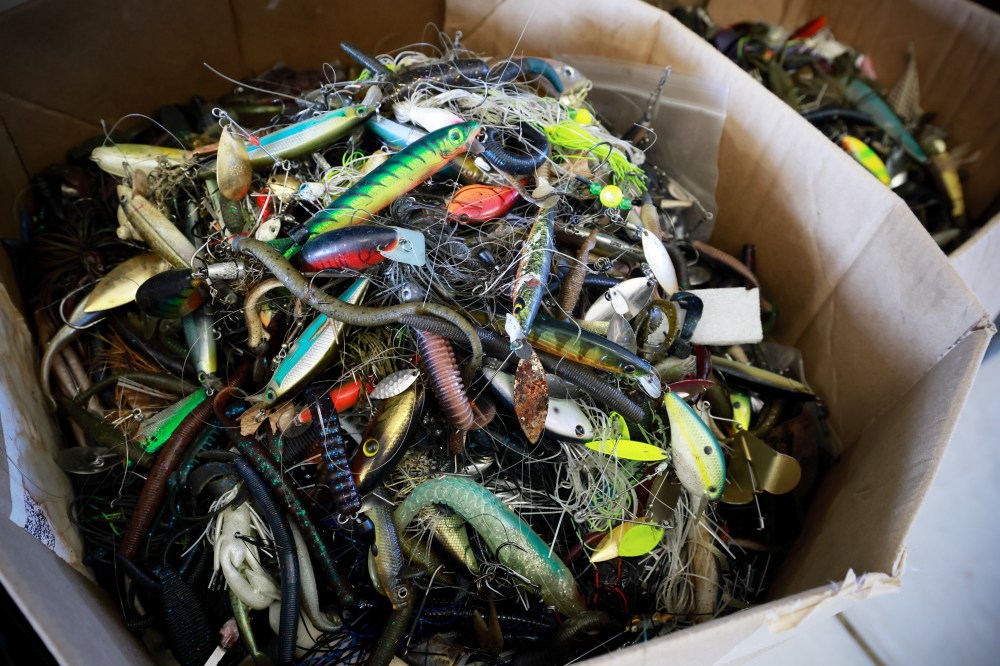
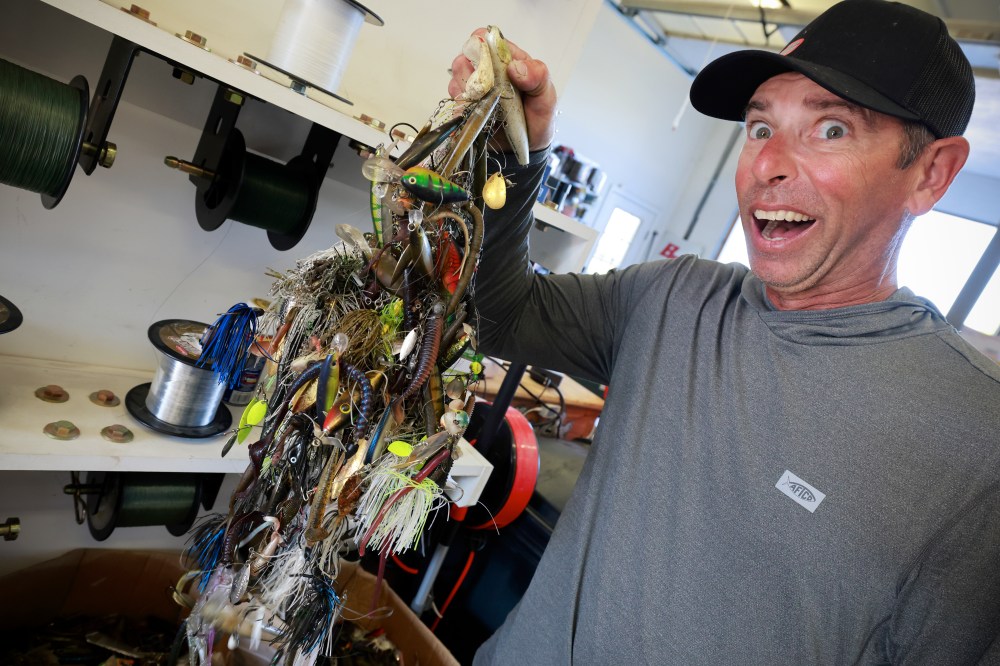
Also at the end of this area in the Shop, I have what has become a world famous “junk box!” This junk box is the resting place for broken, dirty, rusty or unwanted lures. I let this box accumulate lures until it reaches the top, then I usually go through the box salvaging whatever is still good and trashing or donating the rest.
Looks like it might be time for a clean out.
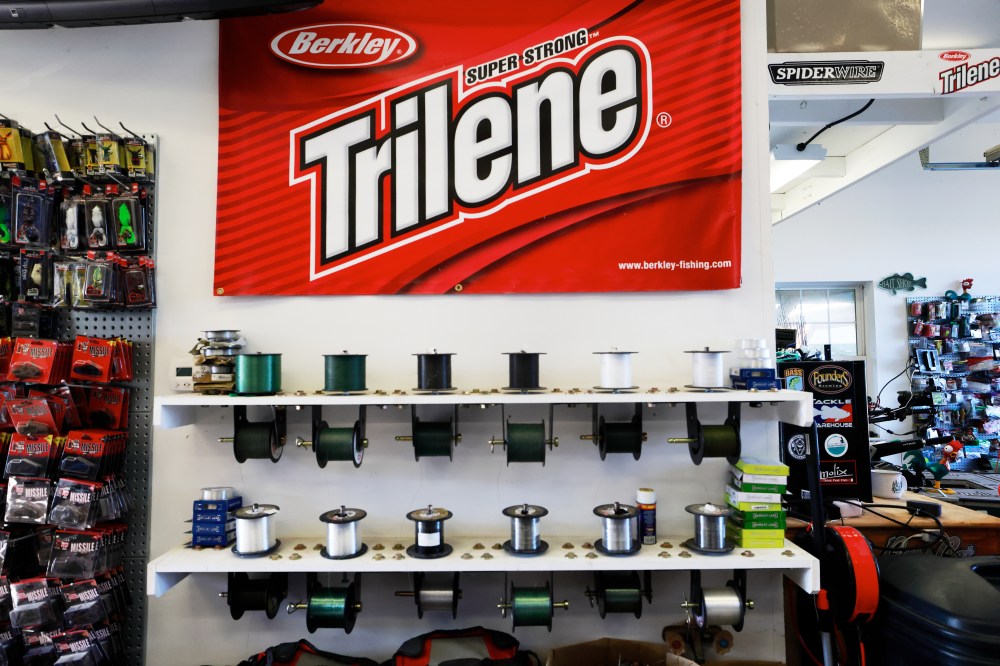
Across the Shop on the opposite wall from my storage units is one of the most-used areas in the entire space. On this wall I have built a custom line spooling station that allows me to keep all of my Abu rods and reels full of fresh Berkley line. I have the spools orientated in different positions depending on if I’m spooling a spinning reel or a casting reel. I mainly use bulk spools, and I have everything from ultra light 6-pound Berkley 100% Flora carbon all the way up to super heavy 80-pound Berkley X9 braid. I always want to be prepared, and you never know what line you might need on your next fishing adventure.
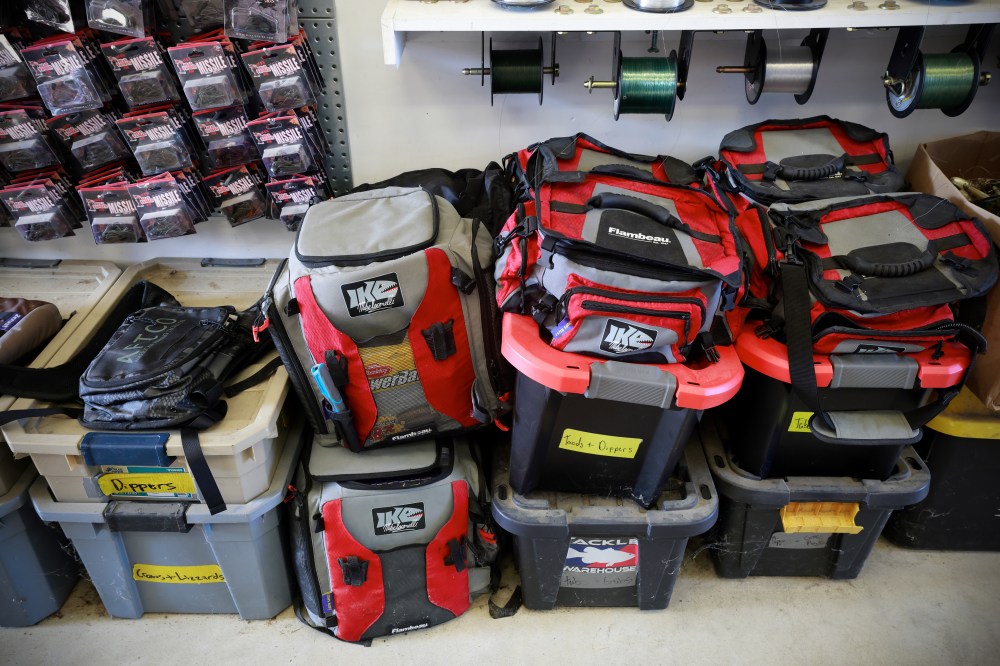
Below the line spoiling station and peg board, I have more boxes of lures and a bunch of travel fishing bags and backpacks.
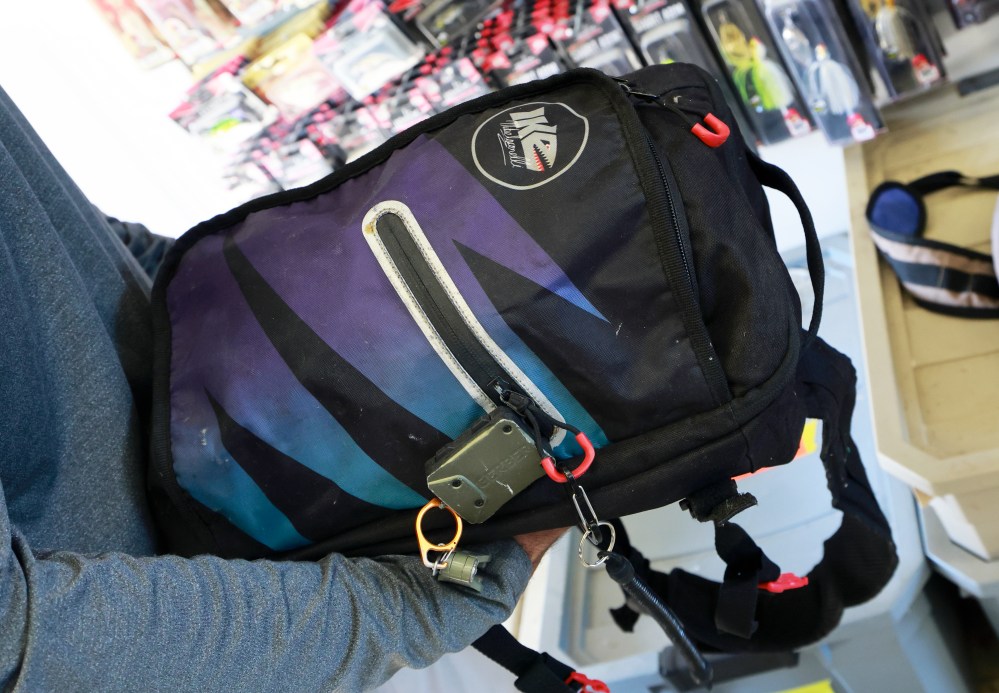
I was fortunate enough to have designed a few different “Ike Approved” bags and packs that help me store tackle and travel around the globe chasing fish.
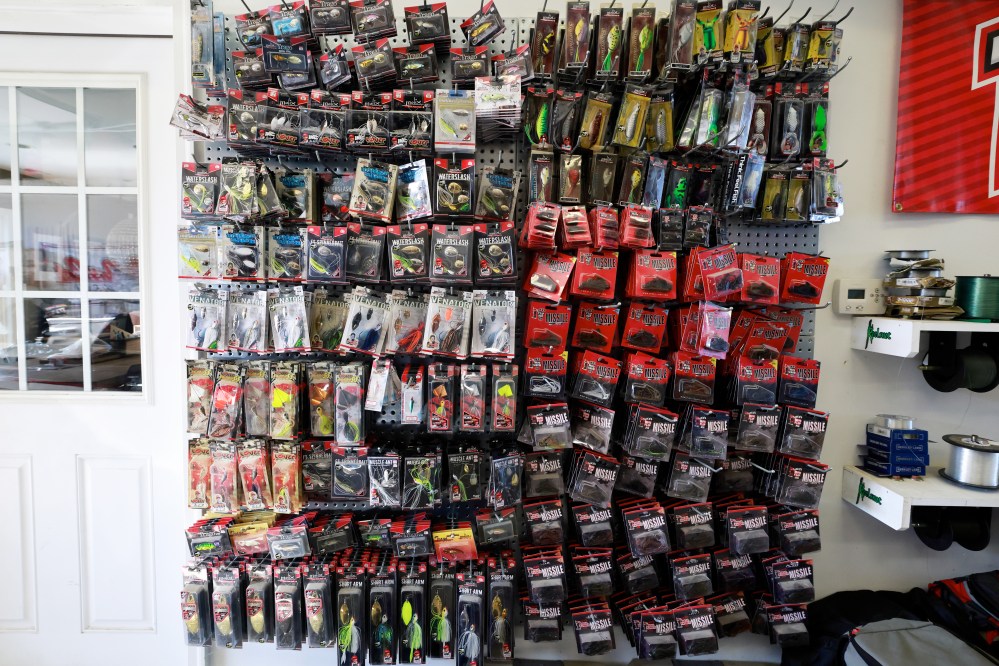
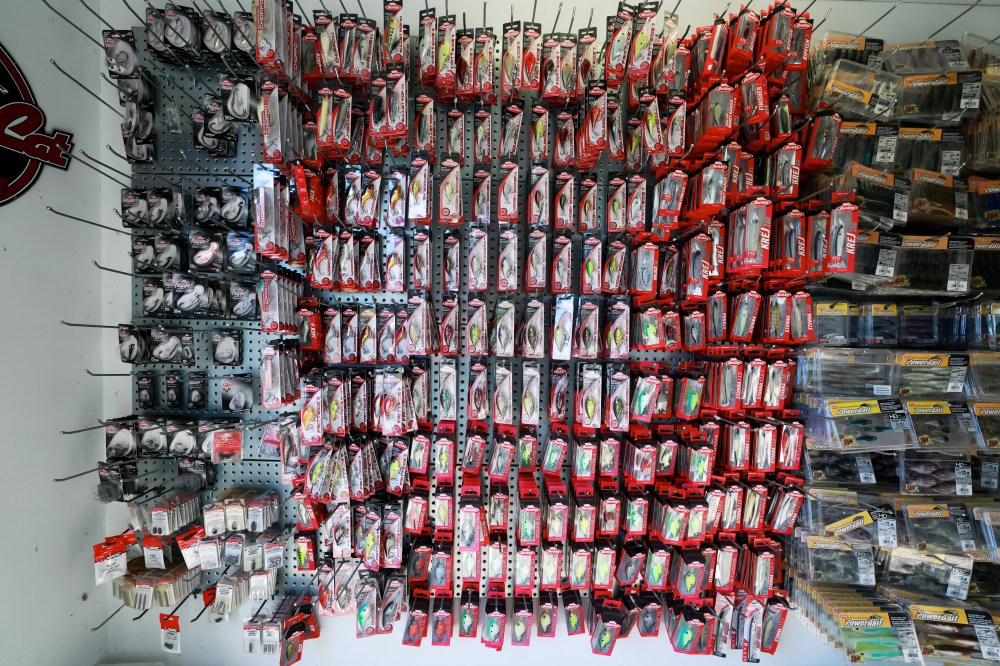
Now to my peg boards! On the remainder of the right side Shop walls, I have installed sheets of stainless Gorilla Board peg board. These peg boards are used to hang the lures that I use on a regular day-to-day basis. This grab-and-go peg board system makes restocking my truck and boat with lures super easy.
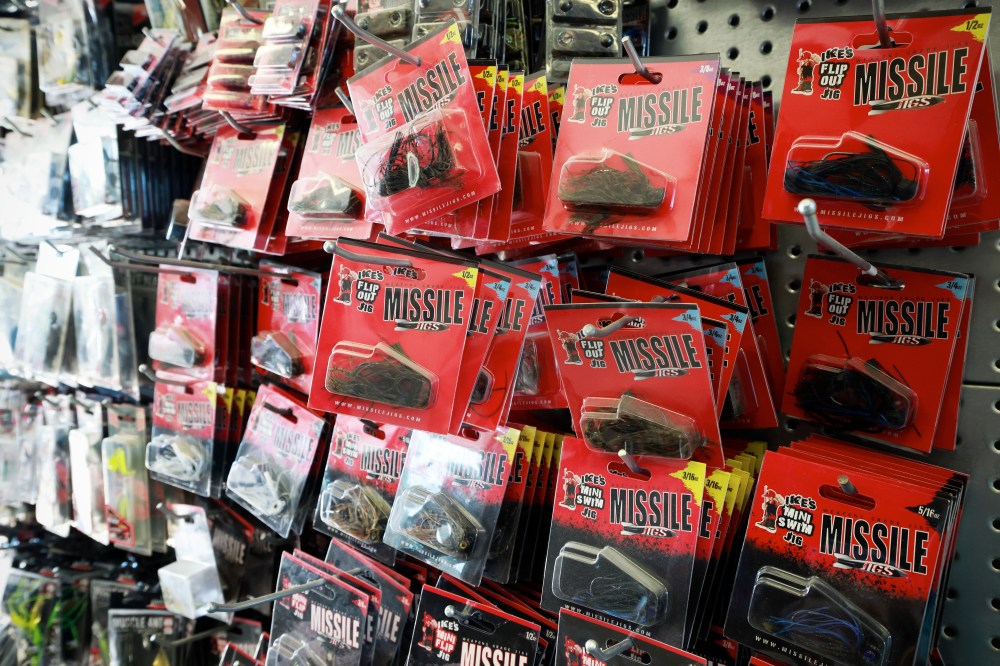
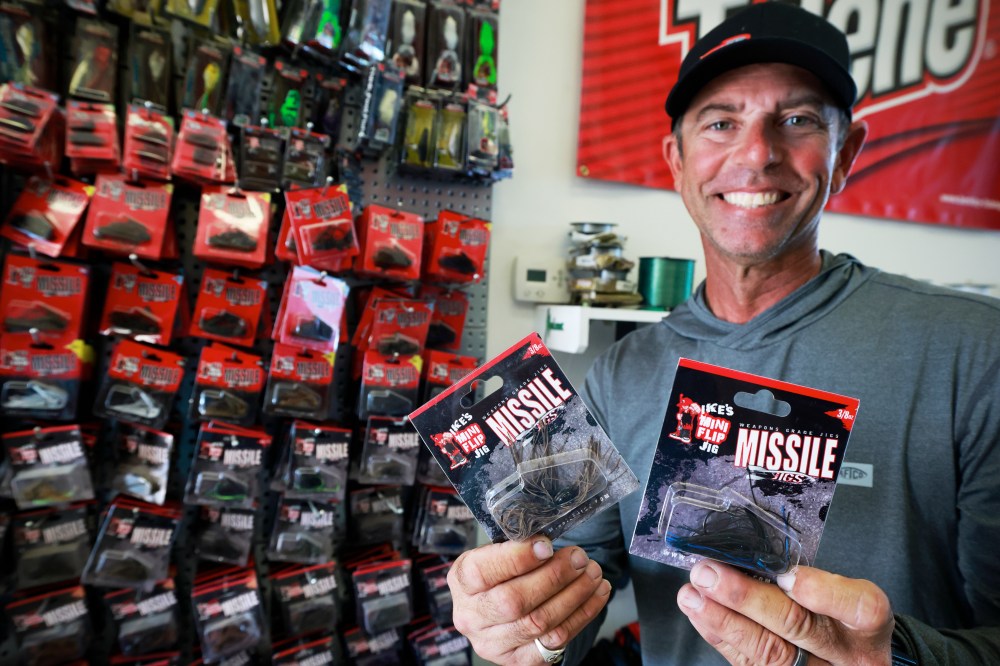
One of the first peg board sections you’ll see is my Missile Jigs wall. Jig fishing is for sure one of my most favorite ways to catch bass, and I always want to have a big selections of different jigs ready to go. You’ll find everything from downsized compact jigs like the Ike’s Mini Flip, the Micro Jig and the Micro Football HD. All the way up to standard size and oversized jigs like the Ike’s Flip Out, the Head Banger football jigs, the Mini Swim swim jigs, up to the huge oversized Missile Monster Jigs.
Without a doubt, the Missile Jigs Mini Flip is my all time favorite. I used this compact style jig to win the Bassmaster Elite Series event on my home fishery — the tidal Delaware River — back in 2014. And if I only had to pick two colors it would be green pumpkin and black and blue.
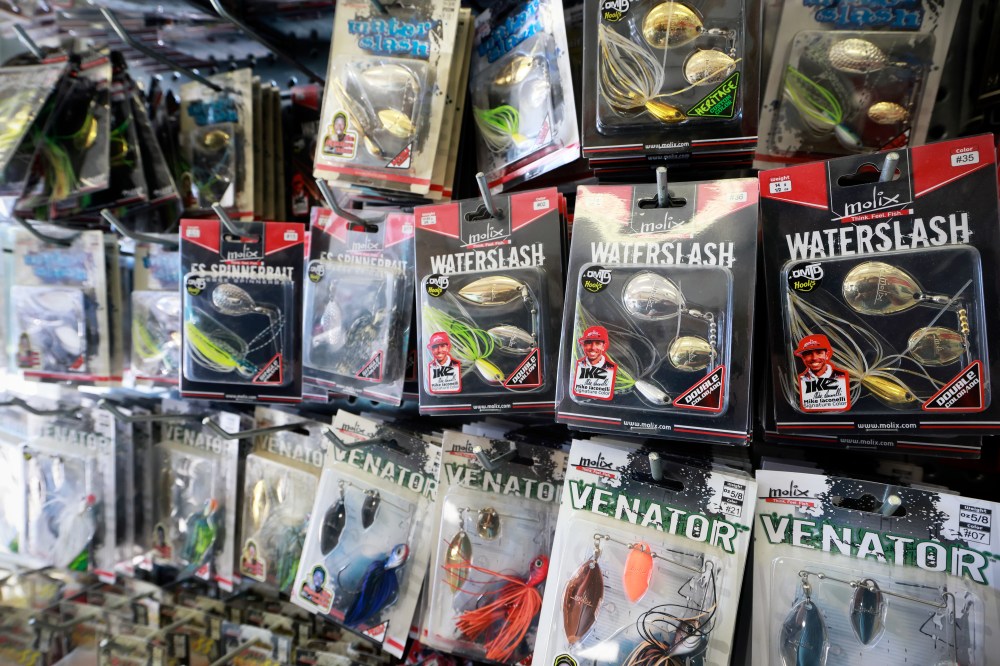
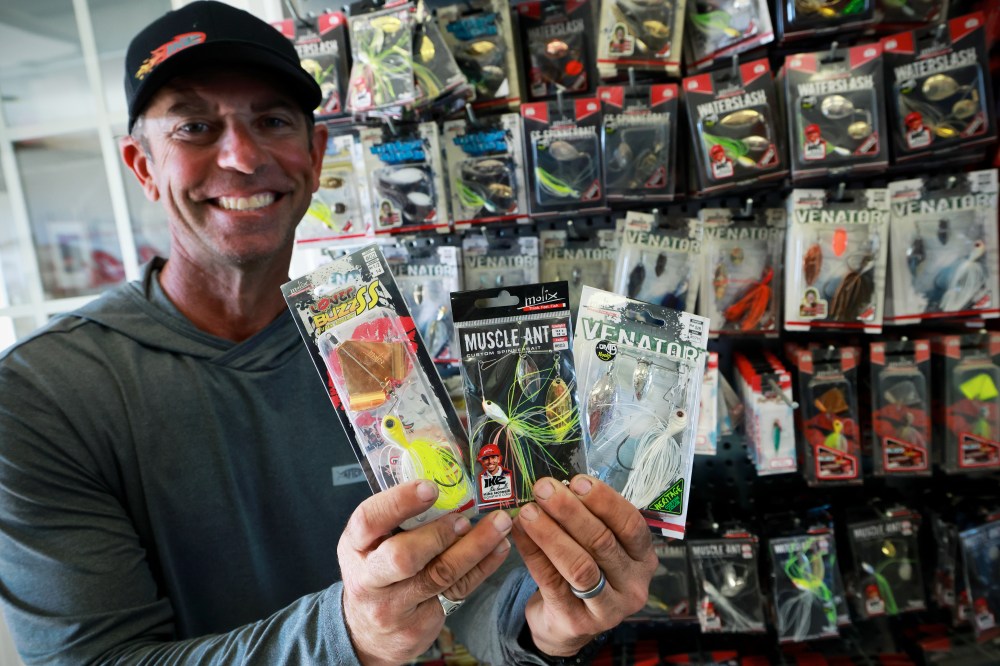
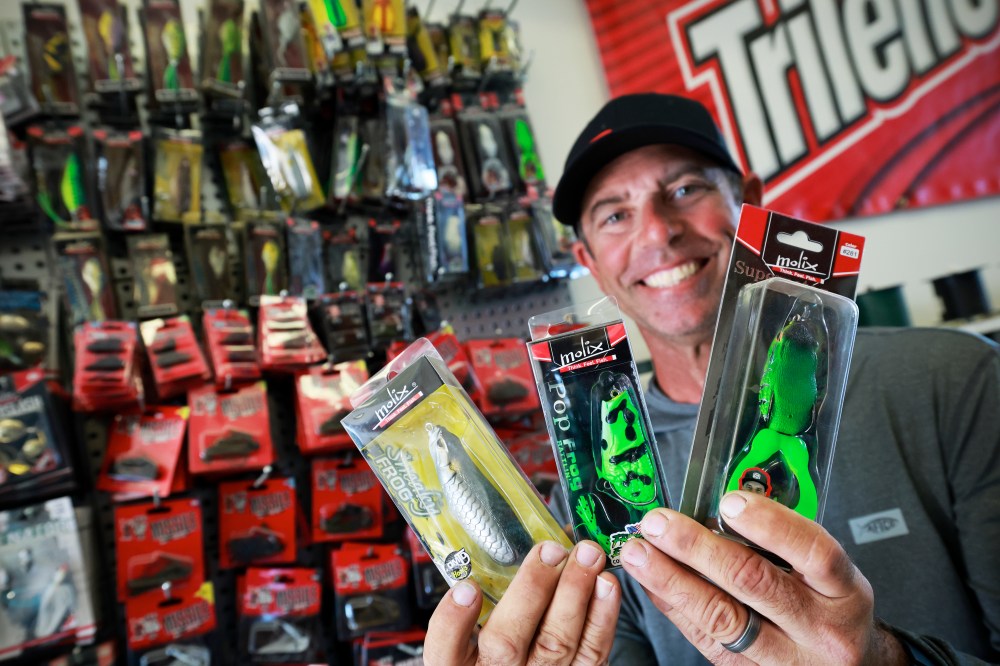
The next peg board section we come to is the Molix Lures section. This area holds my spinnerbaits, buzzbaits, blade baits/spoons and topwater hollow-body frogs. Molix is an Italian lure brand and I’ve been working with them for well over 20 years.
Three of my favorite Molix wire baits are the Lover Buzz SS Buzzbait, the Muscle Ant compact spinnerbait and the Molix Venator full size spinnerbait. Each of these three lures is a staple in my fishing arsenal, and I’ll never leave home without them.
Then over on the Molix frog section, I have a bunch of different style and color topwater hollow-body frogs. I love this style of fishing, and it’s probably one of the most fun ways to catch a bass. Three of my favorite frogs are the Sneaky Frog walking frog, the Molix rattling Pop Frog and the ultra unique Supernato buzzing frog.
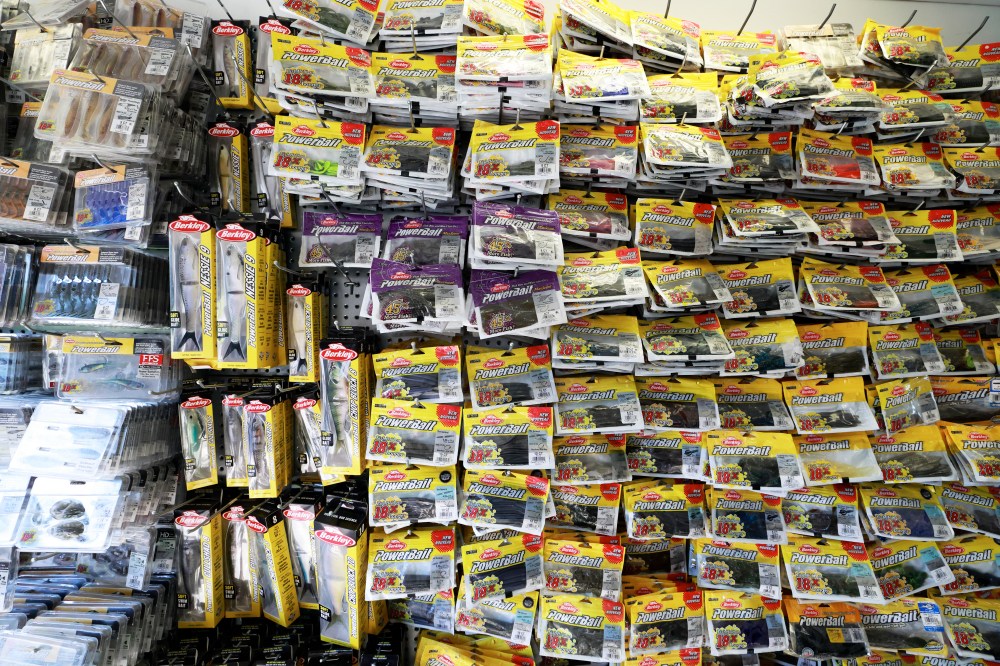
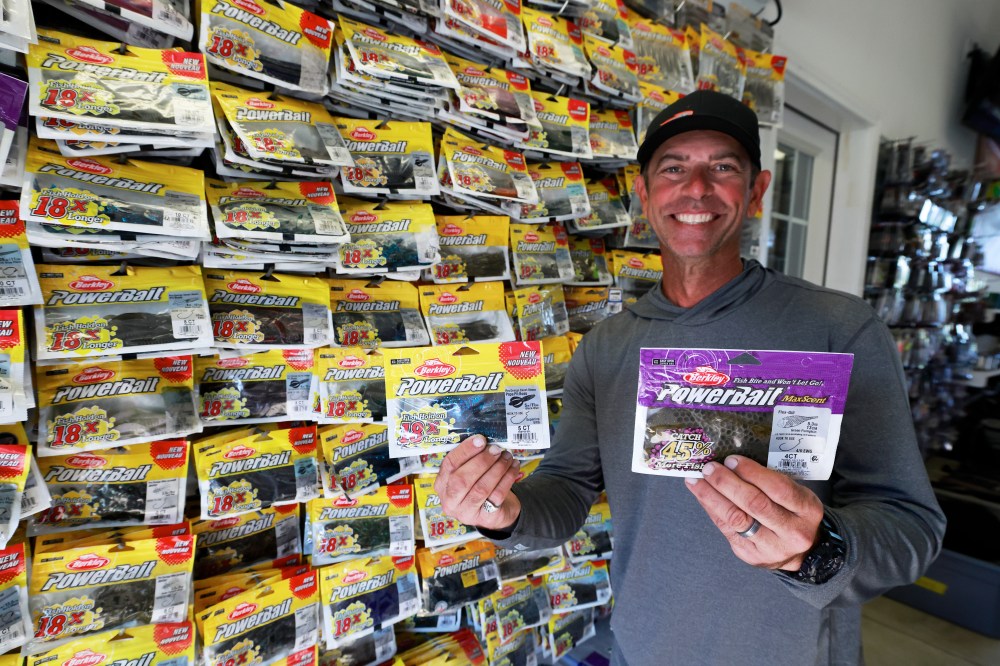
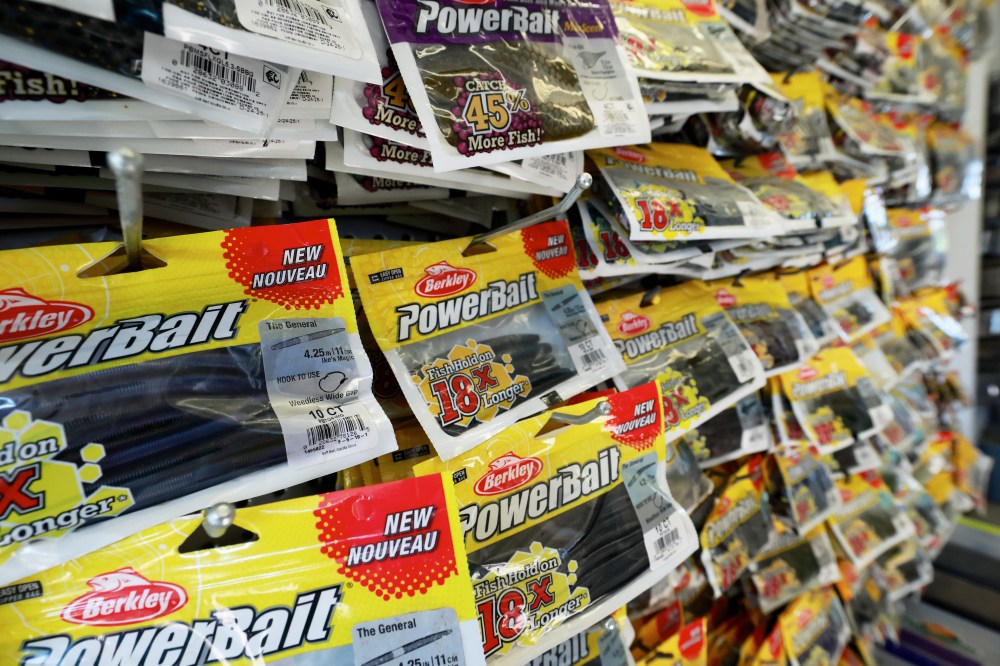
Moving on down the peg board walls, we come to a section I truly could not live without. This mega size peg board sections hold all of my Berkley soft plastics. I can honestly say that, day in and day out, I’ve caught more bass on Berkley soft plastics than any other lure category. You’ll find every shape, size and color plastic here on this wall, and I always keep this section fully stocked. 
Two of my favorite soft plastics represent something old and something new. The good old Berkley Powerbait Pitt Boss is one of my all time favorites. With its craw/creature shape and unique kicking action, I can use it for many different fishing applications from Texas rigging, to shaky heads, and even as a trailer for a jig. And for something new, the recently launched Berkley Maxscent Flux Gill is definitely one of my new favorites. The Flux Gill has a “bluegill/panfish” profile and has holes punched out across the body of the bait. The flat profile and holes allow this lure to glide through the water column, produce some bubbles and the holes makes it easier to get a hook in the fish’s mouth.
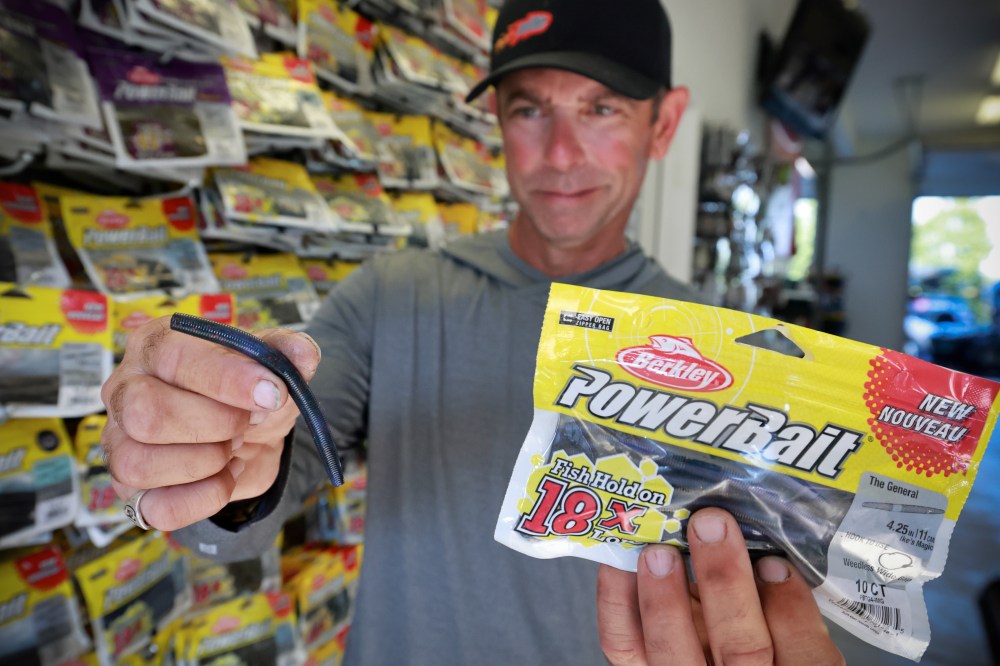
And of course there are tons of Berkley worms and soft stick baits. I stock these shapes in sizes from 4 inches all the way up to monster 12-inch Power worms.
I’ve even got a chance to design some custom “Ike Approved” colors in these baits as well. One of my favorites custom Ike colors is called Ike’s Magic. The color is a laminate mix of black and dark blue with a touch of red metal flake. This color has helped me catch fish all over the world.
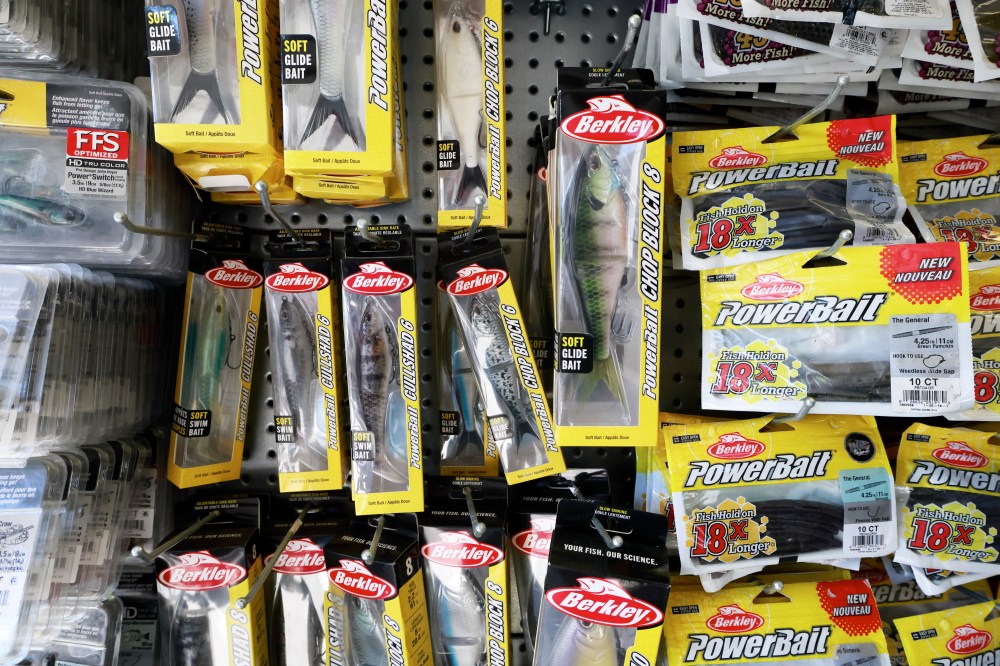
Before this peg board section turns into my Berkley hard baits and terminal tackle, I have a small section sandwiched in between that holds my favorite Berkley soft swimbaits. Baits like the Berkley Cull Shad, the Nessie and the Chop Block have become a big player for me whenever I’m looking for a big bass bite. And they work for other species in fresh and saltwater too.
Last but definitely not least is the Berkley hard bait and terminal tackle section. Besides flipping a jig, throwing hard baits like topwaters, jerkbaits, lipless baits and crankbaits is one of my favorite ways to catch bass.
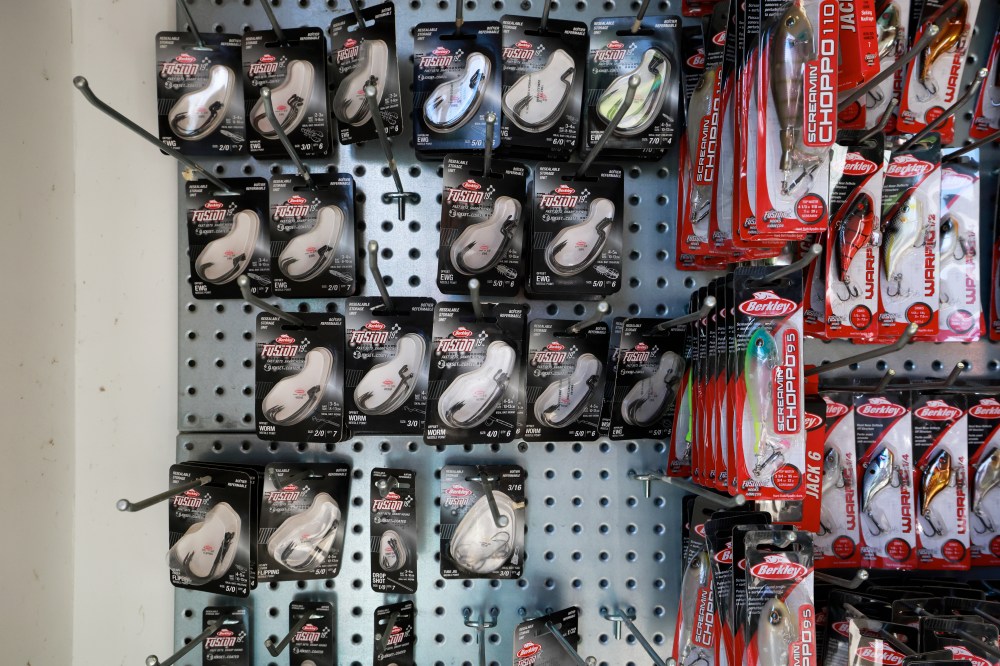
On the left side I keep all of my Berkley Fusion hooks and terminal tackle. The Fusion Hooks are super sharp, and they are a key component when rigging up my soft plastics. These hooks get lost more than any other category. Looks like I’m running low and I’ll have to restock them this offseason.
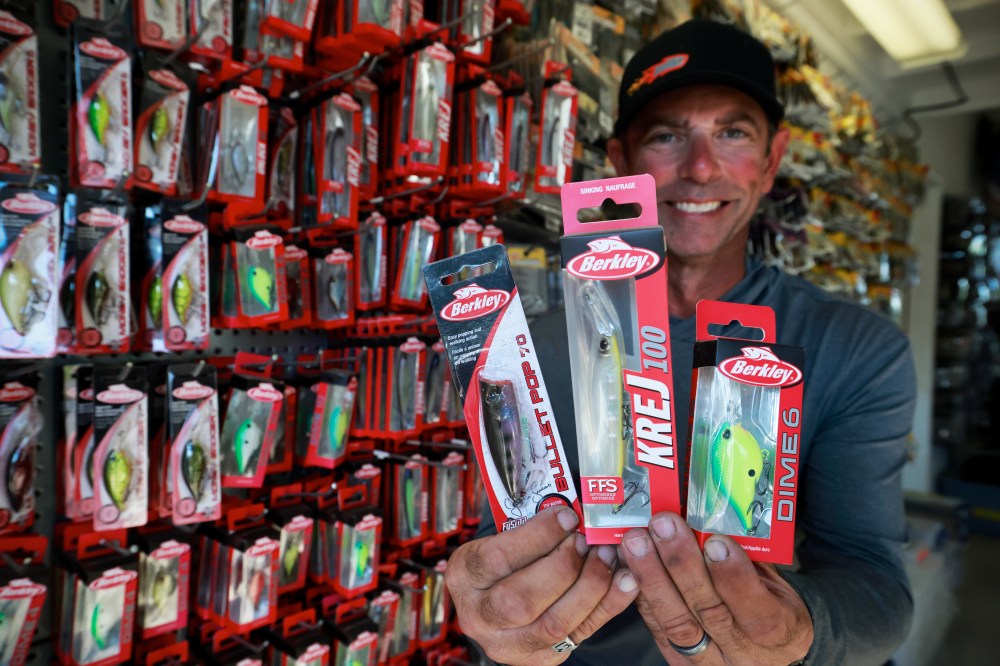
There’s just something so special about catching them on a hard bait. You can fish them top to bottom in the water column, and here are my three best for hitting each zone. For the top zone, a Berkley Bullet Pop is hard to beat. It casts far like a bullet and has a very unique popping splashing sound. For below the surface, the Berkley Krej has become one of my new favorites. You can fish this lure in many different ways, and it’s perfect for drawling up those tricky middle-of-the-water-column bass. And finally for the lowest zone, nothing beats a crankbait hitting and deflecting off the bottom. The Berkley Dime series has cranks that run from 4 feet all the way down to 15 feet plus. I always try and pick a crankbait that runs as deep or a bit deeper than the bottom depth I’m fishing.
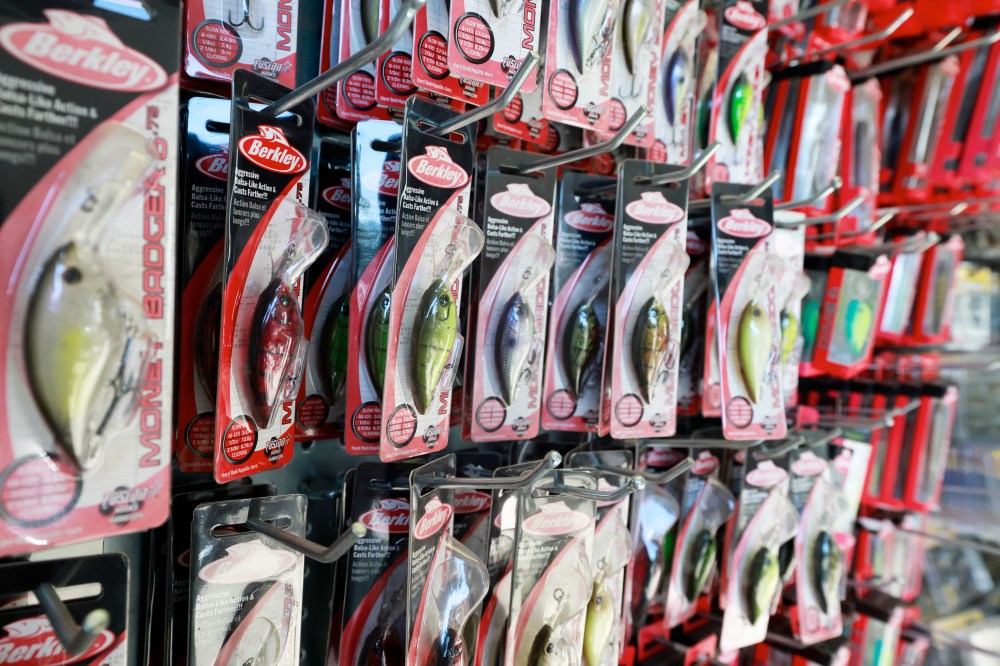
Speaking of crankbaits, I always make sure I have the peg board filled up with different cranks that have different type of wobble. The Berkley Money Badger is a wider running wobble, the Berkley Dine has a more in between wobble and the Berkley Frittside has a super tight wobble. 
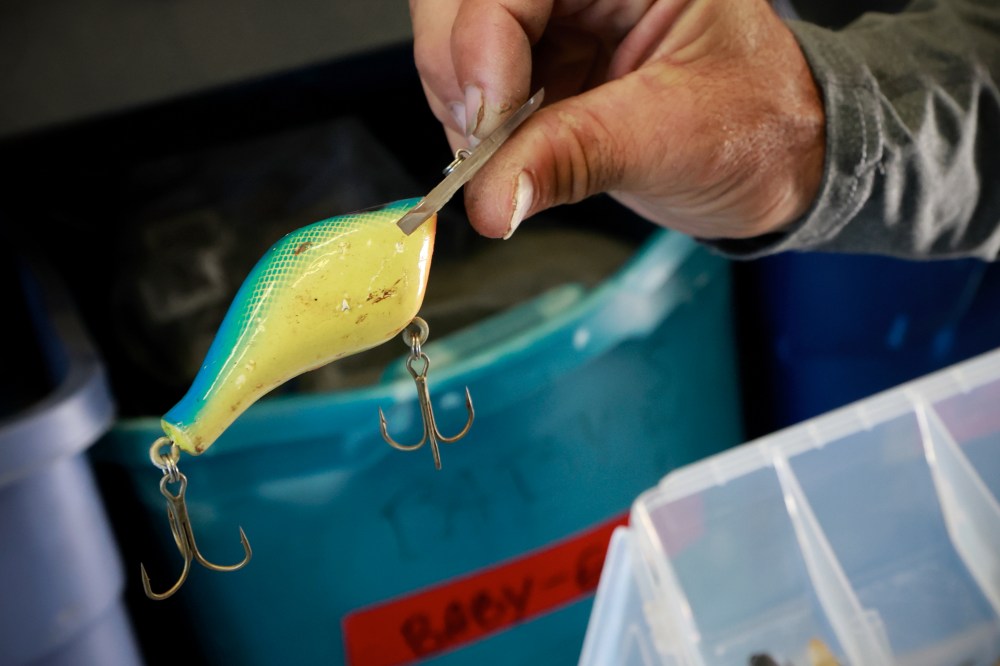
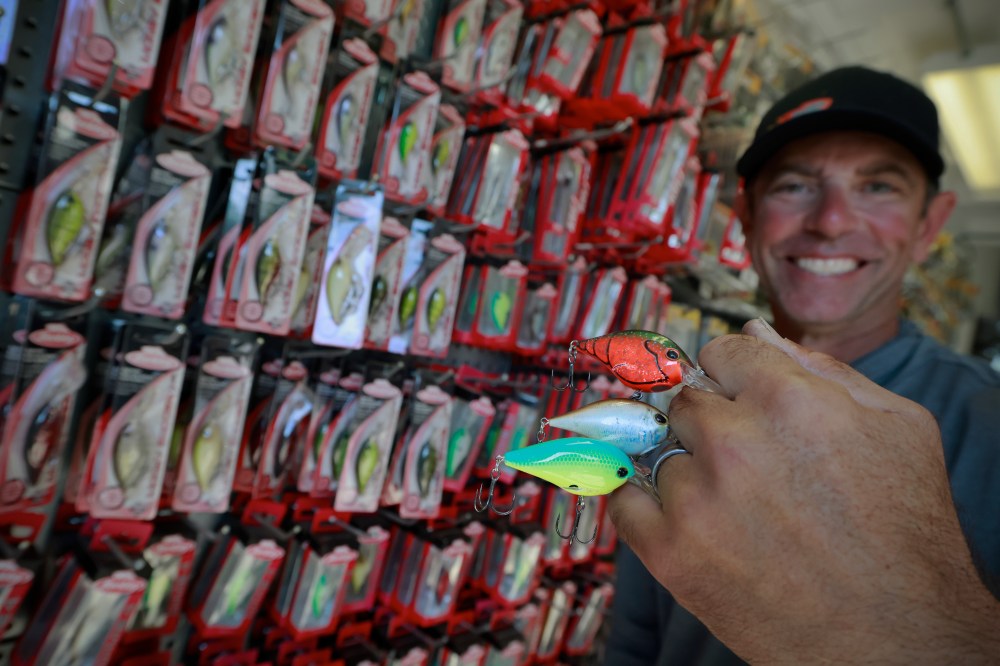
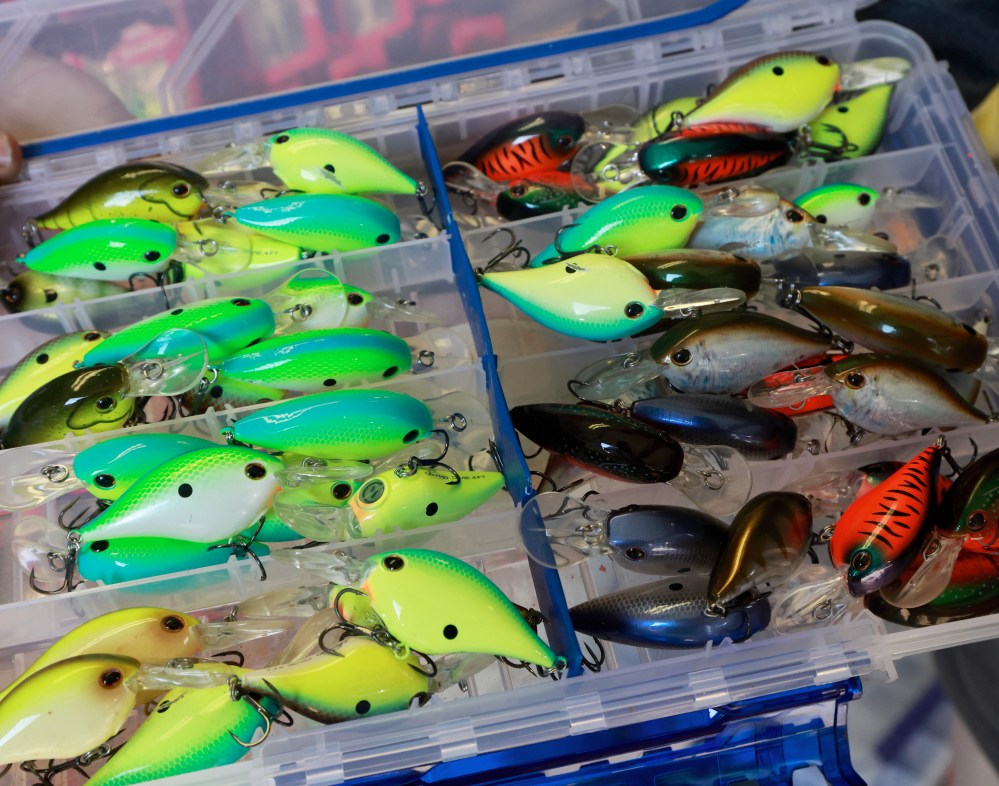
And speaking of crankbait colors, here are three of my all time favorites! These colors help me represent different forage types and allow me to fish different types of water clarities. From top to bottom, the red demon color pattern is great in the spring, it does an excellent job representing crawfish and is a perfect color for when the water gets extremely dirty. In the middle is a natural shad pattern. This color is great all year long, does an amazing job of imitating shad, herring or minnow type baitfish and is killer in clear water. And finally, on the bottom is my all-time favorite color. A chartreuse blue back crank is perfect for patterning bluegill and perch species and is a perfect color in stained or slightly off-color water.
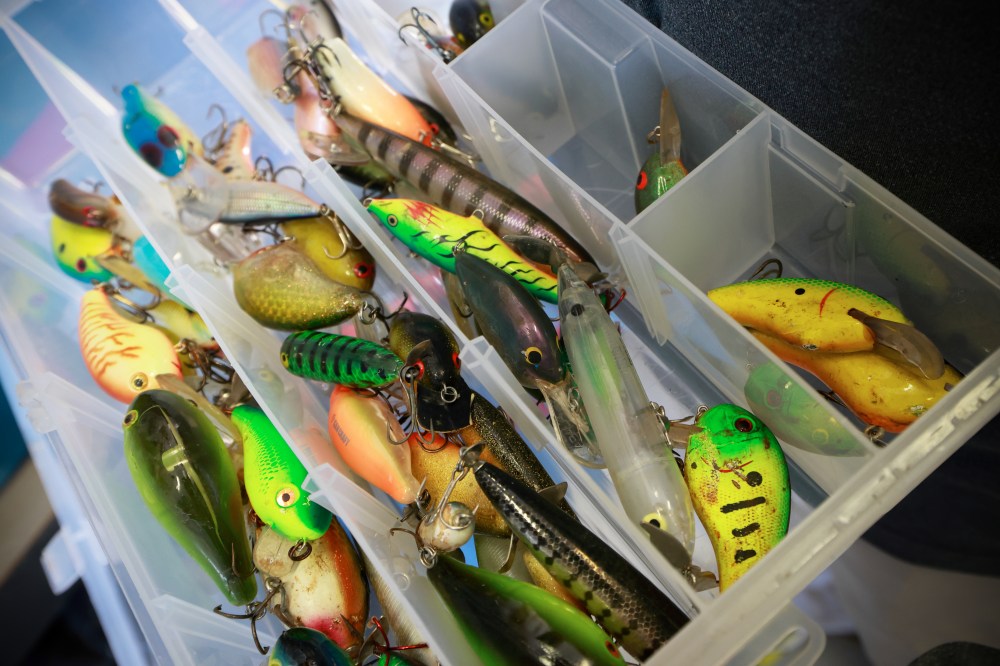
If you need proof, here’s a look inside one of my crankbait boxes that always stays in the boat. These Berkley Dime cranks represent the basic color pallets we just talked about. And remember, always carry at least three of each bait in each color and size. Because if you just carry one, you are sure to lose it and then you’ll be scrambling to find another. 
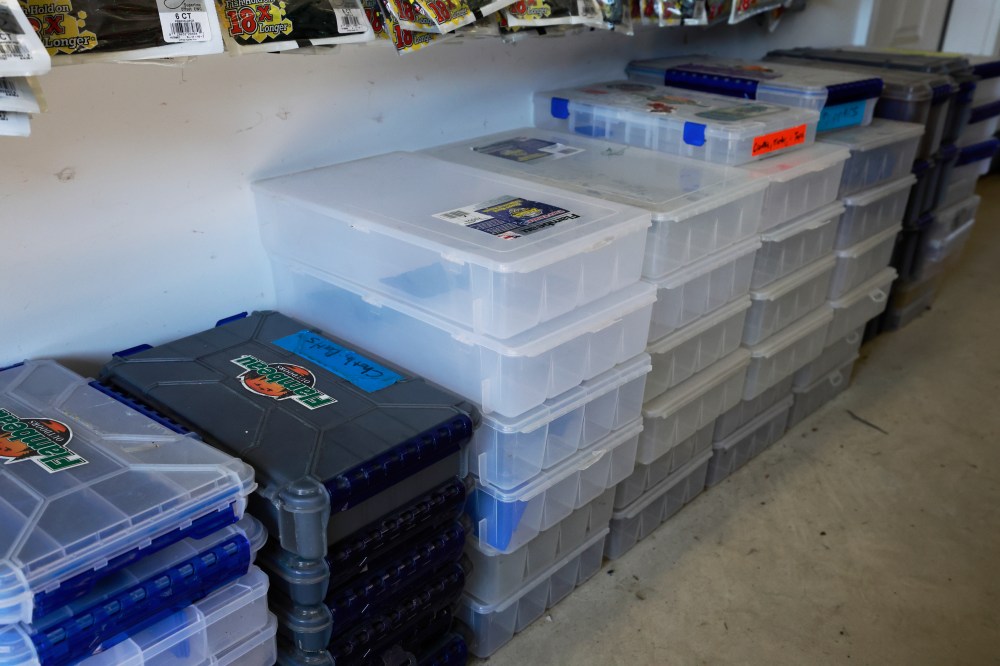
Below this entire wall’s run of stocked peg boards, I carry a bunch of extra empty storage boxes as well. That way if I need to create a new box on the fly, I can literally pick the lures from above and find the perfect-sized storage box below.
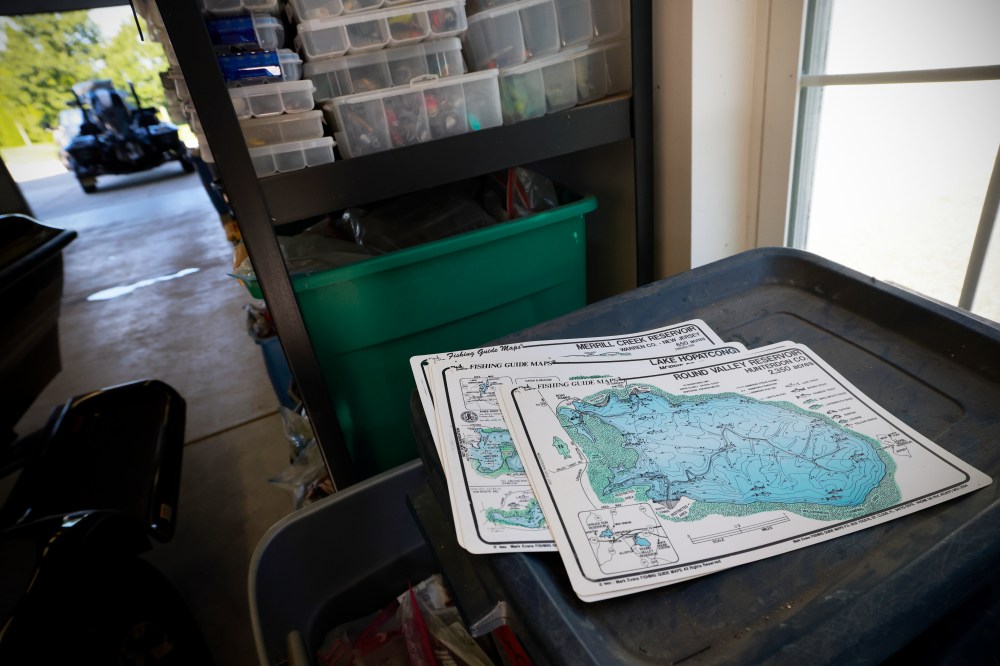
I even have a few paper maps laying around the Shop too. Who remembers these things? It’s hard to believe, but in my early tournament fishing days we didn’t have GPS or digital mapping. We actually had to use paper maps and a process called triangulation to find our spots. I really enjoyed that style of finding fish because you had to fish to find the bass utilizing all of your senses and awareness to find that special spot. Toss a marker buoy and you were all set. 
I hope you enjoyed the tour of my main shop space. But guess what, we’re not done yet! 
An old school metal sign pays one last homage to the area that houses my big full size Bass Cat touring boat before we enter the space we affectionately call the Boat Shed.
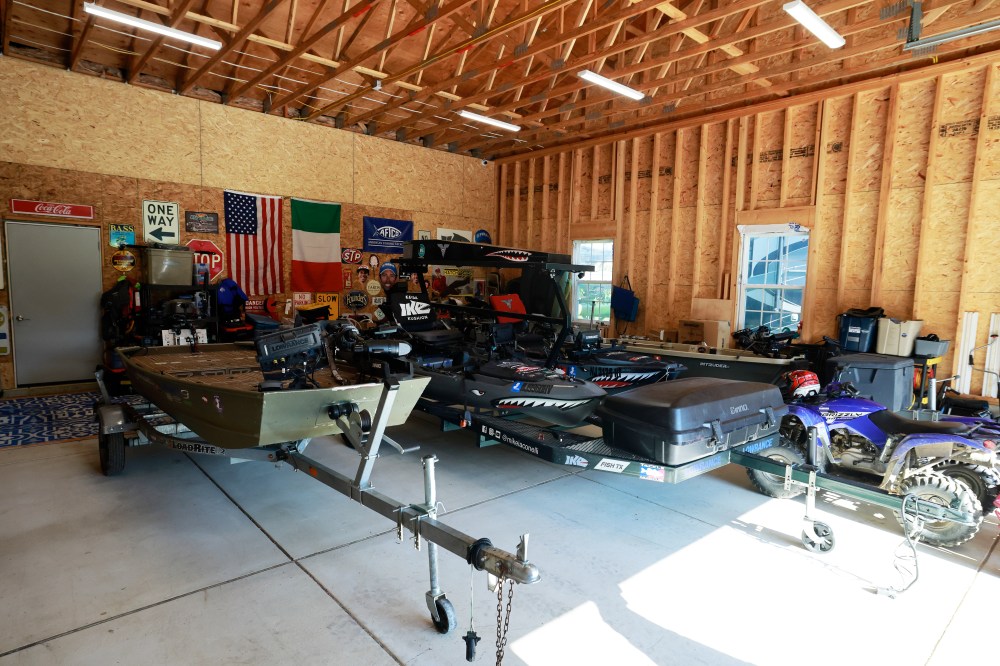
The Boat Shed was an afterthought add-on to the original Shop space that we needed to hold all of my other fishing vessels and supplies. 
One of the things we store in this space are my Wilderness Systems kayaks. About 15 years ago, I really fell in love with fishing from a yak. There’s nothing quite like the feeling of fighting a big fish at the fish’s level. And the ability a kayak has to slip into places I can’t get my big boat — that’s special. All of my Wilderness Systems kayaks are even powered by electric Newport motors now allowing me to travel further and faster.
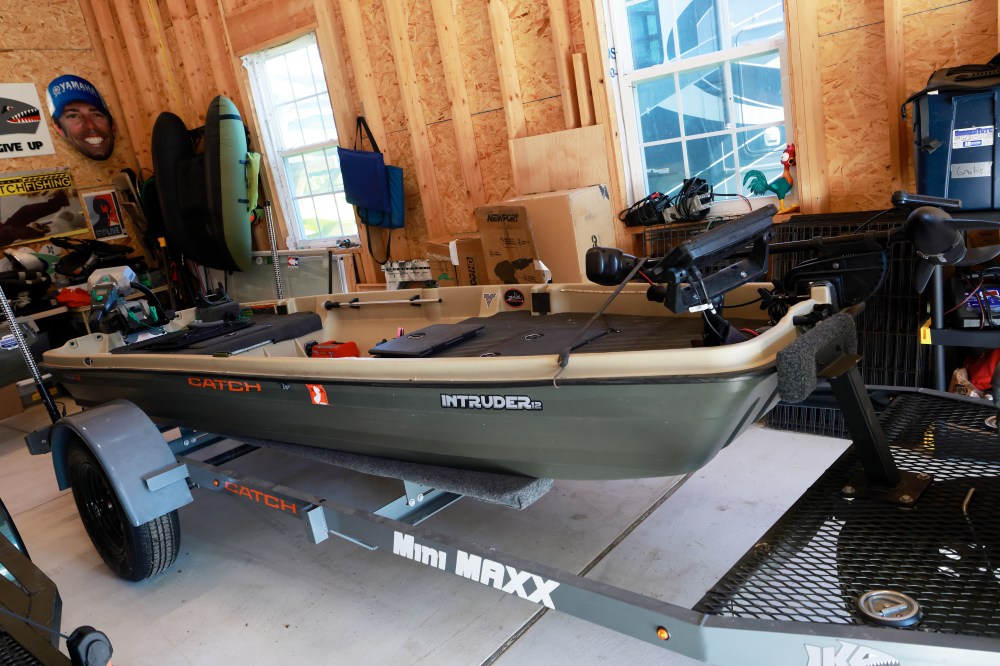
The Boat Shed is also the place I store some of my tiny boats. Tiny boat fishing is what we call our small boat fishing. These smaller boats are way more affordable, they can access smaller water and you can even customize them to suit your fishing needs. This particular tiny boat is one my son Vegas and I built last year. It’s a polyurethane Pelican Catch Intruder 12. We literally created a mini bass boat with decks, livewells, Lowrance electronics and Newport electric outboards. 
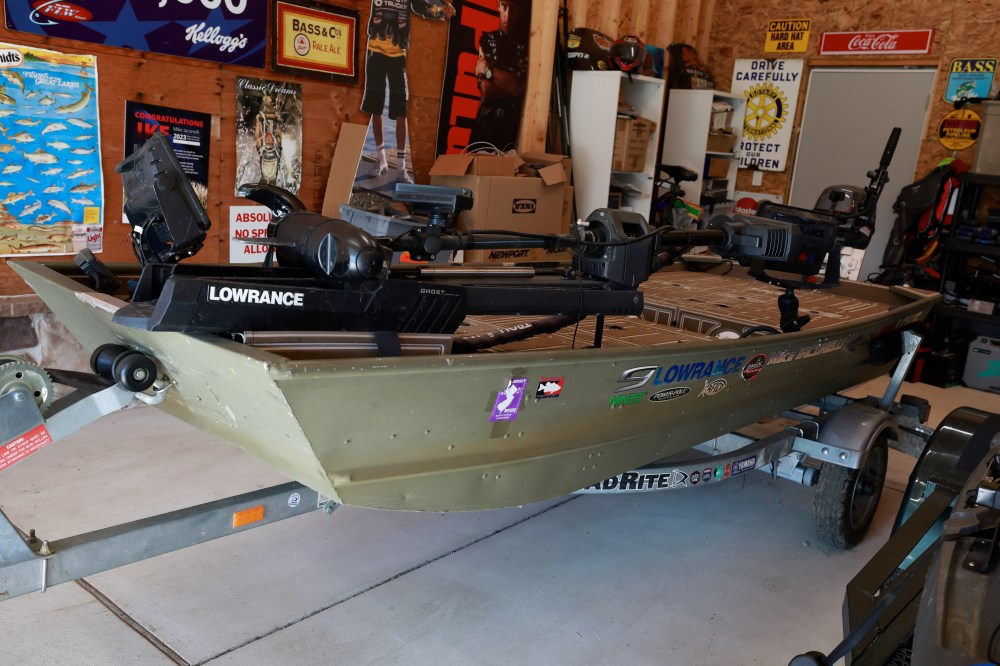
My other tiny boat is a slightly larger tin boat. Around the house, we call them “Jersey Sh$& Kickers,” and they are perfect for the many horsepower restriction lakes found in and around the state. We duped this one out with a Lowrance Ghost trolling motor, Lowrance HDS Electronics and Sea Dek flooring as well.
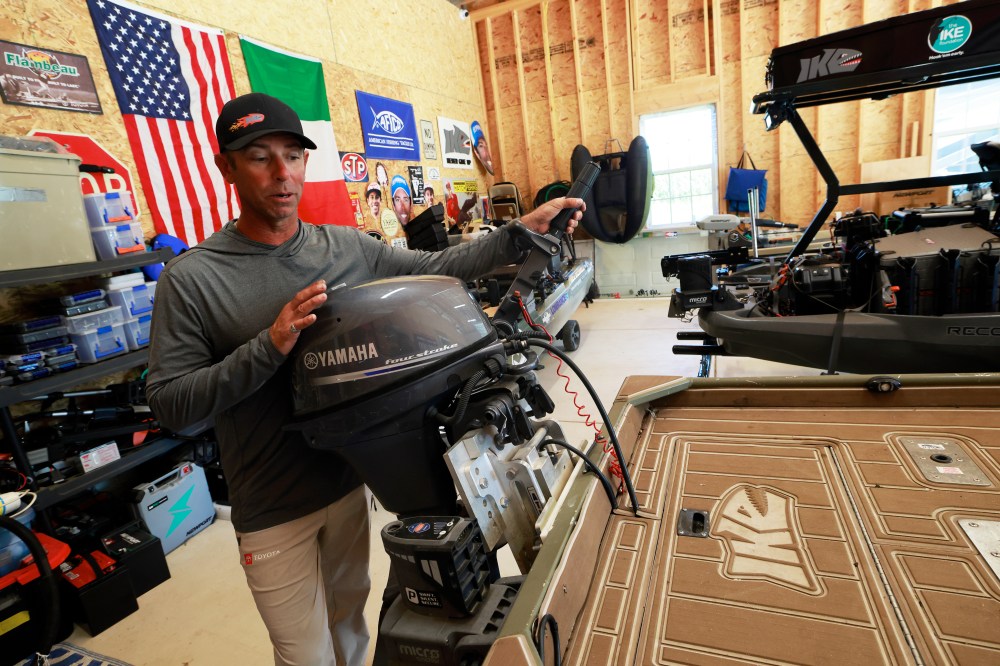
And to finish off this tiny boat build, we installed an amazing little powerful Yamaha 9.9 horsepower gas engine paired with a T-H Marine Atlas Micro Jacker plate on the back as well. 
But not every fishing vessel in the Boat Shed is powered by motors.
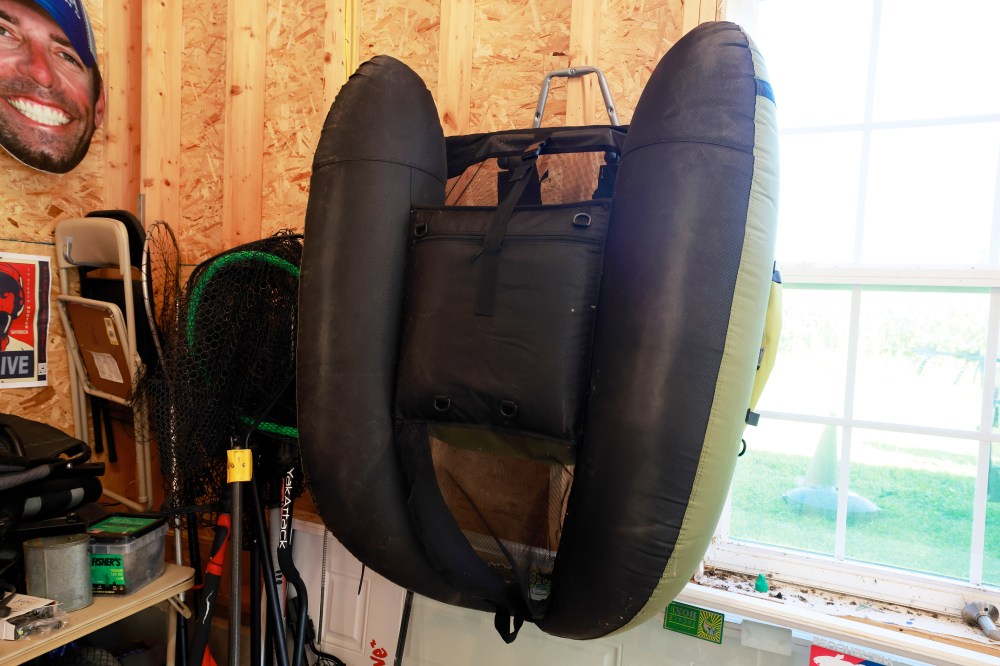
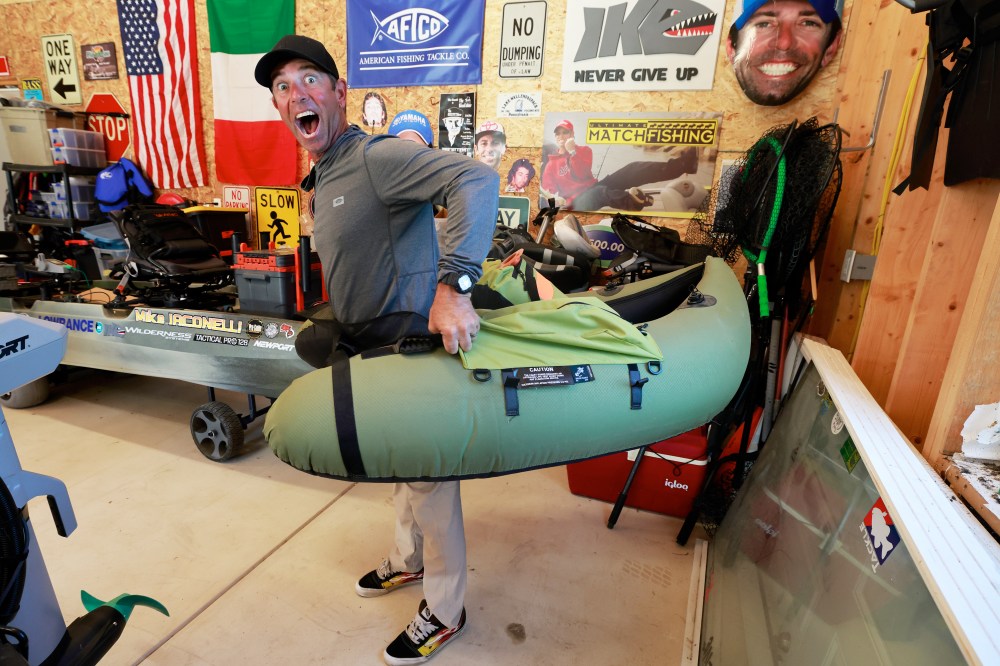
This float tube is perfect for really immersing yourself into the hard-to-access places. My son Vegas and I have both caught our fair share of monster bass in this thing, and we have both been towed around by big fish a time or two. 
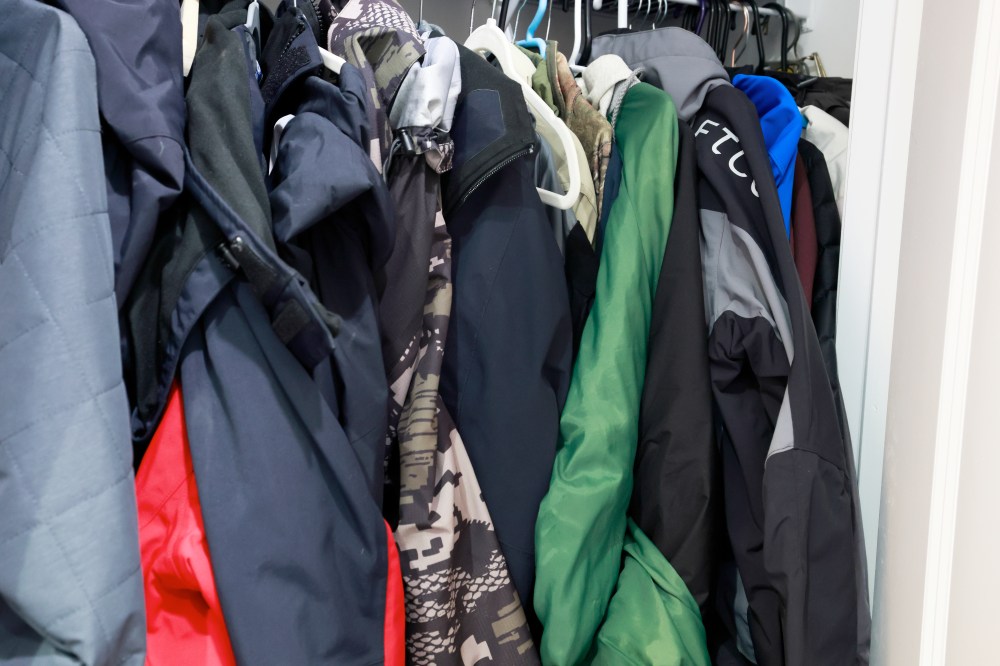
A large closet in the Boat Shed stores all of my more heavy-duty Aftco fishing gear and rainsuits. Staying dry and warm is a big deal, and I can honestly say Aftco makes some of the best technical fishing gear and clothing out there. 
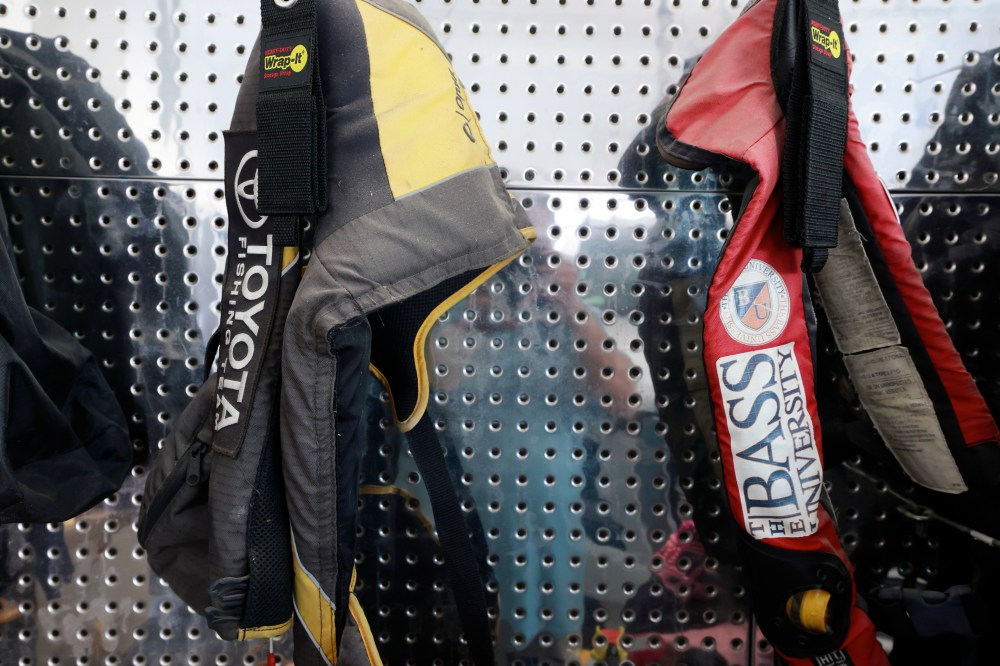
Another wall in the Boat Shed holds our life vests. Whether I’m running my outboard on the big boat or taking a leisurely stroll in my kayak, I always put on my vest for safety. 
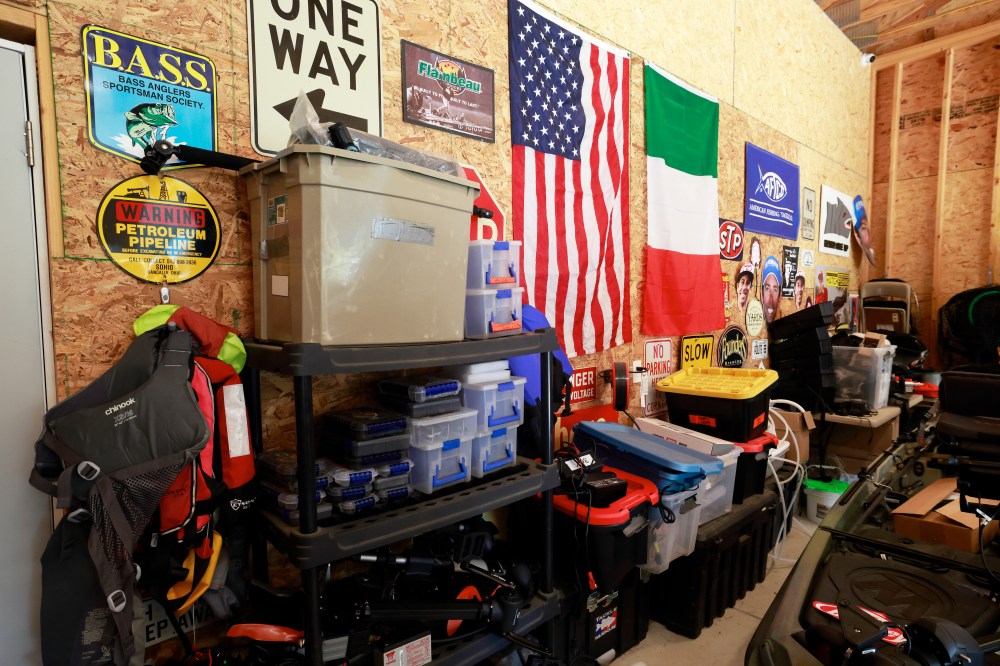
On the back wall of the Boat Shed, you’ll find kayak and tiny boat accessories like Pro Guide lithium batteries and chargers, nets, bait buckets and more. You’ll also find my collection of signs, banners and flags. 
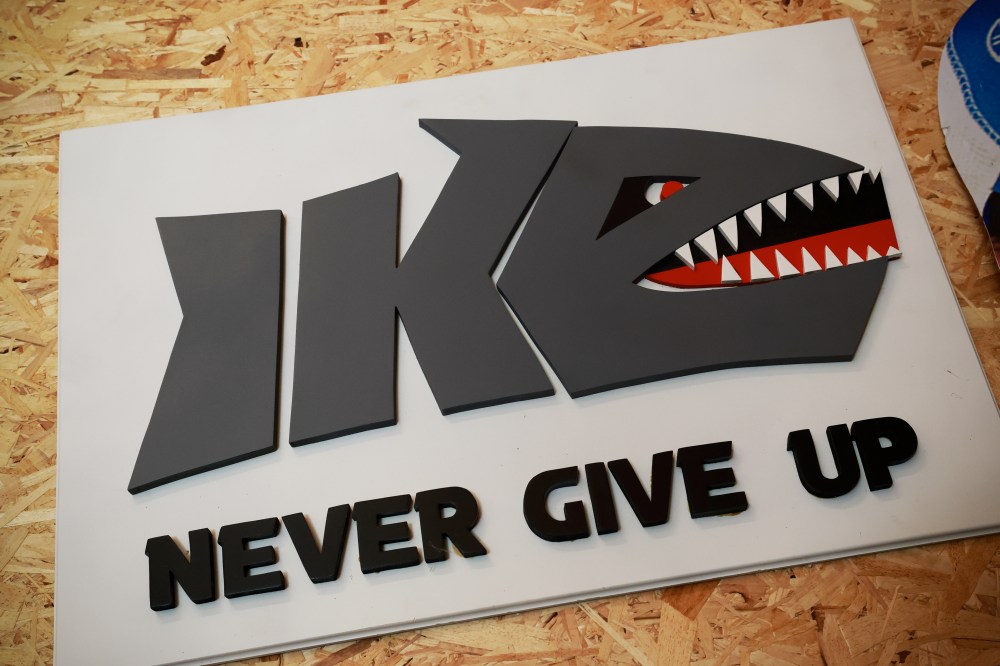
One of the signs is this cool one-of-a-kind, custom-designed wooden Ike Never Give Up sign given to me by a fan.
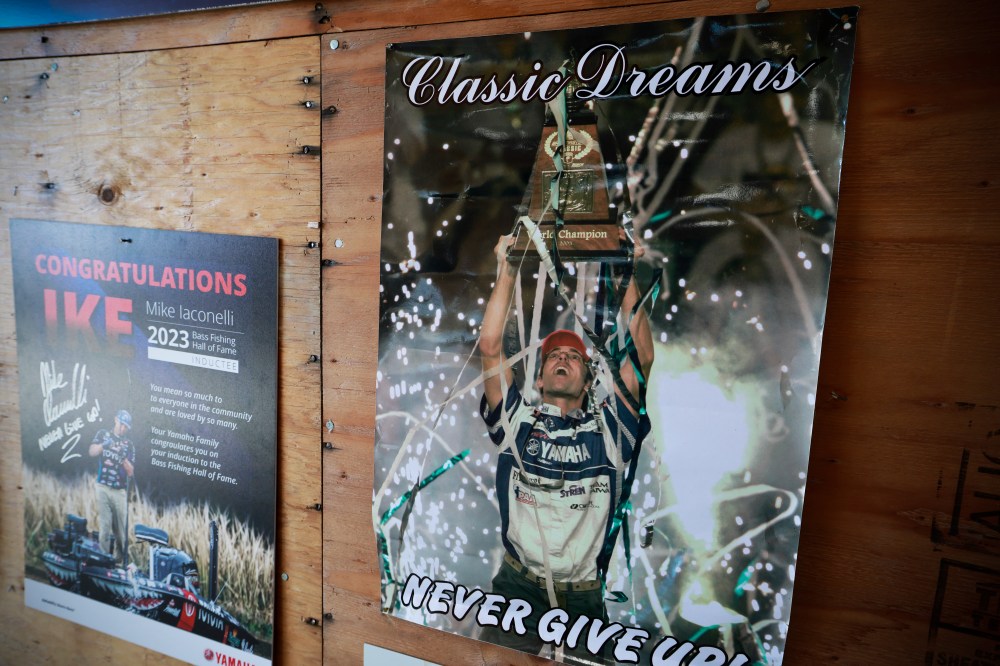
Some cool posters are hanging on the walls too, like this one commemorating my Bassmaster Classic win back in 2003. The poster says “Classic Dreams Never Give Up!” They are definitely two mottos I’ve tried to live by. When I won the Classic, it was for sure a childhood dream come true! And my “Never Give Up” moto has helped me over the years in both my fishing and personal life too.
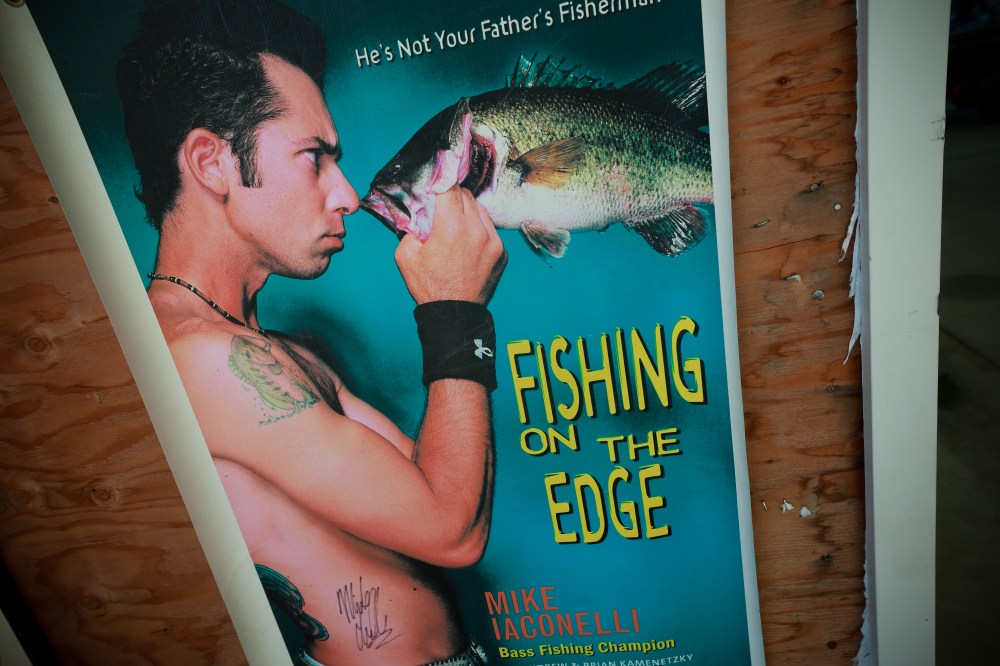
This one is a vinyl material poster that was used at bookstores and retailers to help promote the book I wrote back in 2004 called “Fishing On The Edge!” It’s still amazing to me that I had an opportunity to write a book. It came at a great time in my life, and it was kind of therapeutic, allowing me to let a lot of things out. We still sell copies of the book to this day, and I hope the people that have read it really enjoyed it.
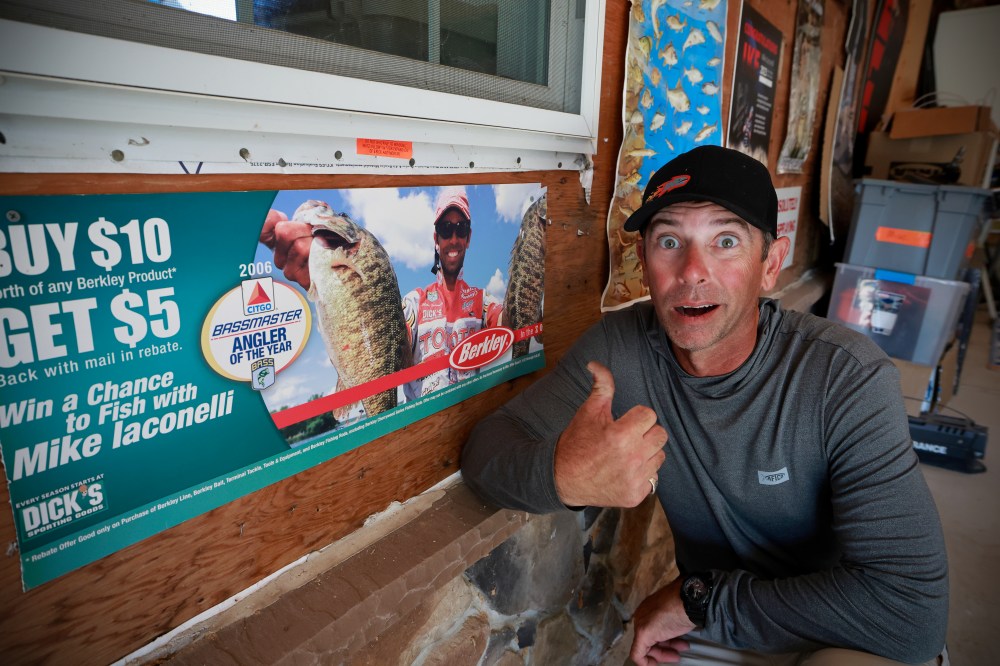
Who’s that young buck? Oh that just me way back in 2006 when I won the Bassmaster Angler Of The Year title! As far as professional anglers are concerned, winning that title is one of the most important things you can do in your career. It definitely helped my business grow and helped to solidify my place in professional bass fishing.
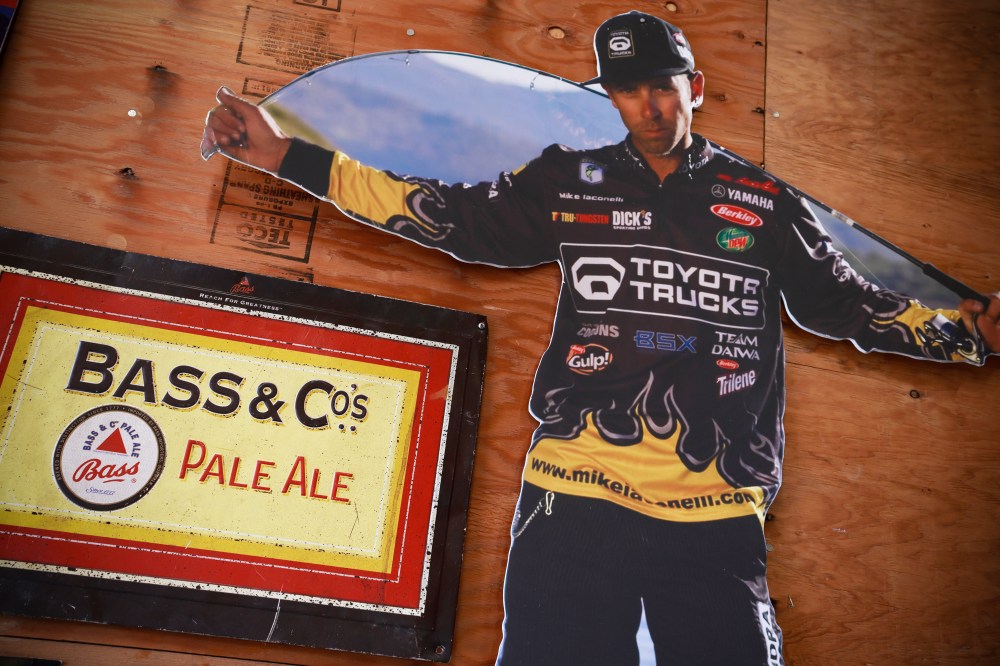
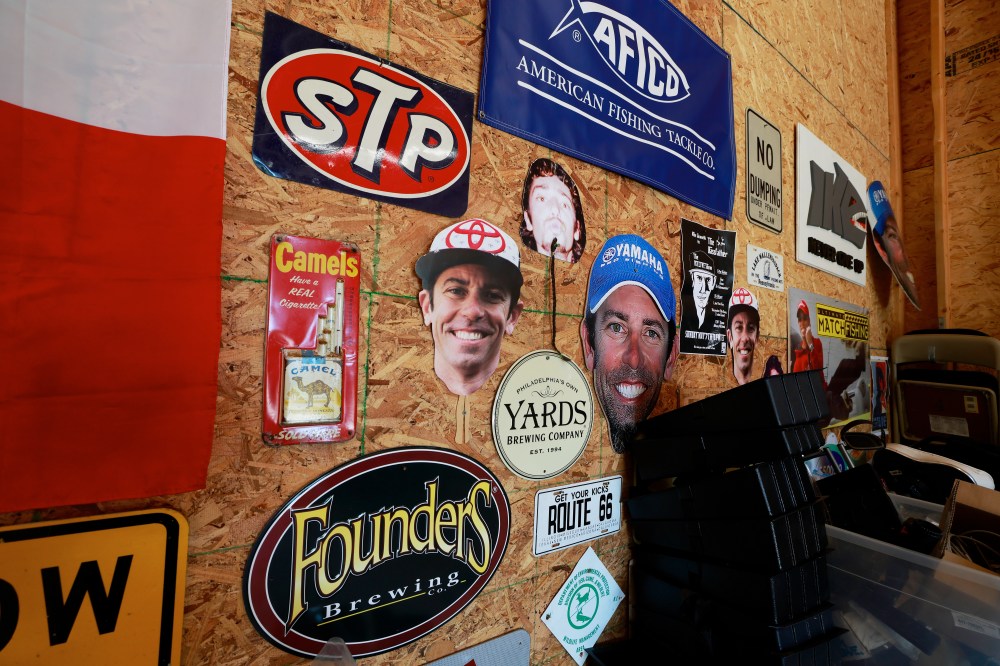
Beer and bass — does anything go together better? An old metal Bass Beer tin sign hangs next to an old P.O.P. store display from around 2008 or so. It’s funny, but I can look back on my many different Toyota fishing jerseys from over the years and pinpoint the year it was from.
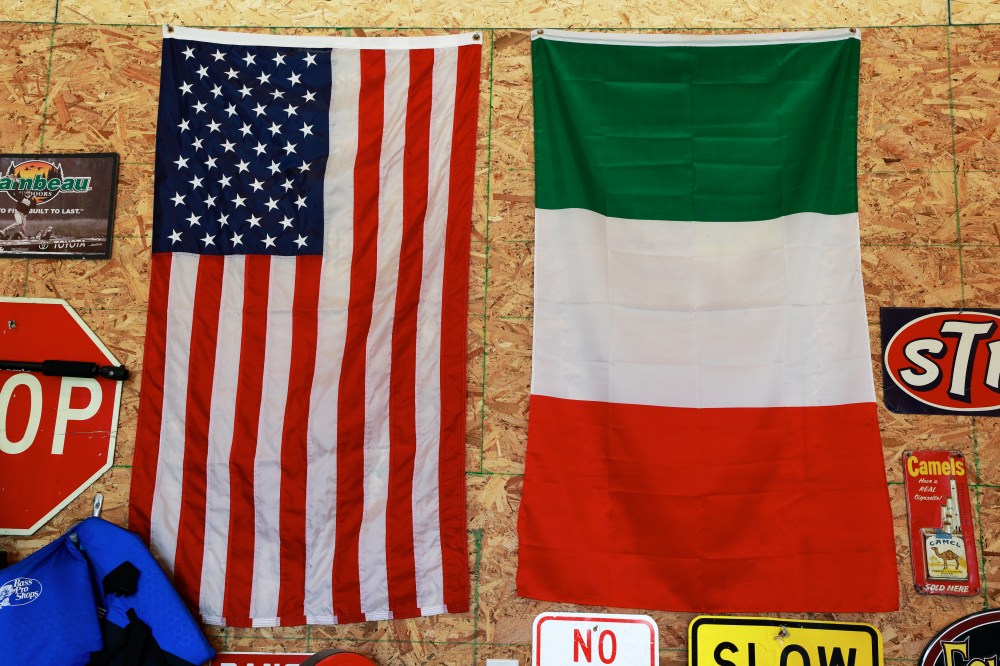
On the back wall I have hanging an American and Italian flag. I’m such a proud American, and I’m so thankful we live in a country where you can chase your dreams. Thank you to the men and women who serve our country! I’m also proud of my Italian heritage. I just wish I could figure out a way to travel to Italy more.
Next to the flags are a weird mix of banners, signs and different “Ike” heads from over the years. Many of these “Ike” heads were used at Bassmaster tournaments and Classics by fans, but now they just act as dart boards for my kids. 
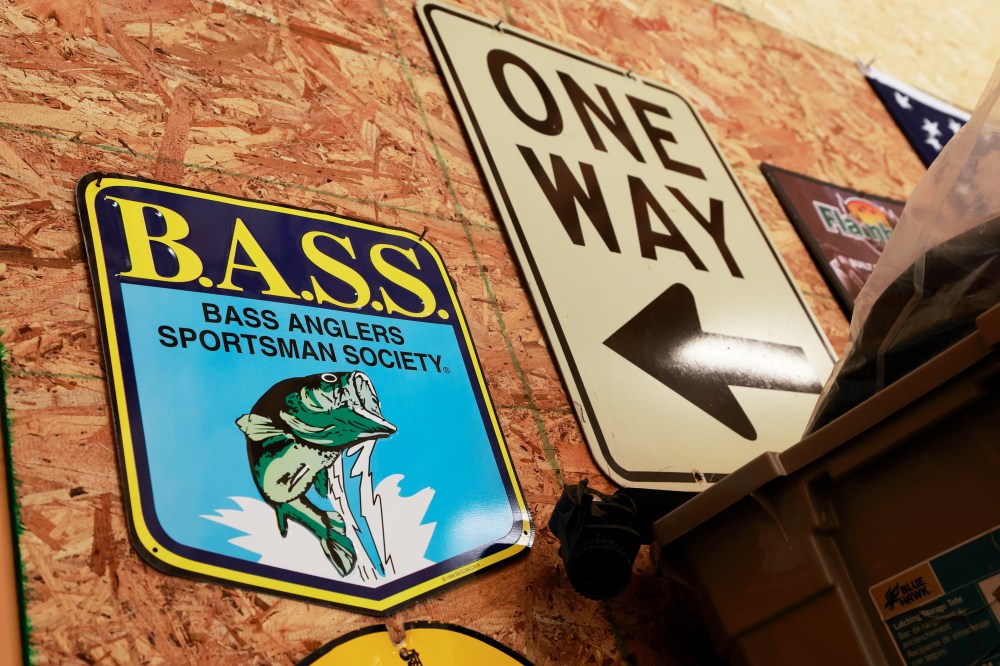
The irony of the placement of these two signs in uncanny! An old metal “one way” street sign points towards a retro tin B.A.S.S. sign. Back when I was young growing up wanting to become a pro bass angler, I knew the only one way to do it was to work my way up through the ranks with Bassmaster. I’m very proud that I came up through the old Federation (now the B.A.S.S. Nation). Without B.A.S.S., none of this ever would have happened for me.
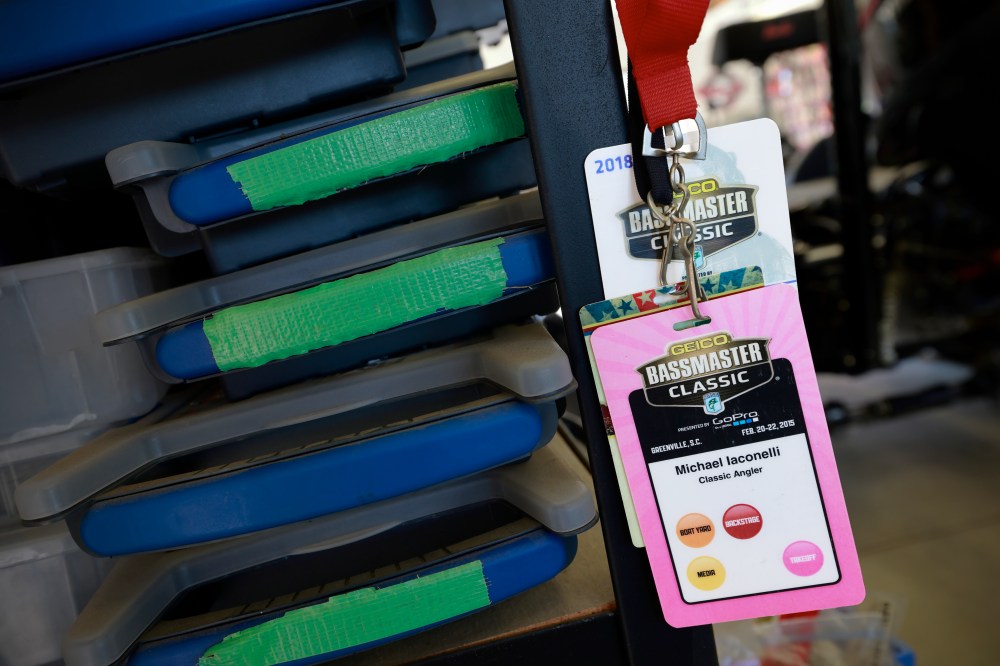
Hanging from one of the shelving units in the Boat Shed, you’ll even find some old Bassmaster Classic entry lanyards. These lanyards were given to each competitor to allow them access to all of places you need to get to throughout the event. I was very fortunate in my career to have qualified for 20 Bassmaster Classics. 
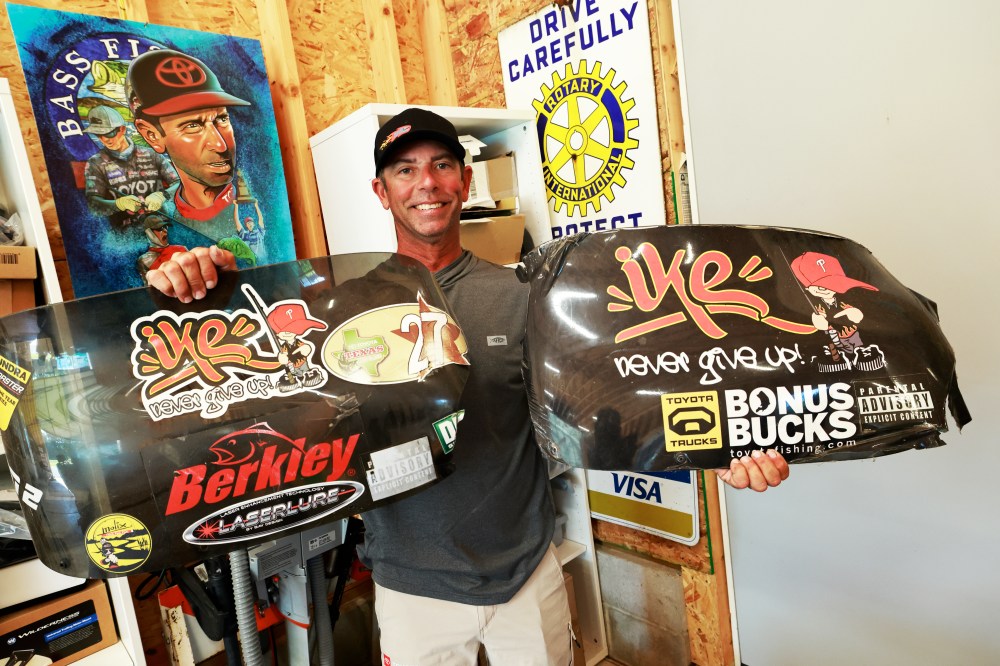
On top of another two storage units in the Boat Shed, you’ll find a few of my old broken windshields from some of my past Bass Cat boats I used on tour. Like the tournament jerseys, each one of these windshields is different and brings back memories from the past. One of these original windshields is also on display at the Bass Fishing Hall Of Fame in Springfield, Mo. Three years ago, I was inducted, and it is such an honor to be recognized by my fishing fans and peers. The Bass Fishing Hall Of Fame is there to not only recognize anglers who have had a positive impact on the sport, but also to preserve the history of bass fishing. If you’re ever down at the Bass Pro Shops in Springfield and the National Aquarium, go give it a look.
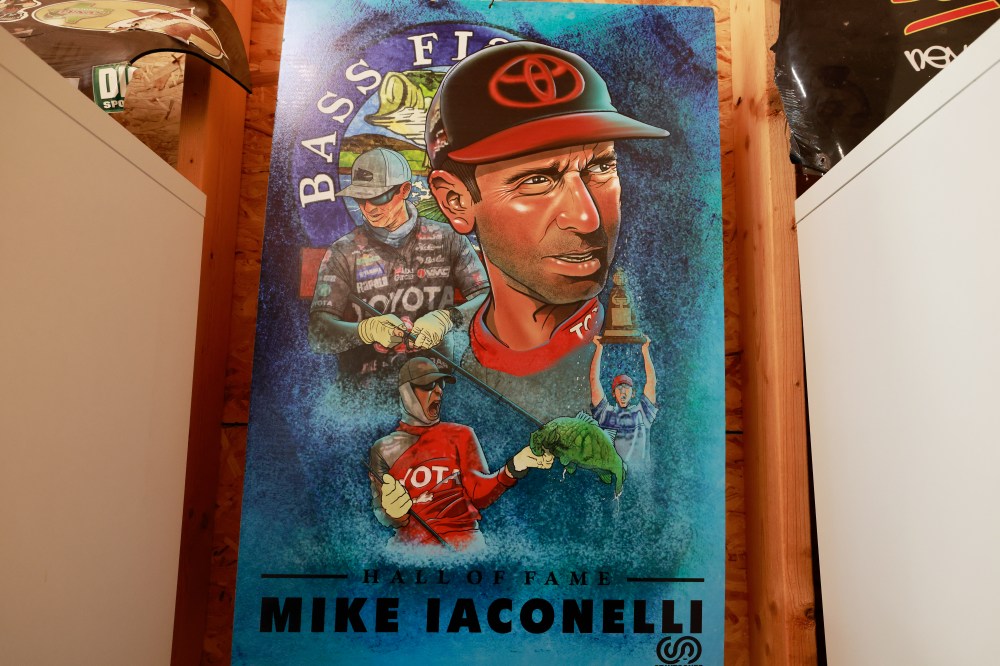
Between these two storage units you find a one of one custom commemorative Hall Of Fame art poster designed by my friend Steve Donnis. Steve is a cartoonist and you most likely have seen some of his work in the pages of Bassmaster Magazine.
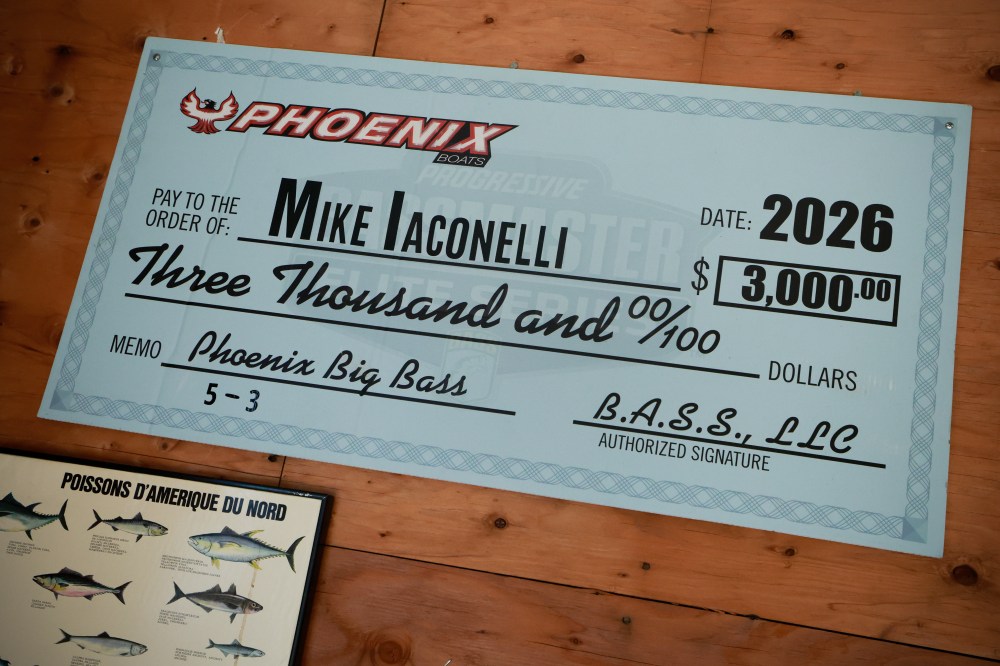
There’s also a few big checks hanging on the Boat Shed walls too. These big checks are given to the anglers that win the tournament or big bass at each event. Funny thing is when I took it to the bank they wouldn’t cash it? 
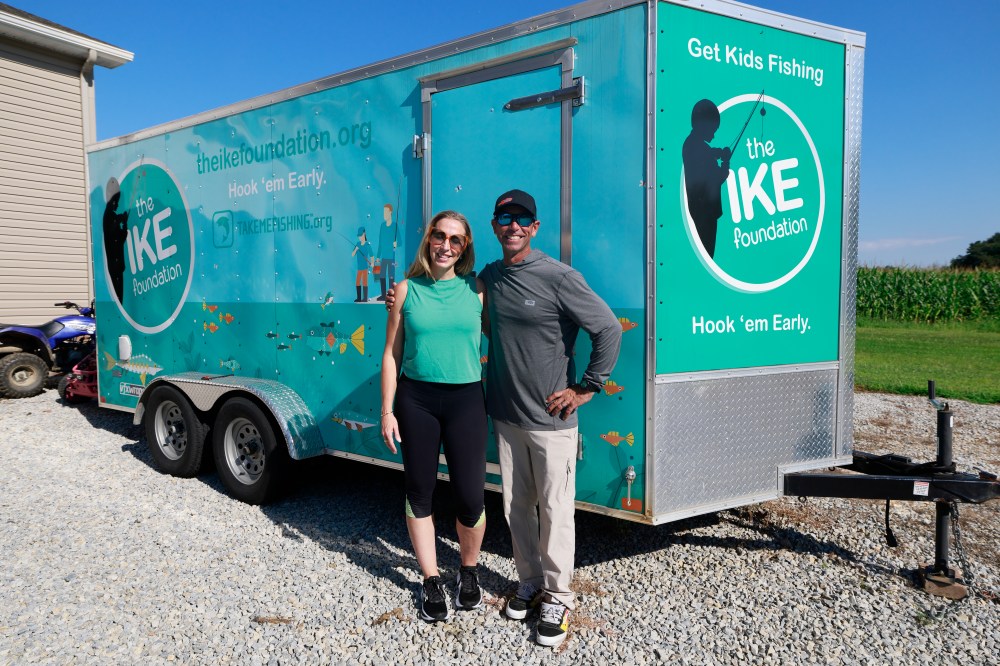
Becky and I want to thank you for taking the tour of our Shop and Boat Shed. Behind the Boat Shed also sits the Ike Foundation trailer. We started the Ike Foundation over 12 years ago to try and help get new kids fishing. We specifically target kids in places where they might not normally go fishing. If you love fishing like we do and you want to help get new kids fishing, please head on over to theikefoundation.org to get more information on how you can help grow the sport! Thanks again, and we’ll see you somewhere soon.