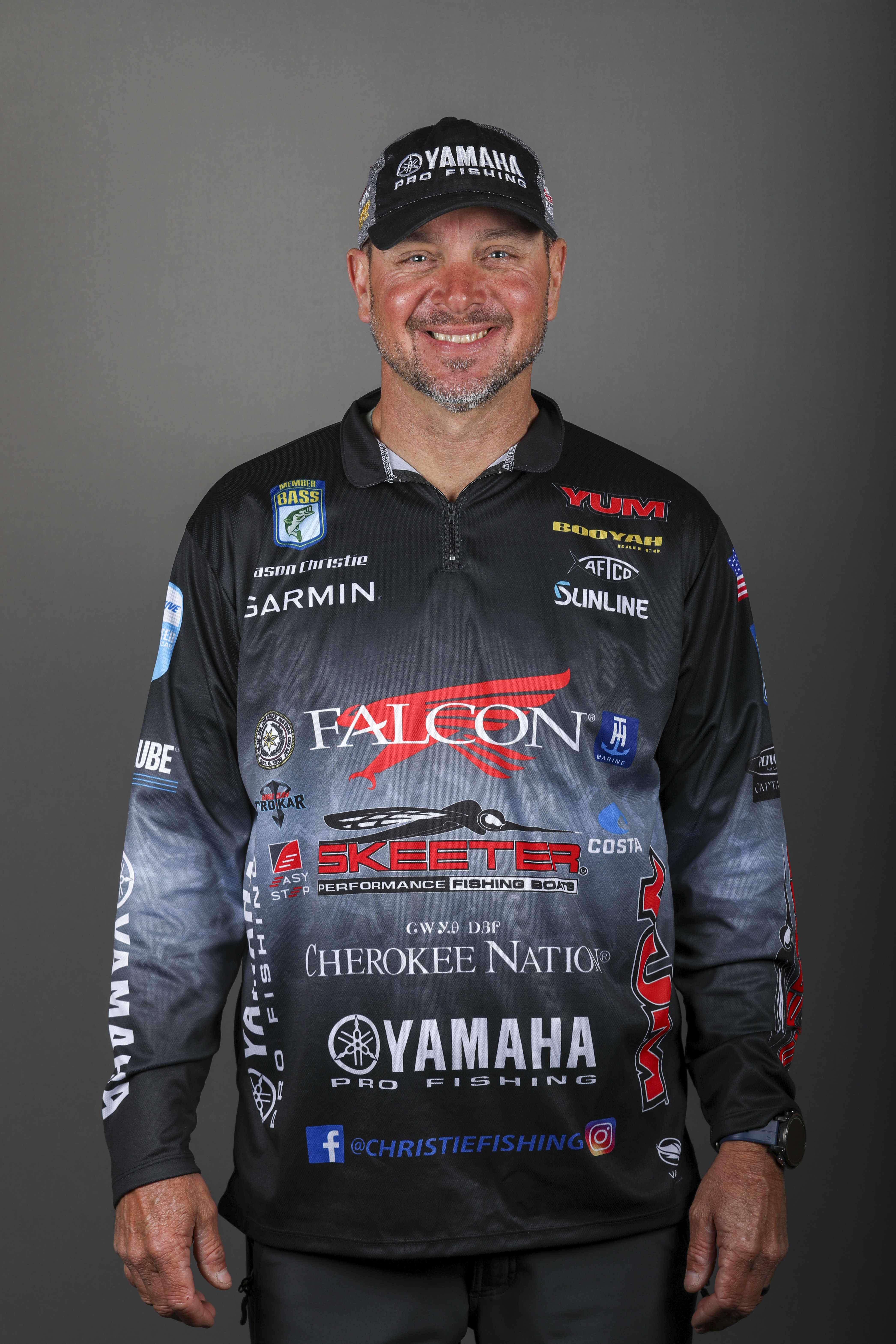
I’m proud that over my career as a professional angler I’ve gained a reputation for being able to close out victories. Some of that is deserved because I’ve won a Bassmaster Classic, seven Elite Series tournaments and two Opens. On the other hand, you have to take it with a slight grain of salt because people tend not to remember the times when I didn’t manage to bring home the trophy.
Thinking back on those wins, in most of them I identified a productive area, remained there and ground it out. That’s what I did earlier this season at the Tennessee-Tombigbee, and it worked out perfectly.
On the other hand, on the Arkansas River out of Muskogee, I deviated from that pattern because I entered the final day with a 7-pound deficit. I didn’t think that I could catch 20 in my main area, so on Day 4 I went looking for something else. It’s easy to see it in hindsight, but looking back now, I wish I had gone back to where I’d had my prior success to grind out that final day.
For a lot of people reading this, if your primary pattern or area isn’t working, you typically make an effort to adjust. That’s what we’re taught to do as anglers — change baits, change locations, go deeper or go shallower. It often makes sense, but you also need to know when to stick with what got you to that point. When I played basketball, I played under a coach who invariably pressed on defense the whole game. We’d be down 10 or 15 points in the middle of the first half and he wouldn’t switch what we were doing. Instead, he said that we’d gradually wear down the other team, and it almost always turned out that eventually we did. I often think of that experience when I’m on the water. My mentality has always been that the longer I can survive in a tournament, the more likely it becomes that I’ll wear everyone else down.
At the Tennessee-Tombigbee, Seth Feider and I shared a productive backwater that propelled us both to Day 4. We split it up, fishing opposite sides. On the final day, however, he pulled up stakes and left. That told me that fishing wasn’t good. Indeed, other anglers’ behavior can frequently clue you in to what you need to do.
At 11 o’clock, I left that backwater for an hour to see how well they were biting elsewhere. It had gotten monotonous and unproductive, but as soon as I put the trolling motor down I had an overwhelming feeling that I needed to be back where I’d started. After an hour without a bite, there was no question at all. I went back to my primary area recharged and refreshed and caught the winning fish.
After decades of fishing competitively, I recognize that each Championship Sunday is an opportunity. That’s more true now than ever before because we have such a balanced field. You have to maximize your chances of winning, and often that means coming in 10th. I’m not scared of that possibility. I mean, it bothers me, but it doesn’t really, as long as I can live with my decisions, and on nights after Day 4, I tend to sleep better if I stuck to my guns.
“Going for it” means different things to different people. My bottom line is that a Top 10 is a Top 10. I’m not scared to come in with just one or two fish. But you also have to remember that every tournament is different. Day 4 weights tend to go down more than they go up. At the Tenn-Tom, with only 12 pounds on the last day, I thought I had about a 10% chance of winning, but it turned out to be enough. I won by over 2 pounds. At Bull Shoals, I came back from a huge deficit on the final day. When I won the Classic, that was a surprise, too. We preach versatility and the ability to adjust, and I agree to some extent that those are important, but sometimes the most important thing is to just trust yourself rather than spinning in circles trying to make something happen.