Whether you are new to the sport or an aging veteran like me, doing battle with your opponents will wear on you … especially when conflict is involved.
Anytime you mix egos with high dollar payouts, tempers can flare.
It happens in nearly every professional sport. Take baseball, for instance. How many times have you seen two teams empty their dugouts over a pitch thrown intentionally at a batter? Or NASCAR, where drivers sometimes fight after one deliberately forces another into the wall?
Competition can bring the worst out in people, and our sport is no exception. Fortunately, though, it rarely comes to blows. Still, the frequent tongue-lashings can seem just as injurious.
I’m sure I made some enemies along the way, and that I regret. But the further I progressed in my career, I began to realize the importance of those conflicts and how they helped shape me as a competitor … how they served to motivate me.
A fire burns within any competitor. But for some of us, it’s our adversaries who best stoke those flames. And as much as we may dislike and want to beat them, they’re an integral part of our development. Losing to them burns. But that feeling, if channeled properly, can push us to become better competitors.
We work harder, and demand more of ourselves.
Enemies made, friends lost
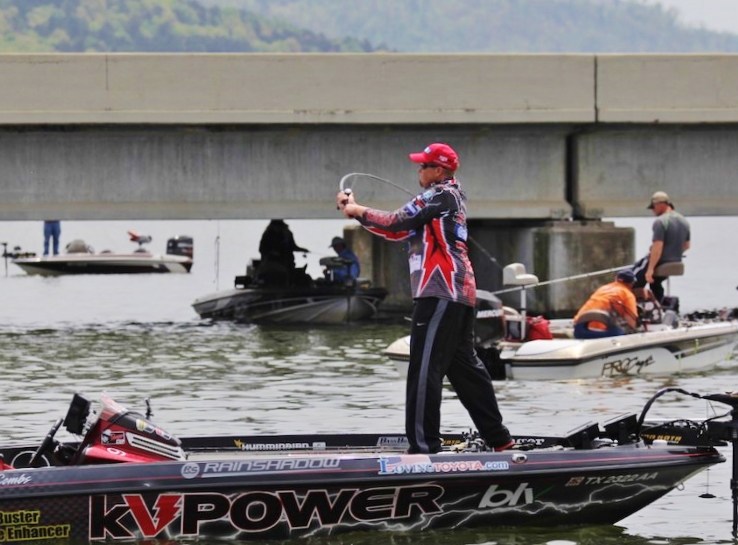
When conflicts occur, I feel it’s best they are settled among those involved. Unfortunately, that’s not always an option. With the advent of livestream broadcasts and social media, nearly every conflict on the water is either witnessed live or documented for later scrutiny, often perpetuating the dispute.
Take the time Kevin Van Dam called out Mike Iaconelli for encroachment during an Elite event on Lake Chickamauga, stating, “You ain’t part of the community!” That exchange reverberated throughout the sport for months, even years.
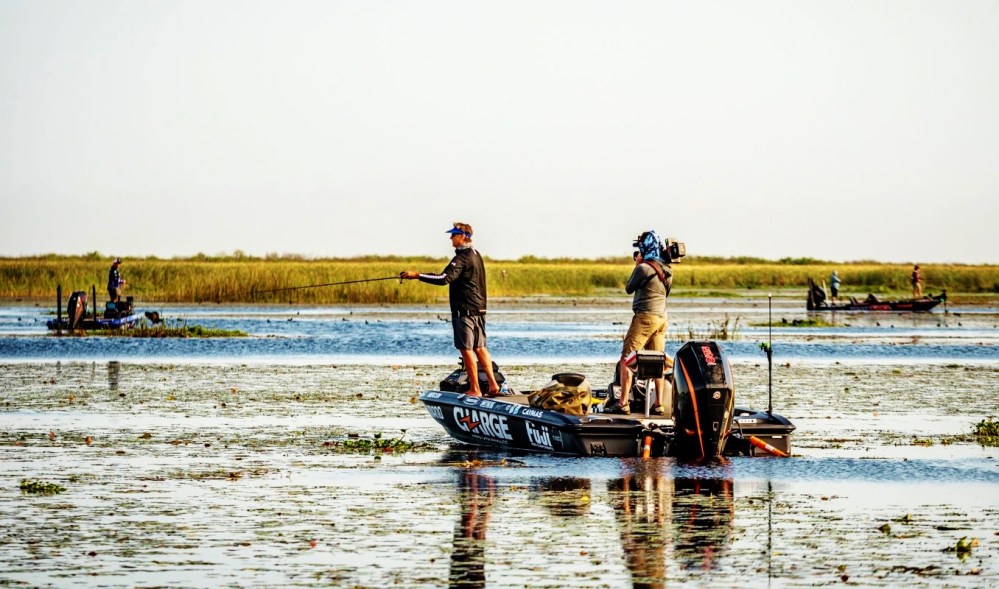
And what about the time Aaron Martens and Byron Velvick got into it during an event on Lake Falcon in Texas — two longtime friends arguing over a single rockpile, in a lake loaded with countless hotspots. Territorial disputes like theirs are actually quite common. They can occur at nearly every tour stop.
I’ve had my own battles. Some I seemingly won, some I lost. But even when I felt I was in the right, not much was gained from it. It’s like the old saying, “there are no winners in war.” It took me years to realize that. Yet, even when I knew better, if confronted on the wrong day, my temper would flare.
That was the case during a conflict with former B.A.S.S. pro, Jim Bitter. During a tournament on the Harris Chain of Lakes, we got into an argument over a stretch of water where I had finished high in a previous event. And though I told Jim about it, he felt he had priority … I guess because he lived on the chain.
In retrospect, neither of us were right. And sadly, our friendship ended as a result. I regret that to this day, especially now that he’s gone.
When time heals
A few years ago, I got into a similar dispute with Caleb Kuphall. It, too, was over a stretch of water. And like the confrontation between KVD and Ike, ours went viral.
It took some time, but we eventually forgave each other and became friends. And I’m glad that was the outcome. Caleb is a good guy, a competitor I respect. He’s old school in his approach and he does his own work. There’s a lot to be said for that.
There are other types of conflicts, some of which occur off the water. Like the time I got into an argument with another Elite competitor — believe it or not — over an electrical outlet at a hotel. And the initial exchange wasn’t pretty.
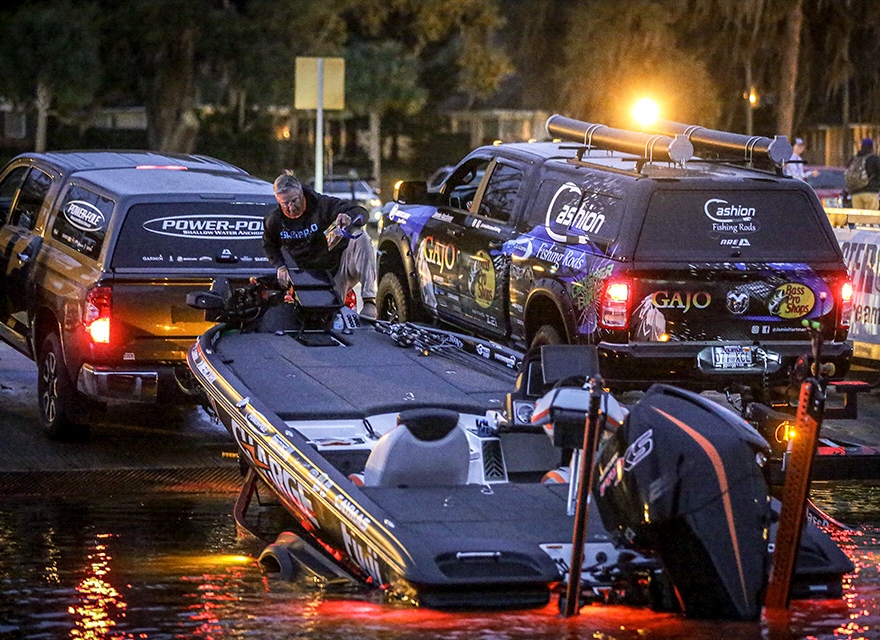
It happened in the Town of Brewerton, on the shores of Oneida Lake in New York. Because the area had limited housing, most of the competitors were crowded into a two-story Quality Inn. And with that many boats in the same parking lot, power outlets to charge batteries were in high demand.
Seeing so many guys splitting off the same outlets, I decided to move to one on the backside of the building — a place where parking and access was really poor. As soon as I plugged in, another angler started barking at me for encroaching on ‘his’ outlet. As absurd as it sounds, he felt that because he had gotten there first, it was his and his alone — despite the fact that the outlet could accommodate two power cords.
He even threatened to unplug mine at night.
Fortunately, some bystanders overheard the exchange and, after some intervention, the issue was resolved. Still, it illustrates how tempers can flare over the simplest, most absurd things … even off the water.
Little is gained from these types of conflicts. Whether you’re on or off the water, it’s best to avoid them whenever possible. In those rare instances when they can’t be avoided, try to keep a level head and make every effort to defuse the situation.
I wish I’d done just that on more than one occasion.
Follow Bernie Schultz on Instagram, Facebook or through his website.